
UGREEN 8K HDMI 2.1 Cable
4.8Editor score
Long 16-foot installation length
Dolby Atmos over eARC
48Gbps Ultra High Speed bandwidth
Broad smart-device compatibility
Our expert guide compares the best HDMI Cable for Dolby Atmos options, highlighting bandwidth, eARC support, audio formats, compatibility, and home theater use.
Dolby Atmos depends on a complete, correctly configured home theater chain, and the HDMI cable connecting a television, soundbar, or receiver must preserve both video and high-bitrate audio. A capable cable should support the required bandwidth, eARC or ARC where applicable, and compatibility with modern gaming and entertainment devices.
We compared all ten cables using the supplied specifications, focusing on bandwidth, supported resolutions, refresh rates, eARC and ARC functionality, Dolby Atmos compatibility, connector construction, cable length, and device support. The list includes short and long HDMI 2.1 options, multi-packs, braided designs, and forward-looking HDMI 2.2 cables.
Each review identifies the strongest use case for its cable while noting any practical limitations. Our top three distinguish an excellent general-purpose option, a value-focused long cable, and a feature-rich premium model. Product pricing and availability can change, so confirm current details and device requirements before purchasing.
4.8Editor score
4.8Editor score

4.6Editor score
The comparison highlights each cable's bandwidth, maximum video mode, audio-return capability, and most useful installation length, making it easier to match a cable to a television, soundbar, receiver, console, or projector.



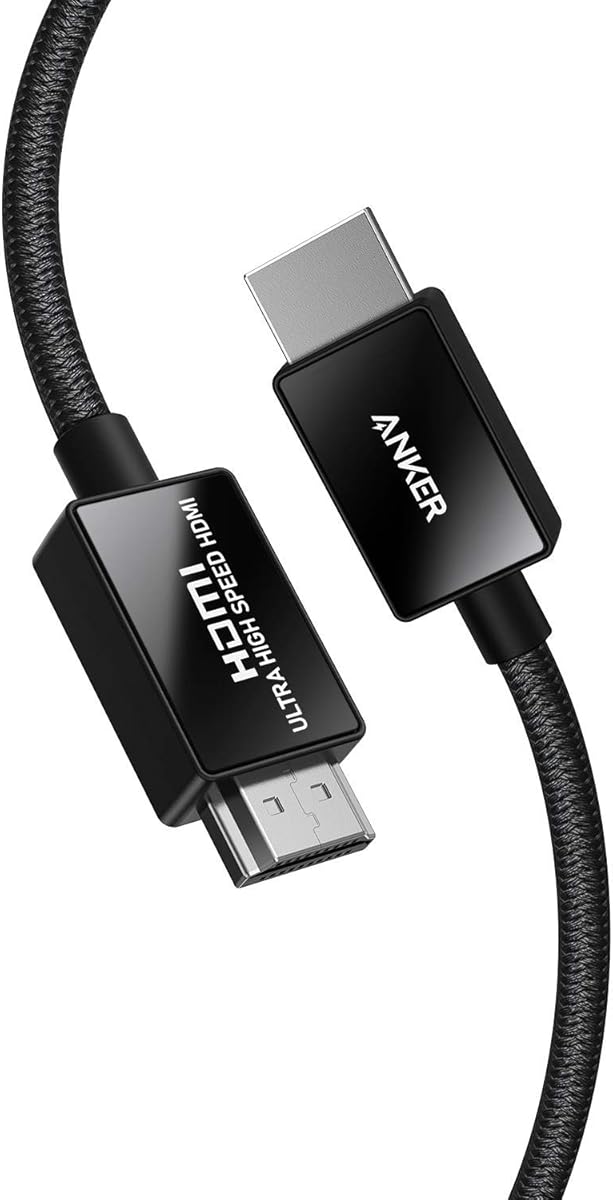
The Anker HDMI 2.1 Cable is our strongest all-around choice for a home entertainment setup that may combine Dolby Atmos equipment with demanding video. Its 48Gbps Ultra High Speed bandwidth supports 8K at 60Hz and 4K at 120Hz, while the supplied 4.8 rating reflects strong customer satisfaction. It is a practical choice for users who want more bandwidth headroom than an older standard-HDMI cable provides.
We may earn a commission when you buy through this link, at no additional cost to you.
One of its most convincing details is the stated HDMI Forum certification. The listing also describes electromagnetic shielding, carbon steel connector housings, gold connector pins, and a double-braided nylon exterior. Those features make it well suited to a permanent connection between a television and soundbar or receiver, especially where cable quality matters as much as headline resolution.
Its gaming specifications are equally useful, with explicit compatibility for PlayStation 5, Xbox Series X/S, 8K UHD televisions, Apple TV, and Roku Ultra. The one important qualification is that Dolby Atmos and eARC are not explicitly listed in the supplied product details. Therefore, buyers whose priority is a TV-to-soundbar audio return connection should verify those requirements before ordering.
This is the best overall option for most people seeking a dependable, high-bandwidth HDMI cable with a polished construction and wide device compatibility. Choose it for modern 4K gaming, high-resolution television viewing, or an AV connection where certified 48Gbps performance matters. For Atmos-specific eARC use, confirm that the connected television and audio device support the desired audio format and that this particular cable is approved for the configuration.
The 48Gbps specification gives the cable ample headroom for 8K video and high-refresh 4K gaming. This makes it a sensible foundation for a system built around recent consoles, UHD televisions, projectors, and streaming devices.
Carbon steel connector housings, gold pins, and a double-braided finish are intended to withstand repeated handling. Anker states that the cable is designed for 10,000 plug-and-unplug cycles, making it useful for frequently rearranged setups.
We may earn a commission when you buy through this link, at no additional cost to you.
The Silkland 8K HDMI 2.1 Cable is among the clearest choices for users whose primary concern is sending Dolby Atmos from a television to a compatible soundbar. It has a 4.7 rating and explicitly describes support for ARC and eARC, high-bitrate DTS formats, and Dolby Atmos. Its 6.6-foot length is suitable for most entertainment centers and nearby media cabinets.
We may earn a commission when you buy through this link, at no additional cost to you.
Its 48Gbps bandwidth accommodates 8K at 60Hz and 4K at 120Hz, with the supplied description also discussing 4K at 144Hz and dynamic HDR. That combination makes it useful for a soundbar setup that also serves a modern television, game console, or streaming device without limiting the connection to audio alone.
The construction list is reassuring: zinc-alloy connector housings, 24K gold-plated contacts, three-layer copper shielding, and a claimed bend resistance of more than 25,000 cycles. These details aim to preserve signal purity and reduce common failures such as flickering or white-dot artifacts. Buyers should still avoid sharply bending the cable near its connectors.
This cable is best for a soundbar owner who wants explicit Dolby Atmos and eARC language rather than inferring support from bandwidth alone. It is also a strong option for gamers because the stated refresh-rate support is extensive. Choose it when the television, soundbar, and desired audio format are all compatible with the eARC path.
ARC and eARC support allows the cable to serve a television-to-soundbar connection in setups that rely on audio return. Dolby Atmos is explicitly identified among the supported high-bitrate formats, subject to the capabilities of the connected equipment.
Dynamic HDR, 12-bit color processing, and high refresh rates make this more than a basic audio cable. It is a versatile connection for consoles, UHD televisions, and streaming devices sharing one soundbar-centered system.
We may earn a commission when you buy through this link, at no additional cost to you.
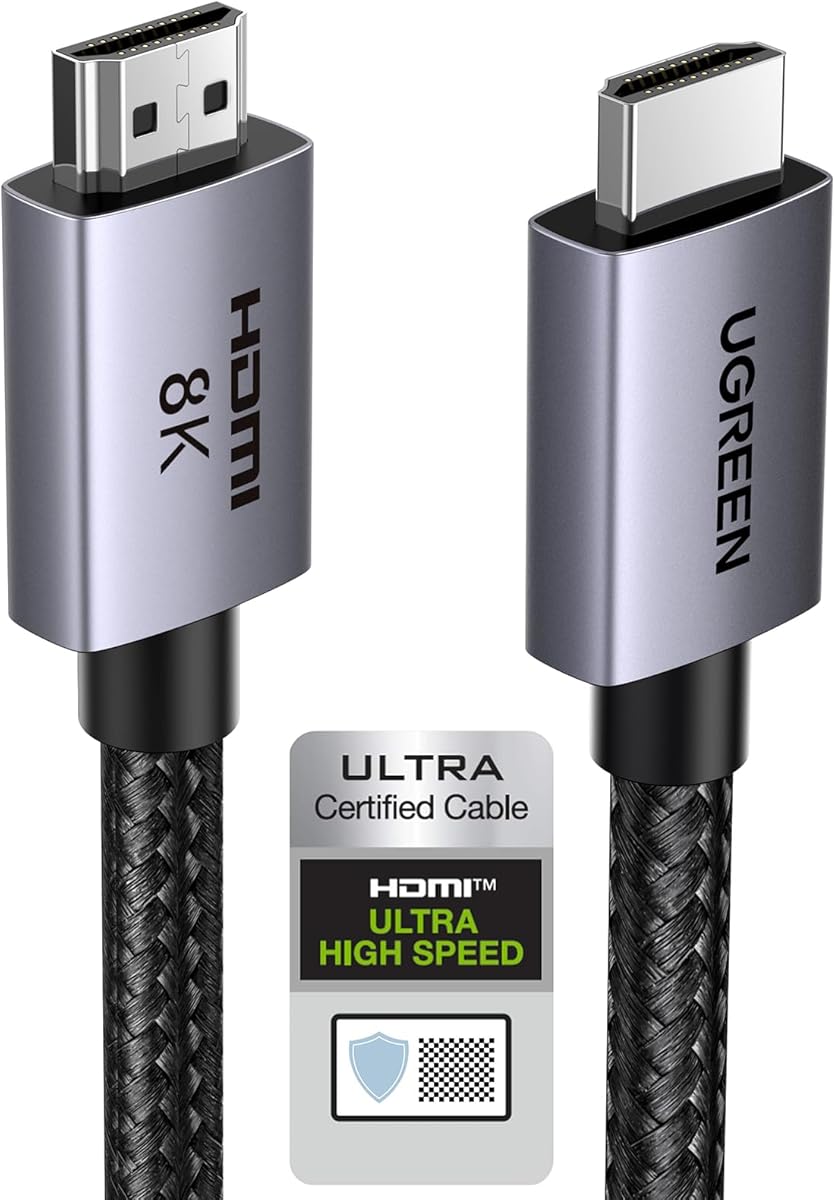
The UGREEN 8K HDMI 2.1 Cable combines a highly useful 16-foot length with certified 48Gbps performance and explicit eARC support for Dolby Atmos. Its 4.8 rating places it among the strongest-rated products in the group. The extended run solves a common problem for wall-mounted televisions, projectors, and entertainment furniture positioned away from each other.
We may earn a commission when you buy through this link, at no additional cost to you.
Video specifications are ambitious, covering 8K at 60Hz and 4K at 240Hz, with support stated for variable refresh rates, quick frame transport, auto low latency mode, and quick media switching. For an Atmos-focused buyer, the key feature is its ability to deliver full-resolution Dolby Atmos and DTS:X from a television to a soundbar or AV receiver through eARC.
Durability comes from an aluminum-alloy connector shell, nickel-plated contacts, and a nylon-braided jacket. The broad compatibility list includes current game consoles, streaming devices, projectors, soundbars, AV receivers, and several television brands. As always, the advertised maximum modes depend on the source, display, audio device, firmware, and selected input settings.
This is our best budget pick for readers who need cable length as much as they need high bandwidth. It is particularly attractive when the television and soundbar are separated by furniture, a wall, or a longer media-console run. Choose it for flexible placement and Atmos-capable eARC, then configure the television and audio device to enable the highest shared audio format.
The 16-foot length provides practical reach between wall-mounted televisions, projectors, and entertainment centers. It is easier to route than an active or unusually specialized cable while retaining the bandwidth needed for modern video.
The cable explicitly supports eARC delivery of Dolby Atmos and DTS:X from a television to a soundbar or receiver. This makes it a stronger fit for Atmos-focused buyers than a cable whose listing mentions only basic HDMI compatibility.
We may earn a commission when you buy through this link, at no additional cost to you.
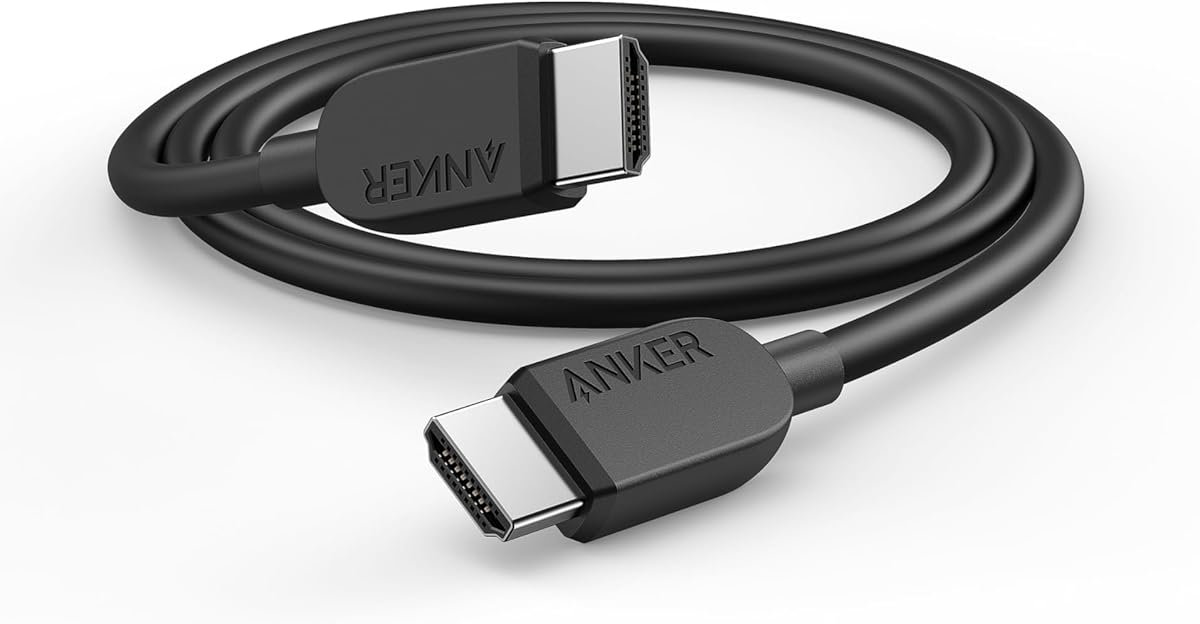
The Anker HDMI 2.1 Cable is a straightforward choice for compact entertainment and gaming installations that benefit from 48Gbps bandwidth. It carries a 4.7 rating and supports 8K at 60Hz, 4K at 120Hz, and the other video modes offered by current HDMI 2.1 equipment. The six-foot cable is easier to conceal behind a television or gaming desk.
We may earn a commission when you buy through this link, at no additional cost to you.
Its primary strength is versatility. Tablets, laptops, projectors, desktop screens, and other HDMI devices can all use the cable, while the certified Ultra High Speed design provides useful bandwidth for modern consoles and high-resolution displays. The package includes a welcome guide and an 18-month warranty.
The supplied description says the cable is designed to withstand up to 1,000 bends. That is a useful durability claim, though some competing listings advertise higher bend-test figures. More importantly for Atmos buyers, the details do not explicitly identify eARC or Dolby Atmos. Buyers who require a guaranteed Atmos-return path should not rely on generic HDMI 2.1 labeling alone.
This cable works well for direct television-to-console, television-to-monitor, or laptop-to-display connections where high-refresh video is the goal. It may also carry audio to compatible soundbars, but the exact audio format must be enabled by the television and soundbar. Choose it when a short, certified cable is all your setup requires.
At six feet, the cable fits neatly between nearby gaming components. Its shorter run also reduces the visual clutter created by excess cable behind wall-mounted displays.
Support for 4K at 120Hz and 48Gbps bandwidth gives compatible gaming hardware room to operate at demanding display modes. Actual refresh-rate availability still depends on the console, game, television, and graphics hardware.
We may earn a commission when you buy through this link, at no additional cost to you.
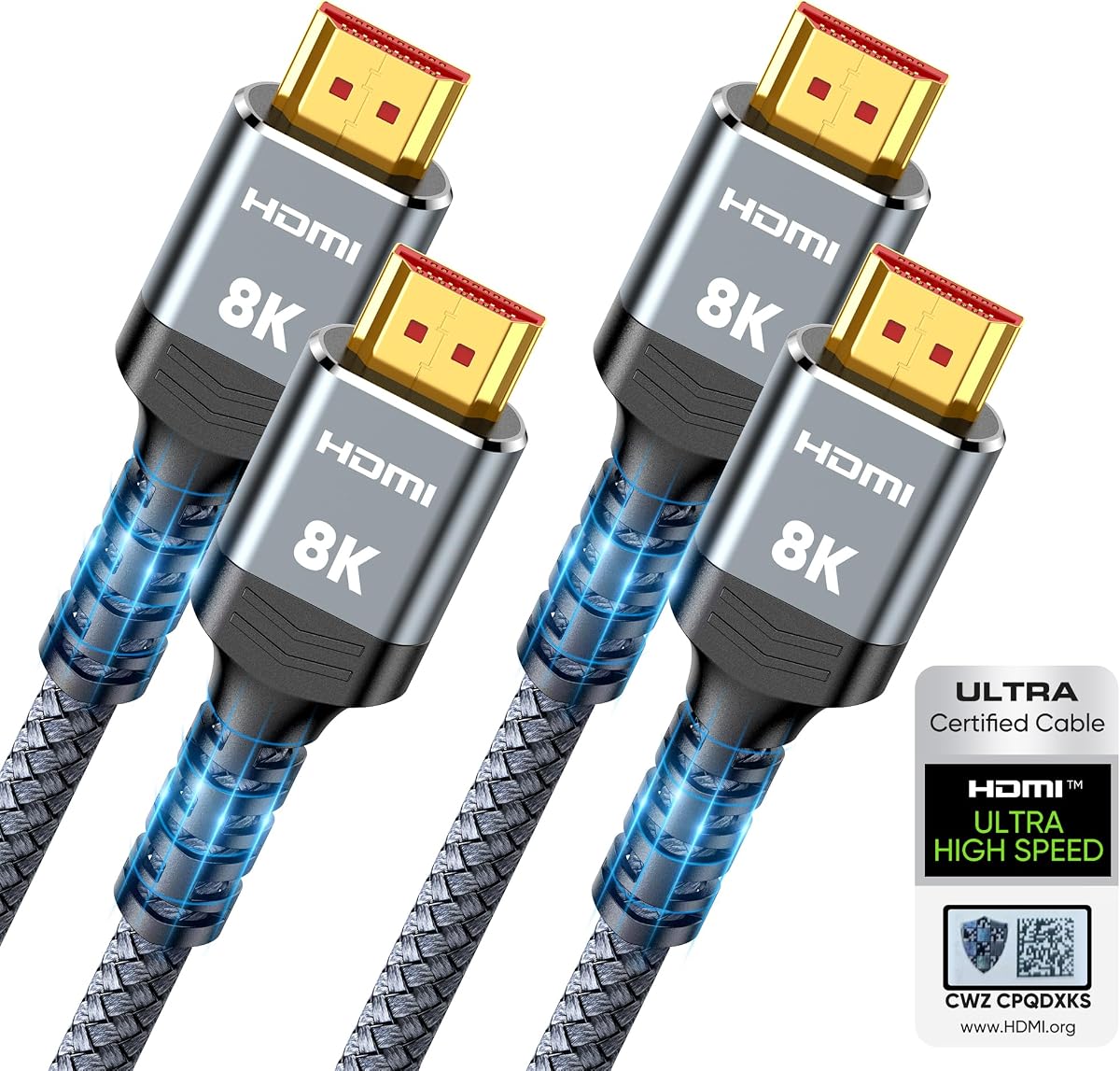
The Highwings 8K HDMI 2.1 Cable 2-Pack is a practical choice when a home entertainment system needs more than one modern connection. The package includes two 6.6-foot cables, each with a 48Gbps bandwidth rating and support for 8K at 60Hz, 4K at 240Hz, 4K at 120Hz, and stated 10K compatibility.
We may earn a commission when you buy through this link, at no additional cost to you.
Each cable uses an aluminum-alloy connector shell, an anti-bending tail, and military-grade tensile nylon. The listing also mentions variable refresh rate for gaming. Together, these features make the pair useful for one game console and one media device, or for keeping a spare high-bandwidth connection nearby.
The key limitation for this particular roundup is that Dolby Atmos and eARC are not explicitly included in the supplied details. Although the cable may carry compatible audio, buyers whose primary goal is Atmos should check the product's full specifications and confirm that the television, soundbar, and selected cable configuration all support the intended return-audio path.
Choose this two-pack when you value having matching cables for several devices rather than one specialized premium cable. It is well suited to gaming-focused rooms and entertainment centers with multiple source components. For a dedicated television-to-soundbar Atmos installation, a model with explicit eARC and Dolby Atmos wording may reduce uncertainty.
Two equal-length cables simplify connections for a console, streaming device, receiver, and display. A spare also makes troubleshooting or temporary rearrangement easier without needing another cable.
The stated 4K refresh-rate support and variable refresh rate compatibility target modern gaming systems. These modes require capable source devices and displays, so check both ends of the connection.
We may earn a commission when you buy through this link, at no additional cost to you.
The Zeskit Certified 2.1 8K HDMI Cable is a feature-rich option for buyers who want one cable to cover Atmos audio, high-resolution video, and contemporary gaming standards. It has a 4.7 rating, certified Ultra High Speed status, and 48Gbps bandwidth. Its supplied specifications explicitly list Dolby Atmos, eARC, Dolby Vision, and dynamic HDR.
We may earn a commission when you buy through this link, at no additional cost to you.
The connection can support 8K at 60Hz, 4K at 120Hz, and stated 10K resolution. Gaming-oriented features include variable refresh rate, automatic low latency mode, quick frame transport, and quick media switching. The cable is also backward compatible with earlier HDMI versions, which helps when connecting mixed-generation equipment.
Its most useful feature for this guide is the explicit inclusion of Dolby Atmos alongside eARC. That makes it a strong candidate for a television-to-soundbar or television-to-receiver installation, provided the connected hardware supports the corresponding audio features and the correct format is selected. The cable cannot create Atmos support in equipment that lacks it.
Choose the Zeskit Maya cable when you want a compact, certified HDMI 2.1 connection with broad modern-feature coverage. It is especially appealing to gamers who also want soundbar audio, although the generous feature set may be more than a basic 4K television setup can actually display.
Explicit support for Dolby Atmos and eARC makes this a reassuring choice for soundbar-centered systems. The same connection can also carry the high-resolution video modes demanded by current consoles and displays.
Compatibility with earlier HDMI devices means the cable can remain useful when components are upgraded unevenly. It is a future-oriented cable that does not lock out an older Blu-ray player or television.
We may earn a commission when you buy through this link, at no additional cost to you.
The Silkland HDMI 2.1 eARC/ARC Cable is a compact choice for a soundbar or receiver sitting immediately beneath a television. Its 3.3-foot length avoids excess slack, while the 48Gbps bandwidth and explicit Dolby Atmos support make it more relevant to this guide than a basic 4K cable.
We may earn a commission when you buy through this link, at no additional cost to you.
The supplied description highlights HDMI 2.1 certification that can be checked through a QR-code scanner. It supports 8K at 60Hz, 5K at 120Hz and 90Hz, 4K at 144Hz and 120Hz, and 2K at 240Hz and 165Hz. Dolby Vision, Dynamic HDR, HDCP 2.2 and 2.3, and backward compatibility broaden its usefulness.
Its double-layer fishet winding, nylon braiding, copper cores, and ferrite magnetic beads are intended to protect signal integrity and reduce black screens or flickering. The short run also makes strain relief easier because the connector does not have to bridge a large gap. Nevertheless, it should not be sharply folded or pulled sideways.
This cable is best for a tightly organized entertainment center where the soundbar sits close to the television. Choose it when you want explicit Atmos and eARC support without the visual and logistical burden of a long cable. For a wall-mounted display with a separate cabinet, a longer model will usually be more convenient.
The 3.3-foot run is sized for soundbars and receivers positioned close to a television or monitor. It simplifies cable management and avoids the loop of excess cable behind compact stands.
The listing provides a QR-code method for checking HDMI 2.1 certification. That can help buyers verify the cable's claimed status rather than relying solely on marketplace terminology.
We may earn a commission when you buy through this link, at no additional cost to you.
The Highwings 16K 4K 480Hz HDMI 2.2 cable is the premium option in this guide for buyers who want maximum stated bandwidth and explicit Atmos support through eARC. Its 96Gbps specification is twice that of the HDMI 2.1 cables here, and it is presented as support for 8K at 240Hz, 4K at 480Hz, 12K at 120Hz, and potential 16K use.
We may earn a commission when you buy through this link, at no additional cost to you.
For the more immediate home theater, the notable features are Dolby Atmos through enhanced audio return, Dolby Vision, Dynamic HDR, variable refresh rate, and automatic low latency mode. The built-in Ethernet channel can carry network connectivity between compatible devices, potentially reducing the need for an additional network cable in a suitably equipped setup.
Construction details include a double-braided nylon jacket, 24K gold-plated connectors, and advanced aluminum-foil shielding for electromagnetic and radio-frequency interference. These features reinforce the premium positioning, although advanced video modes still require compatible source equipment, displays, firmware, and content. A cable cannot independently produce 8K, 240Hz, or 16K output.
Choose this model when your primary goal is Dolby Atmos over eARC and you want a connection that exceeds current 4K requirements. It is a compelling premium choice for a new home theater or gaming system where long-term capability matters. If your existing equipment only needs 4K at 60Hz, an HDMI 2.1 cable may deliver the same practical result with less complexity.
The stated 96Gbps bandwidth provides considerable headroom beyond current mainstream video modes. That makes this cable appropriate for a system expected to evolve across several generations of displays and source hardware.
Enhanced audio return supports uncompressed Dolby Atmos from a television to a soundbar. The Ethernet channel offers additional connectivity where compatible devices allow it, helping streamline a carefully planned installation.
We may earn a commission when you buy through this link, at no additional cost to you.
The Acer HDMI 2.1 Cable is a direct, approachable option for readers who want explicit Dolby Atmos and eARC support without moving into the newest HDMI 2.2 category. It has a 4.7 rating, 48Gbps bandwidth, and a 6.6-foot braided design suited to most entertainment-center layouts.
We may earn a commission when you buy through this link, at no additional cost to you.
The supplied details highlight 8K at 60Hz and 4K at 240Hz, 120Hz, and 144Hz, along with backward support for 4K at 60Hz, 2K, and 1080p. Variable refresh rate is included for compatible gaming setups. Dolby Vision and Dolby Atmos support make it relevant to a mixed television, soundbar, and console installation.
High-purity copper cores, aluminum-alloy connector shells, and a braided jacket are intended to resist interference, bending, and everyday wear. The compatibility list covers PlayStation, Xbox, Roku, Fire TV, Apple TV, PCs, projectors, soundbars, and several television brands, making it a flexible everyday cable.
Choose this model for a conventional living-room setup that combines Atmos sound with modern gaming and high-resolution television viewing. The 48Gbps specification offers more capability than most current displays can use, providing useful flexibility. Just ensure that the television's eARC output and soundbar input are enabled and that Dolby Atmos is selected as the audio format.
The cable pairs current HDMI 2.1 bandwidth with explicit Dolby Atmos and eARC support. That makes it an accessible choice for users who want the key features without paying attention to speculative next-generation video modes.
Backward compatibility and support for many source categories make the cable useful in a mixed household of older and newer devices. It can remain in service as components are upgraded over time.
We may earn a commission when you buy through this link, at no additional cost to you.
The Highwings 16K 8K HDMI 2.2 cable is a forward-looking choice for a new home theater, advanced gaming room, or installation intended to last through multiple hardware cycles. It has a 4.6 rating and a stated 96Gbps bandwidth, supporting 16K at 60Hz, 8K at 120Hz, and 4K at 240Hz.
We may earn a commission when you buy through this link, at no additional cost to you.
Its audio credentials are unusually relevant for Atmos buyers. The supplied description identifies eARC++, Dolby Atmos, DTS:X, HDR10+, and Dynamic HDR, while variable refresh rate and automatic low latency mode serve gaming. As with other advanced cables, each feature depends on the connected equipment and its own support for the corresponding standard.
A double-braided nylon jacket, 24K gold-plated connectors, and multilayer aluminum-foil shielding form a robust construction. The stated Ethernet channel can help reduce network-clutter requirements in compatible installations. The cable's 6.6-foot length fits many furniture arrangements without being difficult to route.
This model suits an enthusiast who wants maximum bandwidth now and expects future display upgrades. It may be unnecessary for a 4K television and basic soundbar, but it offers a clear technical path for 8K and higher-resolution ecosystems. For Atmos specifically, verify eARC++ compatibility across the television and soundbar before installation.
Supporting 16K at 60Hz and 8K at 120Hz gives the cable relevance beyond today's most common 4K installations. The extra bandwidth can accommodate more advanced displays and processing chains as they become available.
The stated eARC++ capability is designed to transmit uncompressed Dolby Atmos from a television to a soundbar over one connection. Device compatibility remains essential, since enhanced return features vary by television and audio product.
We may earn a commission when you buy through this link, at no additional cost to you.
The right cable must satisfy both your audio-return route and the video demands of your display, source components, and gaming hardware. Consider bandwidth, eARC, certification, length, construction, and compatibility before making a selection.
Summary: Choose an explicitly eARC-capable cable for a dedicated Atmos soundbar setup, and verify both endpoints support eARC.
Summary: A 48Gbps cable is enough for most modern systems; consider 96Gbps when future maximum video performance is the priority.
Summary: Confirm both cable-level Atmos support and compatible source, television, and soundbar or receiver hardware.
Summary: Measure the full path and select the shortest length that reaches without tight bends or excess visible cable.
Summary: Prefer an independently certified cable when high-bandwidth gaming, 4K HDR, or future video modes are important.
Summary: Favor braided jackets, reinforced shells, and strain relief, then handle the cable gently to preserve its long-term reliability.
Summary: Prioritize the modes your source and display share, not the largest resolution printed on the cable box.
Summary: Verify ports, formats, firmware, and feature requirements across the entire device chain before buying.
Begin by identifying the correct path through your system. For a typical soundbar setup, connect the source device to the television, then connect the television's eARC-compatible output to the soundbar's eARC input. For an AV receiver arrangement, connect the source to the receiver and the receiver to the television. Use the specified HDMI input and enable enhanced audio return or the appropriate soundbar audio setting.
After connecting the cable, configure the television to output the best audio format supported by both the source and soundbar. Select Dolby Atmos when it is available, remove incompatible restrictions, and confirm that the television recognizes the soundbar as an audio-return device. If Atmos is unavailable, verify the source mix, the television's audio output, the soundbar mode, HDCP requirements, and the relevant firmware before changing cables.
To preserve signal integrity, route the cable away from power cables and sources of interference, avoid tight bends at the connectors, and do not place furniture on the cable. Disconnect it by gripping the connector rather than pulling the jacket. If a link becomes unstable, reseat both ends and test another input before assuming the cable is faulty.
No. An HDMI 2.1 cable may carry compatible audio, but Dolby Atmos also depends on the source content, television, soundbar or receiver, selected HDMI port, and audio settings. For a dedicated soundbar setup, choose a cable that explicitly identifies Dolby Atmos and eARC support, then verify that the connected devices support the same features.
Usually not for a typical Atmos home theater. A certified 48Gbps HDMI 2.1 cable with eARC support is sufficient for mainstream 4K, high-refresh gaming, and current object-based audio use. HDMI 2.2 becomes more relevant when you want maximum bandwidth for advanced future display modes or other high-bandwidth device features.
A three- to four-foot cable is usually convenient when the soundbar sits directly beneath a television. A six-foot cable provides more flexibility around entertainment furniture, while a 16-foot option can reach a remote cabinet or projector. Measure the complete route and avoid selecting a length that requires a sharp connector bend.
No. A cable can only transmit the signals supported by the source and receiving devices. If the television, soundbar, receiver, or source cannot decode Dolby Atmos, changing to a more advanced HDMI cable will not add that capability. Compatibility and configuration remain more important than raw bandwidth alone.
Use eARC when both the television and soundbar support it, particularly for the best chance of passing high-bitrate formats such as Dolby Atmos and DTS:X. ARC is more widely supported but offers less bandwidth. In either case, the correct cable, port, and audio setting must be used.
Several cables in this guide list 48Gbps bandwidth and 4K at 240Hz support, but the active mode still depends on the source and display. The graphics card, console, television or monitor, firmware, and game or video source must all support the same resolution and refresh rate.
Check that the soundbar is connected to the television's eARC-labeled output, that eARC or enhanced audio return is enabled, and that the television is configured to output the soundbar audio. Also confirm that the source provides an Atmos mix, the soundbar supports the format, and both devices have suitable firmware. A compatible cable is necessary, but it cannot resolve every configuration problem by itself.
Test the suspected cable with a known-compatible source and display, and try the same setup with another certified cable. Reseat both connectors, remove tight bends, and select a different input before troubleshooting further. If the replacement works, retire the older cable and avoid using it in high-bandwidth or Atmos-return connections.
The Anker HDMI 2.1 Cable is the most balanced overall recommendation, combining certified 48Gbps bandwidth, strong construction, and broad modern-device compatibility. The UGREEN 16-foot model stands out for flexible placement and explicit Dolby Atmos over eARC, while the Highwings HDMI 2.2 cable offers maximum bandwidth and a premium feature set for future-oriented installations.
For most soundbar buyers, prioritize explicit eARC and Dolby Atmos support over headline refresh rates. Match the cable length to the furniture layout, verify HDCP and audio compatibility across every device, and select the highest video mode that the source and display actually share. A certified cable with manageable routing is generally more valuable than an over-specified one that is awkward to install.
Finally, check the current product details, availability, device requirements, and pricing before ordering. HDMI standards and compatible hardware continue to evolve, and a soundbar's firmware or television settings can affect which features appear. Confirming the complete connection path is the best way to avoid surprises after installation.
