
Tomee 16MB Memory Card
4.7Editor score
16MB standard capacity
251 memory blocks
GameCube save compatibility
Simple save management
Our GameCube Memory Card guide compares ten options for capacity, storage banks, console compatibility, ease of use, and reliable game save storage today.
A GameCube memory card is the bridge between a completed level, unlocked character, or high score and the console that created it. Choosing the right card means balancing storage capacity, block organization, console compatibility, and dependable save handling across GameCube systems and the original Wii.
This guide compares ten memory cards and adapters using the information supplied for each product. It considers capacities from 16MB to 1024MB, selectable storage areas, GameCube and Wii RVL-001 compatibility, third-party construction, and the practical differences between dedicated cards and microSD-based alternatives.
Each review explains the most useful qualities and limitations of its featured product, while the comparison table makes the key specifications easier to scan. Product ratings and availability can change, and prices vary over time, so check the current listing before making a final purchase.
4.7Editor score

4.8Editor score
4.7Editor score
The table below compares all ten products by capacity, block configuration, console support, and card type, making it easier to identify the right option for your GameCube or original Wii setup.


The Mcbazel 1024MB card combines substantial storage with eight separately selectable areas and a 4.7 rating. Its defining advantage is the reported total of 16,344 non-compressed blocks, divided among eight 128MB sections. That makes it a strong fit for players who want room for many GameCube saves or several independent collections on one card.
We may earn a commission when you buy through this link, at no additional cost to you.
The eight-section arrangement gives the card more organizational flexibility than a standard single-area model. A button on the front moves between areas, and indicator lights show the active section. Because the console reads one area at a time, users should understand that the full advertised capacity is not displayed as one continuous save space on screen. Instead, each section serves as an organized library for different games, collections, or profiles.
Compatibility is specified for GameCube consoles and original Wii models numbered RVL001. The product is a third-party accessory rather than an official Nintendo item. It should therefore be purchased primarily for its expanded capacity and multiple-area design, not for first-party status or design authenticity. Users should also note that GameCube disc saves and internal Wii saves are different storage systems.
This is the recommendation for collectors, completionists, and players who regularly use numerous physical GameCube games. Its large capacity reduces the likelihood of running out of space, while eight areas make it easier to separate save files. For anyone who only needs one or two games and wants the simplest possible solution, a smaller standard-capacity card may be more appropriate.
Each 128MB area can hold 2,043 blocks, while the button and indicator lights help identify the currently active section. This makes it practical to dedicate different areas to different game series or save profiles.
The card's stated 16,344 blocks are non-compressed, avoiding ambiguity between raw storage and a compressed alternative. Buyers can compare that figure directly with the capacity of other dedicated memory cards.
We may earn a commission when you buy through this link, at no additional cost to you.
The Tolesum 512MB card offers a balanced middle ground between compact 16MB cards and very large 1024MB models. Its 4.5 rating reflects a product designed around four 128MB areas, a total of 8,192 uncompressed blocks, and support for GameCube consoles and the original Wii RVL-001.
We may earn a commission when you buy through this link, at no additional cost to you.
Four storage areas provide enough room for a larger save collection without requiring an eight-section card. The front button changes the active area, allowing players to separate games or maintain different save sets with less switching than a card divided into only two banks. Its plug-and-play design also keeps the process approachable for anyone who primarily wants to insert a card and continue playing.
The main limitation is that this remains a third-party product. Another consideration is the console's one-area-at-a-time behavior: the four sections do not appear as a single unified 512MB save list. That is normal for cards in this format, but it means users should select a bank deliberately before launching a game whose save they need to access.
Choose this card if 512MB is enough for your collection and you want four separately manageable sections. It is especially useful for players who want more breathing room than a standard card without moving all the way to a 1024MB model. The four-bank arrangement makes it easy to divide saves by game, player, or project.
Four 128MB sections provide a useful compromise between storage volume and bank management. The button-based selection process keeps changing save areas straightforward.
With 8,192 stated non-compressed blocks, the card offers substantially more room than a standard 251-block card. That headroom is valuable for players who retain saves across a broad game library.
We may earn a commission when you buy through this link, at no additional cost to you.
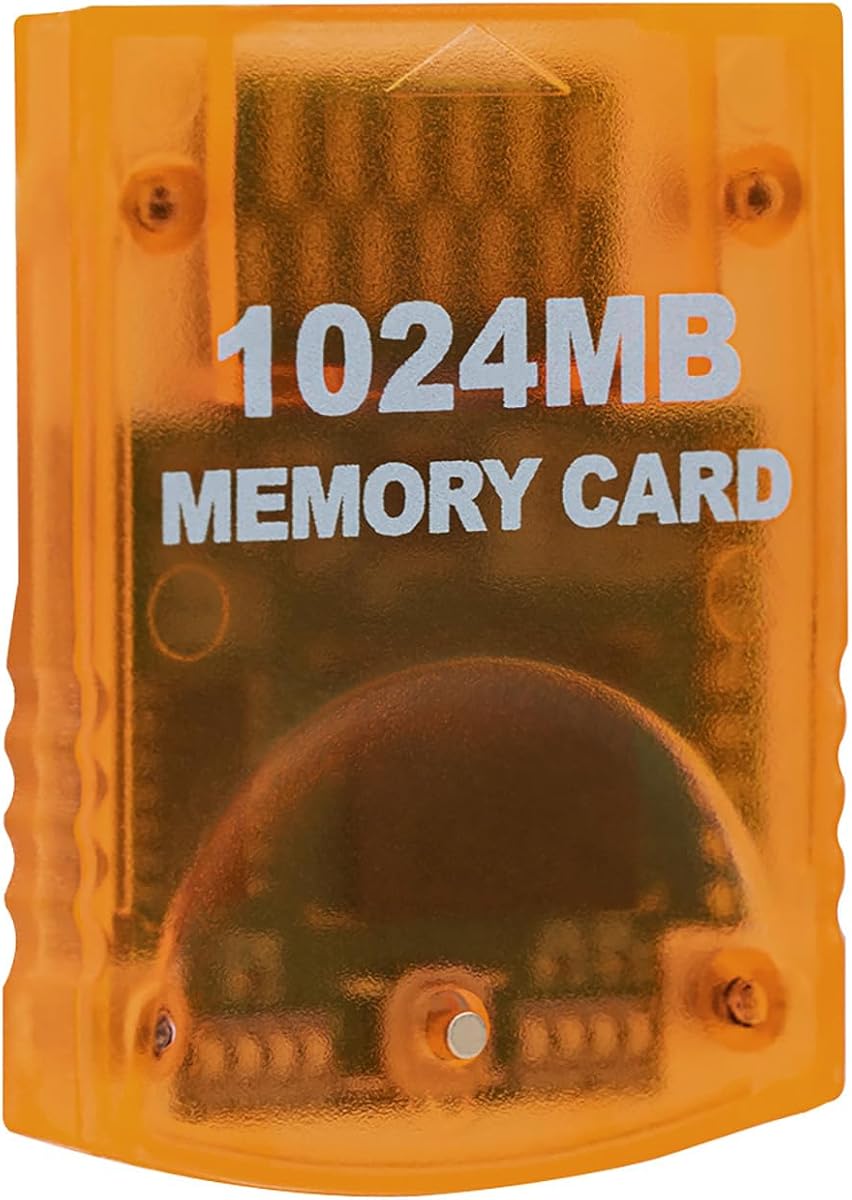
The Tolesum 1024MB card earns an Editor's Choice position because it combines the largest capacity in this guide with eight independent areas and a 4.7 rating. It holds 16,344 uncompressed blocks across eight 128MB sections, giving players ample storage while preserving a practical way to organize different save collections.
We may earn a commission when you buy through this link, at no additional cost to you.
The front button moves from one area to the next, and eight indicator lights identify the active selection. This design is especially useful for a large physical GameCube library because each section can become a dedicated bank for particular titles, players, or categories. The supplied details emphasize that only the selected area appears to the console, which helps set realistic expectations about how the storage is presented.
Compatibility covers GameCube consoles and the original Wii with model number RVL-001. Family Edition and Mini Wii models do not include the required memory card slot, while the successor console is outside this product family. The card is made by a third party, so buyers should not expect an official Nintendo accessory. Safe removal also matters because pulling a card out while the console is running can put save data at risk.
This is an excellent recommendation for dedicated collectors who want maximum space without managing several physical cards. It is also appealing to players who want clearly separated save banks and can remember which area contains each game. Those wanting a simpler setup may find a 16MB card more than sufficient for a limited collection.
Eight 2,043-block sections make it possible to group save files logically. The physical button and indicator lights help ensure that the intended area is active before starting a game.
Checking the model number before ordering prevents a simple compatibility mistake. The card is intended for GameCube systems and launch-style original Wii models with RVL-001, not later Wii hardware without a card slot.
We may earn a commission when you buy through this link, at no additional cost to you.
This black 16MB card offers 251 blocks and a 4.6 rating, bringing the familiar standard capacity to a third-party card for GameCube and the original Wii. Its appeal lies in a simple, familiar format rather than large capacities or multiple selectable areas, making it a sensible option for a limited set of games.
We may earn a commission when you buy through this link, at no additional cost to you.
The product is designed as a plug-and-play replacement that fits a GameCube or RVL-001 Wii memory card slot. The supplied description emphasizes rapid data transfer, a shock-resistant build, and a streamlined profile intended to avoid the loose fit associated with some generic alternatives. Those features focus on everyday reliability and a clean connection rather than elaborate storage organization.
The central trade-off is capacity. A 251-block card can become crowded when preserving saves from many titles, and it cannot offer the separation advantages of 256MB, 512MB, or 1024MB products. Compatibility is also narrower than the word 'Wii' sometimes suggests: only the RVL-001 model is listed, so checking the console is essential before ordering.
Buy this card if you play a small number of GameCube games, need a straightforward replacement, or prefer a standard-capacity option that does not require bank switching. It is less suitable for collectors who expect to retain every save from a broad library, but it covers the conventional use case efficiently.
The 16MB and 251-block layout follows the conventional memory card structure. That familiarity makes it easy to understand and removes the need to manage multiple active sections.
The card's streamlined profile is intended to sit securely in the console slot. A snug connection can be reassuring for players who regularly use physical GameCube discs.
We may earn a commission when you buy through this link, at no additional cost to you.
The Tomee 16MB card is a conventional GameCube memory card with 251 blocks, a 4.7 rating, and a straightforward feature set. It is designed for players who want a familiar standard-capacity solution for storing levels, characters, top scores, and other GameCube save data.
We may earn a commission when you buy through this link, at no additional cost to you.
Its core functions cover the complete basic memory-card workflow: loading, saving, copying, and deleting files. Full compatibility with GameCube games that offer a save option makes it suitable for a focused collection of physical titles. Unlike larger multi-bank products, there are no areas to select or indicators to monitor, which reduces the amount of setup involved.
The limitation is storage headroom. A 251-block card offers considerably less room than the 512MB and 1024MB options in this guide, so a player with numerous saved games may eventually need to delete data or use another card. It is also a dedicated save card rather than a device for loading games from microSD storage.
This is a strong budget recommendation for anyone playing a manageable number of GameCube games or seeking a simple replacement card. Choose it when reliability, straightforward operation, and adequate capacity matter more than extensive collection storage. Players preserving a larger library should consider a banked card instead.
The card supports the normal operations needed to maintain a GameCube save library. Its lack of selectable banks makes the experience easy to understand from the outset.
At 16MB and 251 blocks, the card matches the classic standard capacity. That makes it practical for many focused game collections, although not for unlimited save retention.
We may earn a commission when you buy through this link, at no additional cost to you.
The Mcbazel 256MB Pink card provides two 128MB sections and carries a 4.7 rating. It occupies a useful middle ground: considerably more storage than a standard 16MB card, but a simpler two-bank arrangement than options offering four or eight areas.
We may earn a commission when you buy through this link, at no additional cost to you.
A front button switches between the independent banks, while individual LEDs indicate the active section. This gives players a practical way to separate saves without carrying multiple cards. The product is also described as high-speed, with quick saves and efficient management of game data, and it supports plug-and-play use in GameCube consoles and original Wii RVL-001 systems.
Two banks can require more frequent switching than a card with four or eight areas, particularly for a large library. Its compatibility also does not extend to the Wii U, which is understandable because that console does not use the GameCube memory card format. As with every product in the dedicated-card category, the console should be powered off during insertion or removal.
This card is a good choice for players who want more room than the classic 16MB format but prefer an uncomplicated setup. It works particularly well for two distinct save collections, such as separate game groups or player profiles. The pink shell also gives it a distinctive appearance compared with the more conventional black or blue alternatives.
Two independent 128MB sections provide a simple way to divide a save library. Button switching and individual LEDs make the active bank easy to identify.
The product is positioned around high-speed saves, fast loads, and efficient data management. That focus suits players who want a responsive card without an extensive bank system.
We may earn a commission when you buy through this link, at no additional cost to you.
The 251-block GameCube memory card provides 16MB of flash memory and has a 4.7 rating. It follows the classic single-area format, storing games and settings in the standard 251-block capacity associated with early GameCube and original Wii memory cards.
We may earn a commission when you buy through this link, at no additional cost to you.
Its strongest advantage is simplicity. There is no bank button, no multi-area indicator, and no need to understand compressed versus non-compressed configurations. For someone restoring a basic setup or replacing an aging card for a small game collection, that direct design is refreshingly uncomplicated.
Capacity is the deciding constraint. The same 251-block limitation that defines the standard format also means the card cannot comfortably retain an expanding collection of saves. It also lacks the organizational features of 256MB and larger products, which split storage into multiple selectable sections. A separate microSD adapter would serve a different purpose because it is intended primarily for loading games through compatible software.
Pick this card for a focused retro-gaming setup that needs basic save storage and values a compact, uncomplicated accessory. It is less appealing to a collector preserving dozens or hundreds of games with separate save files. In that situation, a multi-area card provides more flexibility and room to grow.
The 16MB flash format provides the traditional 251 blocks expected from a standard GameCube memory card. It is best suited to basic save storage rather than large libraries.
With one storage area and no switching controls, the card keeps the experience direct. Players can insert it and use the normal console save interface.
We may earn a commission when you buy through this link, at no additional cost to you.
The Suncala 1024MB card combines eight storage sections with a stated 16,344-block capacity and a 4.7 rating. It targets collectors who want a high amount of GameCube save storage and value a more polished presentation, including an updated chip and newly designed packaging.
We may earn a commission when you buy through this link, at no additional cost to you.
The product description states that its upgraded innovation chip processes and saves games 20% faster than older versions. It does not explain the exact test conditions behind that comparison, so the claim is best treated as a manufacturer feature rather than an independently verified result. The eight-section storage system remains the more concrete advantage, providing room to divide games into separate banks.
Compatibility is listed for GameCube consoles and the original Wii model RVL-001. As a third-party card, it is not an official Nintendo product, and it cannot overcome the lack of a memory card slot in later Wii models. A five-year warranty is also listed, adding a form of support that may be useful to buyers, although the details of that policy should be confirmed through the current listing.
This is a strong choice for a broad physical GameCube library and players who want both large capacity and bank separation. It is particularly attractive if you appreciate the updated packaging and the stated processing improvements. As always with high-capacity cards, the selected storage section is the one visible to the console, so keep track of which bank contains each game.
Eight switchable sections make it easier to organize a large save library. The card's physical switch provides direct control over the active area.
The listed chip and fresh package distinguish this model from basic cards. Buyers may also appreciate the stated 60-month warranty when reviewing the seller's current terms.
We may earn a commission when you buy through this link, at no additional cost to you.
The MAYFLASH 512MB card receives the highest rating in this selection at 4.8. Its four storage areas, 8,172 total blocks, and plug-and-play design create a convincing overall balance for GameCube players and original Wii RVL001 owners who want meaningful capacity without the complexity of an eight-bank card.
We may earn a commission when you buy through this link, at no additional cost to you.
Four storage areas each receive 2,043 blocks. A button on the card switches between them, allowing separate collections for different games or profiles. This arrangement is easier to manage than eight very small sections while still providing more organization than a standard single-area card. The 512MB figure also offers enough headroom for a substantial library of physical GameCube titles.
The card is a third-party product and supports GameCube consoles plus original Wii models identified as RVL001. It does not apply to later Wii models without a memory card slot. As with other high-capacity cards, one selected area appears to the console at a time, so users should choose the correct bank before launching a game and avoid removing the card while the system is active.
This is the strongest all-around recommendation for most buyers in the market. The capacity is substantial, the four-area layout is intuitive, and the 4.8 rating is the highest listed among the ten products. Choose it for an extensive GameCube collection, regular use of physical discs, and a desire to organize saves into a few clearly managed banks.
Four banks provide a practical middle ground between a standard card and an eight-section model. Users can divide games into distinct collections without switching through numerous tiny areas.
Its 4.8 rating is the strongest numerical rating in the guide. Combined with 8,172 blocks and broad GameCube compatibility, it makes a persuasive case as the general-purpose selection.
We may earn a commission when you buy through this link, at no additional cost to you.
The AreMe GC2SD is a microSD adapter rather than a conventional GameCube memory card, and it carries a 4.4 rating. It is intended primarily for storing and loading games, making it a different solution for players who want access to a larger digital collection than a standard memory card can provide.
We may earn a commission when you buy through this link, at no additional cost to you.
The adapter can run on any version of GameCube or Wii console, according to the supplied information. It uses a microSD card, supports media up to 512GB, and is described as plug-and-play for accessing the card's game list. It automatically loads that list when used with Swiss, Xeno, GCLoader Lite, or pcioboot, so one of these compatible loading environments is required.
It should not be confused with a device that stores GameCube save files in the same way as a dedicated memory card. The adapter's main purpose is game storage and loading, and its usefulness depends on compatible software and the contents of the inserted microSD card. You must also provide the microSD media; it is not included as part of the adapter.
Choose the GC2SD if your priority is a flexible, high-capacity game-loading setup across GameCube and Wii hardware. It is not the natural choice for someone who only needs a reliable way to preserve ordinary console save data. For that purpose, a dedicated card with 16MB, 256MB, 512MB, or 1024MB of storage remains more direct.
A microSD card can hold far more game files than a conventional memory card. The adapter makes that storage accessible to compatible GameCube and Wii loading software.
The adapter needs Swiss, Xeno, GCLoader Lite, or pcioboot to access its game list. Check that your console setup supports one of these options before buying.
We may earn a commission when you buy through this link, at no additional cost to you.
The right GameCube memory card depends on console model, save volume, organizational habits, and whether you need a dedicated save device or a microSD-based game-loading adapter. These factors help narrow the field before you buy.
Most dedicated cards in this guide support GameCube consoles and only the original Wii model RVL-001. The original Wii's top memory card slot is essential, while the Family Edition, Wii Mini, and Wii U do not use the same card format. Always check the model number printed on the underside of the console before ordering, especially if the listing mentions both GameCube and Wii.
A standard 16MB card contains 251 blocks and may be sufficient for a limited collection. Larger options divide storage into 256MB, 512MB, or 1024MB cards, with two, four, or eight areas respectively. More capacity can reduce the need to delete old saves, but it does not mean every area appears simultaneously, so a larger card should still be paired with a sensible organization plan.
Multi-area cards divide their total capacity into independent sections selected with a front button. Indicator lights generally show which section is active. Two banks are easy to maintain, four provide a useful middle ground, and eight suit collectors who like separating every category. Because the console reads one area at a time, note which area contains each game before switching.
Block count provides a more specific view of usable storage. Standard cards are commonly associated with 251 blocks, while the larger products in this guide list totals ranging from 8,172 to 16,344 blocks. Some descriptions specifically identify their blocks as non-compressed, which is valuable information when comparing products that use similarly large capacity figures.
A dedicated memory card stores and manages GameCube save data in the console's native card slot. A GC2SD adapter uses microSD media and compatible loader software to access a game list. The adapter is not a like-for-like substitute for a normal save card, so consider what you need: preservation of save files, convenient access to a digital game collection, or both through separate solutions.
Cards marketed as plug-and-play generally require no elaborate setup beyond selecting a bank where applicable. GC2SD users need compatible software such as Swiss, Xeno, GCLoader Lite, or pcioboot, plus a microSD card. For every product, power the console fully down before inserting or removing the card or adapter to reduce the risk of interrupting a save operation.
A streamlined card that fits securely can help avoid movement inside the console slot. Some listings emphasize high-speed operation or shock resistance, while others offer distinctive colors or redesigned packaging. These characteristics can influence usability and enjoyment, although capacity, compatibility, and correct installation remain more important to the core job of retaining save data.
Third-party cards are the norm for the larger capacities discussed here, so warranty coverage, packaging, and seller information can add confidence. Some listings mention customer support or extended warranty periods, but buyers should review the current terms on the product page. The same care applies to standard cards: a familiar brand and established format can be reassuring without eliminating the need to verify specifications.
Before inserting a card, check the console model and identify the correct memory card slot. Power the GameCube or original Wii completely off, remove any disc if necessary, and insert the card straight into the slot without forcing it. On a multi-area card, use the front button to select the intended area and confirm that the matching indicator light is active.
Launch a GameCube disc that supports saving and use the console's normal save function. Keep the card inserted while the game is writing data, and do not switch banks or remove the card during that process. When moving a save to another area, use the normal copy or save-management functions supplied by the game rather than moving the physical card while the console is active.
To remove the card, shut the console down fully and wait before pulling it from the slot. Handle it by its edges, keep it away from moisture and extreme heat, and store it in a protective case. For the GC2SD adapter, use compatible loading software, eject or power down safely, and keep the microSD card properly formatted and populated with the files your selected loader expects.
Only original Wii models with a memory card slot are supported by the dedicated cards in this guide, specifically the RVL-001 model. Later Wii variants do not accept standard GameCube memory cards. Check the model number on the underside of the console before ordering, and note that even compatible hardware may store different games in separate internal or SD-based save systems.
No. Multi-area cards divide the advertised total into independent sections, and the console displays only the currently selected area. A 1024MB card with eight areas may provide eight 128MB sections rather than one continuous 1024MB save list. This is normal for the format, so organize the areas by game and confirm the active indicator before saving.
Not necessarily. Compressed capacity can make two cards with similar printed totals behave differently, and some descriptions specifically emphasize real uncompressed blocks. The products listing 8,172 or 16,344 uncompressed blocks provide a clear figure for comparison. Check the detailed product description rather than relying only on the large capacity printed on the shell.
A compatible card can physically fit an original RVL-001 Wii, but that does not mean it stores every Wii title's save data. The listed card is primarily for saves written by GameCube discs, including discs played on the original Wii. Other Wii titles may use internal console memory or an SD card, which is a separate system.
Yes. The AreMe GC2SD is an adapter that uses a microSD card rather than a built-in 16MB, 256MB, 512MB, or 1024MB save-card format. The supplied information says it supports microSD media up to 512GB. The card must also be used with Swiss, Xeno, GCLoader Lite, or pcioboot for the game list to load automatically.
Capacity alone does not make a card better. The dedicated products in this guide range from 16MB to 1024MB, and the console format works with block-based storage. A 16MB card may be perfectly adequate for a small collection, while a multi-area 512MB or 1024MB model is more useful for extensive save libraries. Compatibility and storage organization should guide the choice.
The card can fit both a GameCube and an original RVL-001 Wii, and it can store saves for GameCube discs played on either system. It does not automatically store every Wii game's progress because many Wii titles use internal memory or an SD card. Treat the memory card as a GameCube-disc save device with original Wii hardware compatibility.
Power the console down completely before removing the card. Do not pull it out while a game is saving or while the console is running, because interrupting the process can put save data at risk. Hold the card by its edges, avoid moisture and impact, and keep it in a protective case when it is not installed in the console.
The MAYFLASH 512MB card is the strongest general-purpose option, combining the highest listed rating, 8,172 blocks, and four manageable storage areas. The Tomee 16MB card is a straightforward budget choice for a small collection, while the Mcbazel 1024MB card provides the greatest capacity and eight separate banks for players who want maximum room.
Prioritize console compatibility first, then choose a capacity that matches the number of games you want to preserve. Multi-area cards are worth considering when organization matters, but buyers should remember that only the active area is shown. If the goal is loading a digital game collection instead of storing ordinary save data, the AreMe GC2SD is a different and software-dependent solution.
Ratings, availability, seller policies, and prices can change, so review the current product listing before purchasing. Confirm the console model, understand how many storage areas the card contains, and follow the safe power-off procedure whenever inserting or removing the accessory. With those checks completed, the right card can keep classic GameCube progress organized and readily available.