
Granicell Size 312 Batteries
4.7Editor score
Quadruple leak-resistant seal
Two portable twenty-count boxes
Elongated senior-friendly brown tabs
Discover the best 312 hearing aid batteries, comparing capacity, tabs, packaging, shelf life, and fit to help you choose a reliable option with confidence.
Size 312 hearing aid batteries power a wide range of digital and analog devices, but the best choice depends on more than the label. Battery construction, tab design, leak protection, storage life, and packaging can all influence convenience, reliability, and the overall hearing-aid experience.
This guide compares ten products from Duracell, Rayovac, Powermax, Implany, Granicell, and Amazon Basics. The evaluation focuses on supplied specifications, including voltage, capacity, chemistry, shelf life, tab length, child-resistant packaging, and compatibility with common size 312 devices.
Each section explains the product's standout qualities and practical trade-offs, helping regular users, caregivers, and hearing professionals identify a suitable battery. Product ratings reflect the supplied data, while prices and availability can change, so readers should confirm current details before purchasing.
4.7Editor score
4.7Editor score
4.0Editor score
The comparison below places all ten size 312 zinc-air battery options side by side, emphasizing pack quantity, capacity, handling features, leak protection, and stated storage life.


The Duracell Activair Size 312 package contains 80 brown-tab hearing aid batteries and has a supplied rating of 4.3. It is a practical choice for regular users, households supporting multiple hearing-aid users, and professionals who need a substantial supply without replenishing it frequently.
We may earn a commission when you buy through this link, at no additional cost to you.
Its defining benefit is the combination of quantity and practical handling. The EasyTab is designed for easier opening and installation, while the compact packaging is intended to protect the batteries during storage. The cells use zinc-air chemistry and provide a nominal 1.45 volts, matching the operating expectations of many size 312 hearing aids.
The main trade-off is package size. Eighty batteries are ideal for frequent use but may be excessive for someone who changes a cell only occasionally. The product information also refers to protected packaging, and users unfamiliar with child-resistant battery packaging may need to open it carefully rather than pulling a battery directly from the pack.
This is an excellent general-purpose option for someone who values a familiar brand, a large quantity, and a long tab. It is less compelling for occasional users, but for regular wearers, the supply and handling features justify considering it near the top of the list.
With 80 batteries in each package, this product reduces the frequency of reordering for users who change batteries regularly. It is also suitable for caregivers who keep replacement cells in several locations or for clinics serving a sizeable number of hearing-aid users.
The extended pull tab is intended to make the battery easier to grip and remove from its packaging. This can be particularly useful for users with limited dexterity or anyone who performs battery changes without the benefit of a small tool.
We may earn a commission when you buy through this link, at no additional cost to you.
This 32-count Duracell Size 312 package has a supplied rating of 4.6, giving it one of the strongest customer-feedback profiles in the group. It offers a more compact format than the 80-count Activair package while retaining the familiar brown color coding and long-tab installation system.
We may earn a commission when you buy through this link, at no additional cost to you.
The extra-long EasyTab is central to the product's design. Duracell states that these batteries are certified by the Arthritis Foundation's Ease of Use program, which focuses on making everyday packaging tasks easier. The batteries are also guaranteed for four years in storage, adding useful flexibility for people who want to keep backup cells on hand.
Its smaller count is the obvious limitation. Someone who changes batteries daily or manages two devices will use 32 cells more quickly than a user who changes one cell every few weeks. Nevertheless, the compact package is easy to store and can reduce the temptation to keep unnecessary loose batteries around the home.
Choose this product when handling convenience and a smaller pack matter more than maximum quantity. Its high supplied rating, easy-grip tab, and four-year storage guarantee make it a strong all-rounder for individual users and caregivers.
The extra-long tab and stated Arthritis Foundation Ease of Use certification distinguish this package for users who may find short tabs difficult to manipulate. A longer grip surface can also help when fine motor control is limited.
The four-year storage guarantee means buyers can maintain a modest backup without concern that recently purchased cells will lose their usefulness in a short period. Keeping one sealed package in a dry location provides a convenient reserve.
We may earn a commission when you buy through this link, at no additional cost to you.
Powermax offers a 60-count pack of size 312 brown-tab hearing aid batteries with a supplied rating of 4.0. It is a solid mid-list option for people who want a generous supply, a long handling tab, and zinc-air performance without paying for the largest package in the comparison.
We may earn a commission when you buy through this link, at no additional cost to you.
The batteries are described as compatible with a wide range of hearing-aid brands and designed to support extended daily use. Zinc-air technology is intended to deliver clear sound through the battery's usable life, while the long brown tab helps with removal. The cells contain no cadmium or mercury according to the supplied product information.
Powermax explicitly notes that its improved packaging may be more challenging to open because it follows Reese's Law, which added warnings and child-safety requirements for products containing small parts. That safety-oriented change is understandable, but it can be inconvenient for buyers accustomed to older packaging.
This pack is best for regular users who value quantity, travel readiness, and a long tab more than elaborate packaging. Users who struggle with child-resistant packs may prefer the scissor-free Implany option or another format that explicitly focuses on easier access.
Sixty batteries offer a middle ground between compact 16- and 32-count options and the largest 80-cell packages. They can provide a useful reserve for a single user or a smaller group of hearing-aid wearers.
The packaging follows the requirements described in Reese's Law and includes warnings about choking hazards and other small-parts risks. Buyers should expect to take extra care when opening it, particularly around children and pets.
We may earn a commission when you buy through this link, at no additional cost to you.
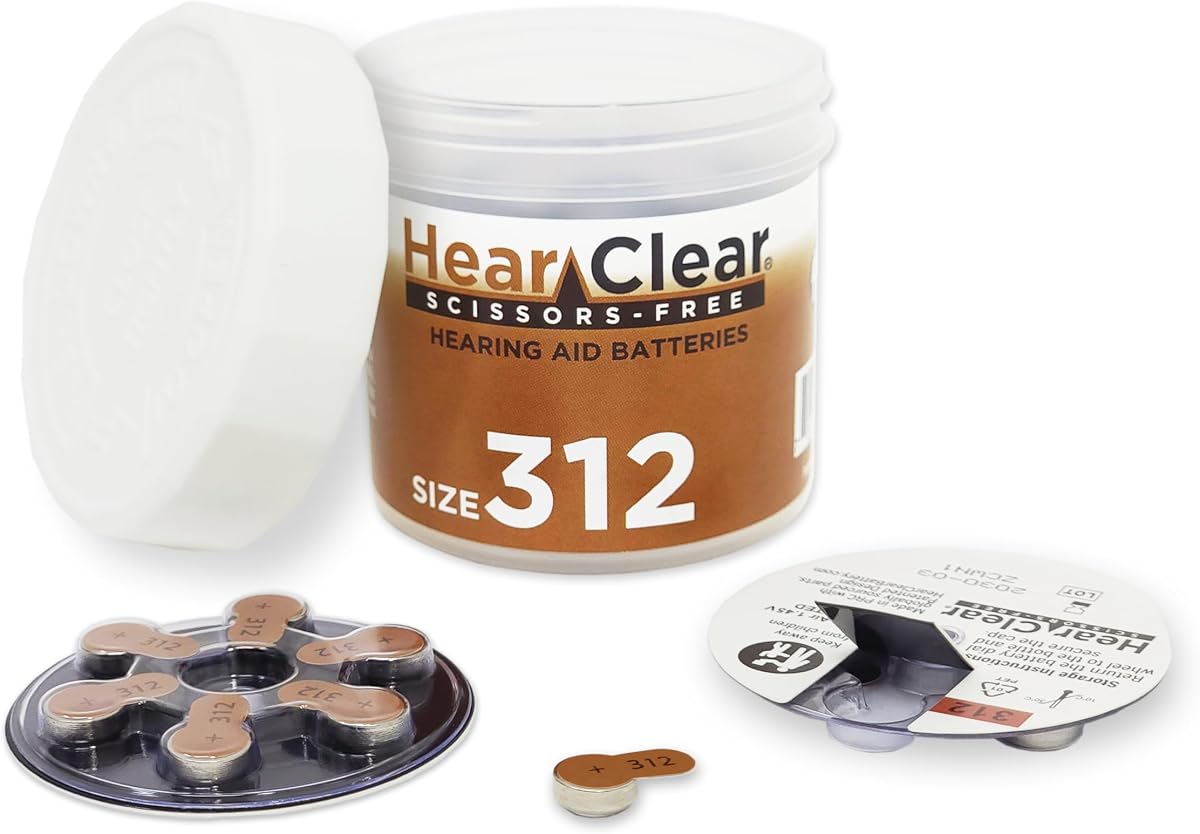
Implany's 60-pack has a supplied rating of 4.7, tying for the highest rating in this comparison. Its most distinctive feature is the scissor-free, child-resistant bottle: once the cap has been opened, batteries are accessible without cutting the outer packaging with scissors.
We may earn a commission when you buy through this link, at no additional cost to you.
The listed capacity is 160 mAh, and the product states a four-year shelf life. A patented air-cathode design is intended to improve efficiency as discharge power increases, with particular attention to digital hearing aids, wireless streaming, and Bluetooth applications. These features position it well for modern, power-hungry devices.
Construction details also emphasize protection. A double nickel-plated coating provides anti-rust performance, while the patented air-cathode design is intended to support clearer tones, less distortion, and steadier voltage. The child-resistant bottle improves post-opening access, although it remains a safety cap that must be opened properly and kept away from children.
This is a particularly strong recommendation for users who want convenient access without scissors, especially if they also use streaming features. It is also attractive to professional users who replace batteries frequently and want a bottle format that keeps unused cells protected.
Unlike blister-style packs that require cutting, this bottle allows individual batteries to be removed after the child-resistant cap is opened. That can simplify daily changes while still keeping unused cells in a protective container.
The stated air-cathode technology targets digital, streaming, and Bluetooth use cases. Its 160 mAh capacity and high-drain performance claims make it a credible option for users whose hearing aids place heavy demands on each cell.
We may earn a commission when you buy through this link, at no additional cost to you.
The Rayovac Extra Advanced 312 contains 80 batteries and carries a supplied rating of 4.4. It combines a large quantity with a mercury-free formula and a design intended to support advanced hearing-aid functions such as streaming video, audio, and phone calls.
We may earn a commission when you buy through this link, at no additional cost to you.
Rayovac states that the new design directs energy where it is needed and prolongs battery life, aiming to support a consistent listening experience. This makes the product relevant to users with digital devices that use connectivity and streaming, where energy demands can be greater than in basic hearing-aid operation.
The packaging is child resistant and requires scissors to open. Instructions specifically advise sitting down, using a table, and carefully cutting the pack to access the batteries. This is less convenient than a scissor-free bottle, but it keeps unused cells protected until the user is ready to remove them.
This package is a sensible choice for advanced-device users and regular wearers who want an 80-cell supply. Buyers who prioritize effortless opening may prefer the Implany bottle, while those comfortable with a traditional blister pack will appreciate the balance of quantity and specialized feature support.
The product information specifically identifies streaming video, audio, and phone calls as intended use cases. That makes this option more relevant to users whose devices handle frequent wireless communication than a basic replacement cell would be.
The child-resistant blister package helps preserve unused batteries until each one is needed. Although opening requires scissors, the design reduces loose-cell handling and is suitable for households that want a sizable reserve.
We may earn a commission when you buy through this link, at no additional cost to you.
The Granicell Size 312 package includes 40 batteries arranged as two boxes of 20 and has a supplied rating of 4.7. It is one of the strongest-rated products here and stands out for its portable two-box format, quadruple seal, and compatibility with digital and analog devices that use size 312, 312A, or PR41 cells.
We may earn a commission when you buy through this link, at no additional cost to you.
Its zinc-air cells are specified at 1.45 volts and described as maintaining stable output throughout their lifespan. The four-layer barrier and anti-corrosion casing are intended to resist leaks and moisture, helping protect hearing aids from the kind of battery-acid damage that can occur when a cell fails inside a device.
The separate boxes offer a practical storage advantage: one can remain at home while another is carried in a pocket, purse, or travel bag. The elongated brown tab is designed to simplify peeling and installation, making it approachable for seniors and users with arthritis.
Granicell is a strong choice when portability, sealing, and easy handling are priorities. The 40-cell count may not suit heavy users as well as an 80-cell package, but the dual-box organization makes this one of the most versatile options for everyday reserve and travel.
The two independent twenty-count boxes let users split their supply without handling loose cells. One package can remain in a protected storage area while the other serves as a portable replacement kit.
The stated quadruple seal and anti-corrosion casing create multiple barriers against leakage and moisture. For an expensive device, this added protection is a meaningful consideration when evaluating otherwise similar zinc-air batteries.
We may earn a commission when you buy through this link, at no additional cost to you.
The Rayovac Advanced Size 312 listing is organized as a pack of seven eight-count sets, with the product information identifying 56 batteries in total. Its supplied rating is 4.5, and the most notable feature is the reclosable door that helps with both removal and storage.
We may earn a commission when you buy through this link, at no additional cost to you.
Instead of requiring a buyer to carry one large pack, the set separates the batteries into smaller groups. This can be useful for keeping a spare in multiple locations, sharing among family members, or supplying a professional who distributes batteries to several hearing-aid users.
Rayovac also highlights long, wide tabs designed to make the batteries easier to use and store. The four-year shelf life provides a reasonable window for maintaining backup supplies. The mercury-free formula is produced in the United States using domestic and global parts according to the supplied information.
The multi-pack organization is the main appeal. Buyers who want the largest possible battery count may prefer an 80-cell option, while anyone who values compact, resealable allotments will find this arrangement especially convenient.
Seven smaller packs can be placed in different rooms, carried in separate bags, or allocated to different users. This makes it easier to keep a replacement available without carrying a full-size battery carton everywhere.
The door helps users remove one cell at a time and then close the remaining batteries. That design can limit accidental exposure and makes the smaller eight-count packs convenient to place in a drawer, pocket, or travel case.
We may earn a commission when you buy through this link, at no additional cost to you.
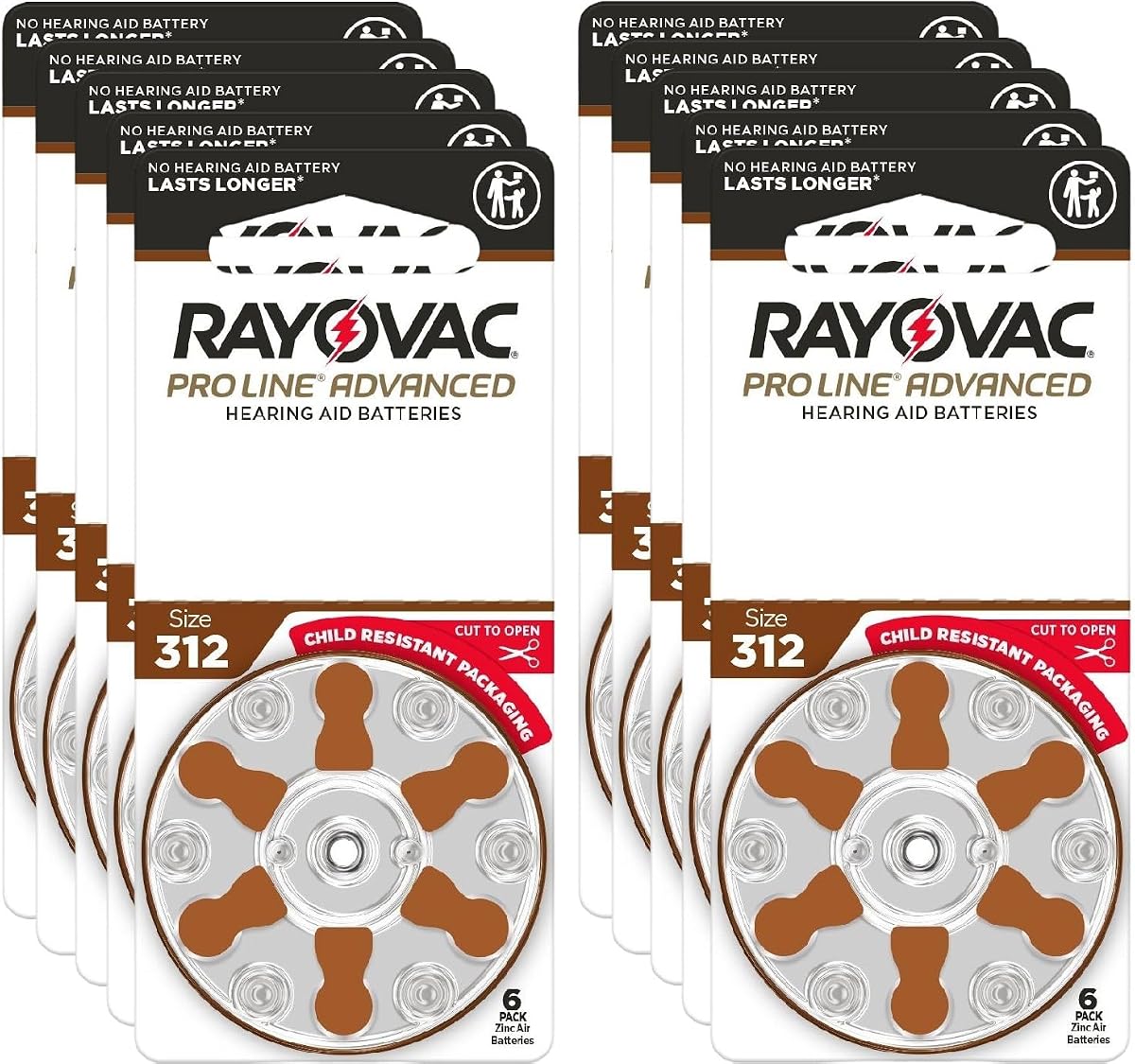
Rayovac Proline Advanced provides 60 size 312 cells with a supplied rating of 4.0. It distinguishes itself through unusually detailed technical specifications, including a 170–180 mAh capacity, 1.45-volt nominal voltage, a 7.9 mm diameter, and a 3.6 mm height.
We may earn a commission when you buy through this link, at no additional cost to you.
The zinc-air cells are mercury-free and use a refined alloy and electrolyte mixture intended to improve electronic consistency by 10% under fluctuating current demands. The product information highlights wireless streaming as a specific application, making it relevant for connected hearing aids that draw variable amounts of power.
A high-grade anti-corrosion seal is designed to prevent swelling or leaking and protect the hearing aid's internal components. The listing also provides common cross-references, including PR41, PR48, P312, ZA312, and Brown Tab 312, which can help buyers confirm compatibility before ordering.
This is a compelling premium-style option for users who prioritize documented capacity, exact dimensions, and power consistency. The supplied rating is lower than several alternatives, so the technical details and device requirements deserve careful attention, but it remains a well-specified choice for modern hearing-aid users.
Multiple cross-reference identifiers make it easier to match the battery to a compatible device. Exact diameter and height figures also help users confirm physical fit when the hearing-aid manufacturer does not clearly label the required battery.
The stated alloy and electrolyte mixture is designed to maintain consistency as current demand changes. That makes the product especially relevant to streaming devices, where variable power use can challenge ordinary hearing-aid cells.
We may earn a commission when you buy through this link, at no additional cost to you.
This Duracell Brown Size 312 package contains 16 batteries and has a supplied rating of 4.2. It is the smallest quantity among the three Duracell options and functions as a compact starter pack for someone who wants to try the brand without committing to a large supply.
We may earn a commission when you buy through this link, at no additional cost to you.
The extra-long EasyTab supports easier installation, and the brown color coding makes the size easier to distinguish from other hearing-aid battery types. Duracell also guarantees these batteries for four years in storage, allowing buyers to keep them as backup without concern about a short usable window.
The child-secure packaging is described as nearly impossible to open without scissors. This protects children but requires a tool during unpacking and battery changes. For heavy users, 16 cells may disappear quickly, and the need for regular reordering could become inconvenient.
This product works well for occasional users, travelers who want a small reserve, or anyone wanting a small first purchase. Users who change batteries frequently should compare the 32-, 60-, and 80-count alternatives, while users unable to use scissors may favor a bottle-style package.
Sixteen cells offer a manageable starting quantity for a wearer who changes batteries infrequently. The smaller package is also easy to place in a carry bag without adding unnecessary bulk.
Brown identifies the 312 size within Duracell's color-coded range. This simple visual cue can help prevent an accidental mismatch when several hearing-aid accessories or batteries are stored together.
We may earn a commission when you buy through this link, at no additional cost to you.
Amazon Basics offers a 60-pack of 1.45-volt size 312 hearing aid batteries with a supplied rating of 3.9. It covers the basic requirements of a zinc-air replacement cell while including a four-year shelf life, mercury-free formulation, and a child-resistant package.
We may earn a commission when you buy through this link, at no additional cost to you.
The brown tab makes the size identifiable, and zinc-air technology is described as delivering clear sound throughout the battery's usable life. A 60-cell quantity is versatile: it is large enough for regular use but not so large that the package becomes difficult to store.
The child-resistant design follows CPSC requirements and requires scissors to open, matching the precautions specified for other products in this category. Its supplied rating is the lowest among the ten options, so buyers with highly specific performance expectations may want to consider alternatives with stronger feedback or more detailed technical claims.
Amazon Basics is a practical choice for value-conscious buyers who want a standard 312 cell, a moderate quantity, and a four-year storage window. It may not be the most specialized streaming battery in the list, but it delivers the core features expected from a dependable hearing-aid replacement.
The 1.45-volt zinc-air format and brown tab provide the essential specifications expected from a size 312 battery. This straightforward configuration is appropriate for users who want a familiar replacement format without extra proprietary features.
The 60-cell quantity and four-year shelf life create a useful combination for regular users who want a moderate reserve. It is also a reasonable middle option between smaller trial packs and larger 80-cell supplies.
We may earn a commission when you buy through this link, at no additional cost to you.
Choosing a size 312 battery involves balancing device fit, handling, leak protection, power demands, and packaging. The following factors help narrow the field without overlooking a feature that may matter in daily use.
Hearing-aid batteries are color-coded, and size 312 batteries are generally identified by a brown tab. Before buying, check the battery compartment, hearing-aid manual, or the device manufacturer to confirm that it calls for size 312, 312A, or a listed equivalent such as PR41. A battery that looks similar in diameter may still differ in height or fit, so the printed model number remains the most reliable guide.
Always verify the specified size before ordering. Using a cell with the wrong dimensions can prevent the compartment from closing properly or make removal difficult.
Capacity indicates how much energy a battery can provide, and modern digital hearing aids with Bluetooth or streaming may demand more power than basic devices. The products in this guide list capacities ranging from 160 mAh to 170–180 mAh, while some do not provide a capacity figure. Higher stated capacity can be attractive for advanced features, but the most important factor remains compatibility with the hearing aid and consistent operation.
For advanced or frequently streaming devices, prioritize documented high-drain performance and stable output. For standard use, voltage, chemistry, and a proper fit are the essential baseline.
Most size 312 options use zinc-air chemistry, a standard choice for air-cell hearing-aid batteries. The listed nominal voltage is generally 1.45 volts, although one Powermax package describes its cells as 1.4 volts. These are closely related specifications, but following the hearing-aid manufacturer's battery guidance remains the safest approach.
Choose a zinc-air cell from a reputable range with a stated 1.45-volt specification when possible. Do not substitute rechargeable or other battery chemistries unless the hearing-aid manufacturer explicitly permits them.
Battery packaging has a larger effect on usability than many shoppers initially expect. Long, wide, or extra-long tabs can make the brown pull strip easier to grip, especially for seniors and people with arthritis. Some packs open with scissors, while the Implany option uses a scissor-free child-resistant bottle. The Rayovac Advanced set also provides a reclosable door, while Granicell divides its batteries into two portable boxes.
Choose the opening method that suits your dexterity and household environment. Longer tabs are helpful, but easy access after opening and the ability to reseal unused batteries are also important.
A hearing-aid battery leak can damage the device, and leakage is often associated with long storage, high heat, or mixed old and new cells. Granicell describes a four-layer seal and anti-corrosion casing, Implany lists a double nickel-plated coating, and Rayovac Proline advertises anti-corrosion protection. These features are especially attractive for users storing batteries in warm environments or carrying them frequently.
Protective construction is not a substitute for correct handling, but it adds a valuable margin against moisture and corrosion. Replace batteries promptly and avoid mixing fresh and used cells.
Most products in the group state a four-year shelf life or storage guarantee, which makes it practical to keep a reserve without constantly purchasing small quantities. Storage life begins from manufacture, however, and does not mean a cell will remain unused in an open package. Keep batteries sealed, dry, and away from extreme heat, and use the oldest cells first.
A moderate reserve is often ideal. Keep one sealed package accessible and another in a protected storage location, then rotate stock so batteries are not left unused for years.
Pack quantities range from 16 to 80 batteries. Larger packs reduce ordering frequency and are useful for two hearing aids, frequent changes, or professional use. Smaller packs lower the initial commitment and are easier to test, while two-box or multi-box formats provide convenient portability. Consider how often you change batteries, how many devices you power, and how much storage space you have.
Choose the smallest quantity that comfortably covers your usual replacement cycle. For daily wearers, a 40-, 56-, 60-, or 80-cell package is likely to be more practical than a small trial pack.
Some products explicitly target digital hearing aids, Bluetooth, wireless streaming, and other high-drain applications. These claims do not guarantee a particular listening time because battery life depends on the device, volume, program, connectivity, and individual use. They do, however, help distinguish batteries designed with more demanding equipment in mind from general-purpose replacements.
For connected hearing aids, look for stable output, high-drain performance, and capacity information. For straightforward hearing aids, prioritize fit, packaging, leak protection, and a reliable replacement schedule.
Begin by washing your hands and identifying a dry, well-lit workspace. Remove the old cell from the hearing aid as the manual directs, and place the used battery away from children and pets. Check that the replacement is the correct size 312 brown-tab battery and that its protective seal has not been damaged.
Remove the new battery from its package only when you are ready to install it. If it is a zinc-air cell, remove the tab and wait for the brief activation period indicated by the manufacturer. Avoid touching the exposed terminal, because oils and moisture from your fingers can interfere with the cell's electrical performance. Use the tab to place the battery in the correct polarity and close the compartment fully.
Store unused batteries in their original packaging, away from moisture, direct sunlight, and extreme heat. Rotate older stock first, do not mix batteries from different packages or age groups, and replace a cell promptly if you notice reduced amplification, distortion, or unstable volume. If a battery leaks, follow the hearing-aid manufacturer's cleaning guidance and keep the leaking cell away from children and pets.
A brown tab generally identifies a size 312 hearing aid battery, although color systems can vary slightly between brands. Size 312 is also commonly associated with PR41 and 312A references. Confirm the label in the hearing-aid battery compartment or consult the hearing-aid manual before installation, especially if the device is new or unmarked.
The products reviewed here are primary, non-rechargeable zinc-air cells. They are designed to be replaced after their usable service period rather than recharged. Using a rechargeable cell in a device that does not support it can cause charging or fit problems, so only use a battery specifically approved by the hearing-aid manufacturer.
Most products in this guide state a four-year shelf life or storage guarantee, but this period applies to properly stored batteries. Keep them sealed in their original packaging, away from heat, moisture, and direct sunlight. Storage life is not the same as the service life after a battery has been opened and installed.
The tab seals the air inlet of a zinc-air cell. Removing it allows oxygen to enter and activates the battery, but the activation may take a short time before output reaches normal levels. Follow the battery or hearing-aid instructions for the recommended wait, and avoid reapplying the tab to preserve the available charge.
Common signs include reduced amplification, a quieter sound, distorted speech, fluctuating volume, whistling, or intermittent operation. Because batteries can gradually decline rather than stop instantly, replacing a cell when these changes appear can prevent further disruption. Keep a spare package so a replacement is ready when needed.
Some packages require scissors because the child-resistant design is intended to prevent accidental exposure to loose batteries. The Implany product offers a different approach with a scissor-free child-resistant bottle, while the Rayovac Advanced option uses a reclosable door. Follow the package directions, open away from children and pets, and dispose of used batteries according to local guidance.
Leakage is possible, particularly with old batteries, improper storage, or cells exposed to heat and moisture. Products such as Granicell, Implany, and Rayovac Proline describe additional anti-corrosion or leak-resistant construction. Those protections reduce risk but do not eliminate it, so batteries should still be replaced on a regular schedule.
A higher stated capacity can be beneficial for devices with demanding streaming and Bluetooth functions because it provides more stored energy. Capacity alone does not determine compatibility or total listening time, however. Users should select the correct battery size and a product whose stated performance addresses their device's power demands.
The strongest overall choice in this guide is the Implany Size 312 pack because it combines a 4.7 supplied rating, 160 mAh capacity, a four-year shelf life, advanced drain performance, and scissor-free access. The Granicell option is the Best Budget choice with its 4.7 rating, dual portable boxes, and quadruple leak-resistant seal, while Rayovac Proline earns Best Premium recognition for its detailed 170–180 mAh specification and streaming-focused design.
For most users, the right choice comes down to daily handling. Prefer a long tab when dexterity is a concern, a resealable or portable box when you travel, and a larger count when you use two devices or change batteries frequently. Always confirm that the hearing aid requires size 312, and consider capacity, voltage, and power-management features when using Bluetooth or streaming.
Ratings, product availability, and prices can change over time, so check the current listing and manufacturer information before buying. Also verify the battery size against your device rather than relying only on color, and purchase from a seller that provides clear packaging, compatibility details, and secure handling instructions.