
Bingfu Garage Door Gate Opener Antenna
4.3Editor score
7dBi omnidirectional gain
Three-meter coaxial cable
Includes RP-SMA adapter
Discover the best 433MHz Antennas for gates, sensors, LoRa, and smart home systems, with expert comparisons of gain, connectors, range, and installation
433MHz antennas can make a substantial difference in weak, unreliable, or short-range wireless links. They are used with gate openers, garage remotes, security systems, LoRa devices, sensors, and smart-home equipment. The right antenna depends on connector type, gain, mounting method, operating environment, and the frequency band your device actually supports.
This guide compares ten antennas using the supplied product specifications, including operating frequency, gain, radiation pattern, impedance, VSWR, connector design, cable length, mounting style, and intended applications. It covers compact whip antennas, external 433MHz antennas with coaxial cables, and two-antenna kits for modules with U.FL or RP-SMA connections, without claiming that every product was personally tested.
The rankings show why each antenna may fit a particular setup, from direct SMA replacements to outdoor wall-mounted installations. The top three offer a balanced general-purpose antenna, a gate-opener-focused option, and a more substantial external antenna. Product ratings and availability can change, as can pricing, so compare the current listing details before making a purchase.
4.3Editor score

4.5Editor score

4.2Editor score
The comparison below organizes each antenna by its practical specifications, including gain, frequency coverage, connector configuration, and installation method. These details reveal which products suit compact electronics, direct device upgrades, or exterior gate and gate-opener installations.




This 433MHz antenna kit is the most flexible all-purpose option in the guide, earning a 4.5 rating from customers. It combines two compact 3dBi omnidirectional antennas with matching U.FL-to-SMA pigtails. That combination makes it especially useful when upgrading a module with a tiny onboard antenna or replacing an existing removable whip without committing to a large exterior installation.
We may earn a commission when you buy through this link, at no additional cost to you.
The strongest feature is its precise tuning for the 433.05–434.79MHz ISM band. A stated VSWR below 1.5 indicates an effort to maintain efficient signal transfer and minimize reflected power, while the gold-plated SMA male connector supports dependable contact and corrosion resistance. Each antenna is 11 centimeters long, making the set easier to position than a full-size outdoor antenna while still providing useful omnidirectional coverage.
The trade-off is that 3dBi is moderate gain rather than a dramatic range multiplier, and compact antennas work best with reasonably clear propagation paths. Building materials, vehicles, landscaping, and mounting position can matter as much as the antenna itself. The included 15-centimeter pigtails are useful for modules with U.FL connectors, though users should avoid sharply bending the coax and should position the antenna away from metal.
This is the strongest recommendation for general users, builders, and smart-home tinkerers who need one flexible kit for multiple Sub-GHz projects. It is particularly attractive when you own more than one 433MHz device, because the package contains two antennas and two pigtails for upgrades, replacements, or a two-node setup.
Rather than covering a very broad spectrum, the antenna is specified for the precise 433.05–434.79MHz ISM range. Focused tuning and a stated VSWR below 1.5 make it a sensible choice when consistent behavior matters more than maximum physical antenna size.
The included U.FL-to-SMA pigtails let users connect the antennas to compatible radio modules while the SMA male ends suit devices with removable external antennas. This makes the package practical for prototypes, replacements, and multi-device projects.
We may earn a commission when you buy through this link, at no additional cost to you.
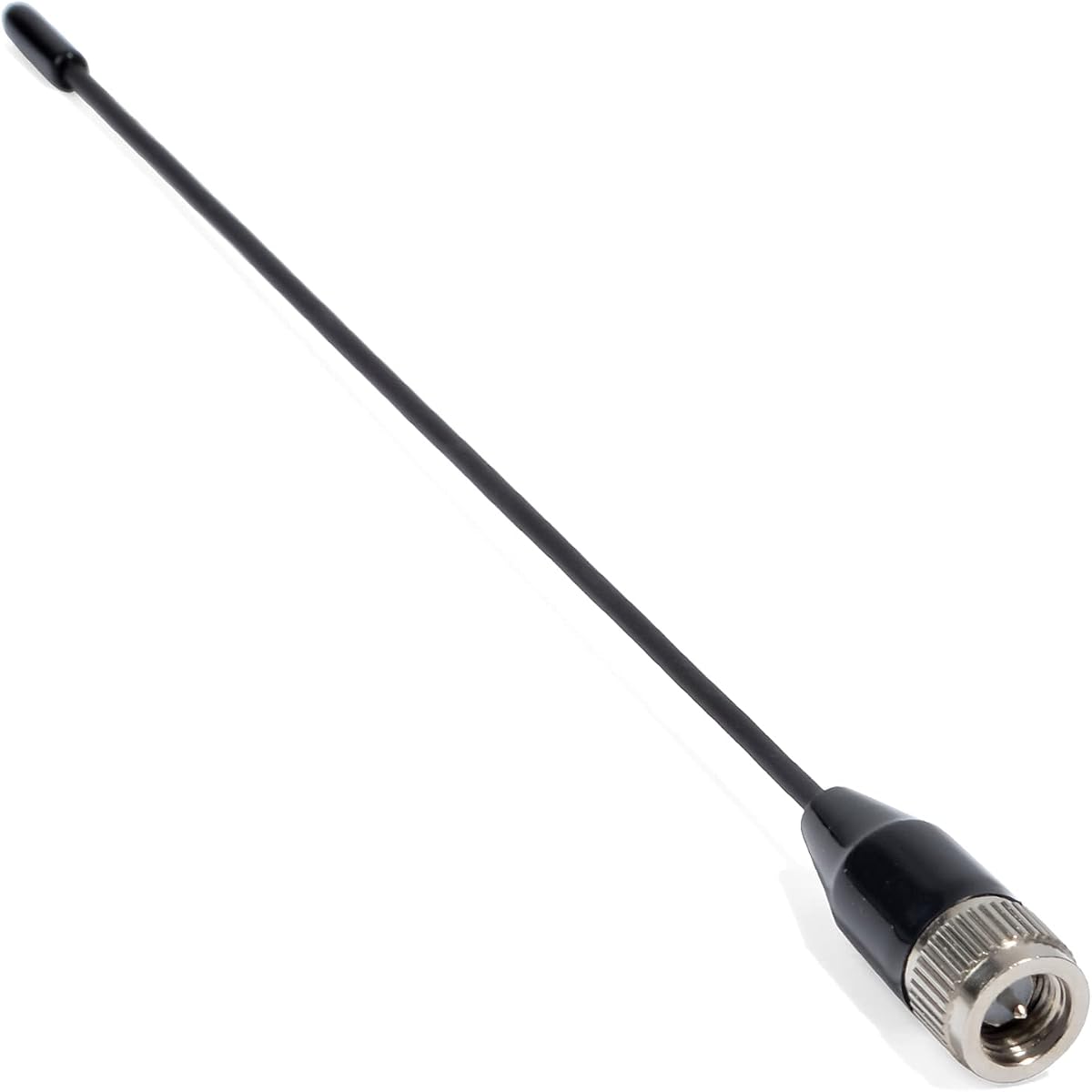
The Bingfu antenna is a focused solution for 433MHz garage and gate openers, with a customer rating of 4.3. Its stated 7dBi gain, three-meter cable, and included mounting hardware suit installations where the opener receiver is inside a structure or tucked behind a wall and the antenna needs to be moved outside.
We may earn a commission when you buy through this link, at no additional cost to you.
This product supports a range of commonly encountered openers, including specified GTO Mighty Mule, LiftMaster, Ghost Controls, Multicode, ALEKO, CO-Z, and TOPENS models. The SMA male connection offers plug-and-play installation for compatible systems, while an RP-SMA male adapter covers another common interface. For models using a tiny internal coax lead, the instructions call for removing that lead and soldering the included cable.
Its important limitation is that compatibility is not entirely plug-and-play across all listed brands. Users should confirm the receiver connector and original antenna wiring before installation, and they should be comfortable with basic soldering if the device requires it. The stated 7dBi figure should also be understood as a product specification rather than a guaranteed distance improvement in every environment.
Choose this antenna when the objective is to move a gate opener's 433MHz antenna outside, provide a longer cable run, or add directional clearance around walls. It is less suitable for someone seeking a tiny in-enclosure antenna, but for a gate receiver with a poorly positioned internal antenna, the additional mounting flexibility can be decisive.
The long RG58-style cable and bracket allow the antenna to be mounted in a clearer location while remaining connected to the opener. This arrangement can help when metal housings, masonry, vehicles, or multiple walls weaken a receiver's internal antenna.
Compatible systems may use SMA, RP-SMA, or a wired internal connection. The included adapter handles RP-SMA, but installations based on a thin factory wire may require desoldering and attaching the supplied coaxial cable.
We may earn a commission when you buy through this link, at no additional cost to you.
This UAYESOK external antenna is a detailed, installation-oriented option for 433MHz receivers and transmitters. It has a 4.4 rating and a broad stated operating range of 433–434MHz, along with 50-ohm impedance, VSWR below 1.5, vertical polarization, and a maximum input power of 20W. Those details make it appealing for users who want more than a simple replacement whip.
We may earn a commission when you buy through this link, at no additional cost to you.
The mechanical design is equally important. A three-meter RG58 coaxial cable provides enough separation between the radio and the antenna, while a stainless-steel bracket supports wall installation. Direct-ground lightning protection adds a layer of outdoor-oriented protection, and the antenna dimensions are listed as 390 or 397 millimeters depending on the configuration.
Although the product listing uses a 500-foot-plus distance claim, actual coverage depends on the paired transmitter, receiver sensitivity, terrain, obstructions, mounting height, and competing 433MHz traffic. Its stated 2.5dBi gain is modest, so buyers should focus on the long cable, clean placement, and proper 50-ohm connection rather than assuming the listed distance will always be achieved.
This antenna is a good fit for a wall-mounted gate receiver, weather station, remote-control system, or smart-home RF installation where the device sits far from the desired antenna position. It is also a sensible choice for experimenters who understand impedance, VSWR, and coax transmission. For a straightforward direct attachment with no cable relocation, a compact whip may be easier.
A three-meter cable allows the antenna to be moved to an exterior wall, above a receiver enclosure, or another clearer position. For fixed installations, placement can matter more than a small difference in nominal gain.
The stated 50-ohm impedance, VSWR below 1.5, vertical polarization, and 20-watt maximum input power give installers useful information for matching the antenna to compatible radio equipment.
We may earn a commission when you buy through this link, at no additional cost to you.
The larger UAYESOK external antenna is designed for 433MHz systems that need more physical presence and an elevated mounting position. It carries a 4.2 customer rating, uses a 3dBi omnidirectional configuration, and is specified for 50-ohm impedance and VSWR below 1.5. Its listed maximum input power is 50 watts, comfortably above what most remote-control and IoT devices require.
We may earn a commission when you buy through this link, at no additional cost to you.
The antenna measures approximately 195 millimeters in diameter by 325 millimeters long and connects through a three-meter cable. Stainless-steel reflector and bracket materials support outdoor use, while the specified operating range of minus 50 to 70 degrees Celsius makes it suitable for varied seasonal conditions. The listing also identifies direct-ground lightning protection as part of the design.
Its listing claims remote-distance improvement up to 1000 feet or more and a range increase to 400 meters or more, but those figures are best treated as potential rather than guaranteed performance. A 3dBi antenna cannot overcome every obstruction, and the result still depends on the radio's output power, receiver quality, antenna height, nearby interference, and whether the remote and receiver communicate with the same protocol.
This is a strong candidate for a fixed outdoor installation where the user can provide clear separation between the antenna and the receiver. It is less convenient for a portable setup or a small indoor project. Buyers should also make sure that the device accepts an SMA male antenna and that the three-meter cable can be routed without pinching or sharply bending the coax.
The reflector, bracket, and operating-temperature specification indicate a design aimed at fixed outdoor installations. Elevating the antenna can reduce interference from walls, gates, vehicles, and other conductive objects.
With a listed maximum input power of 50 watts and a stated VSWR below 1.5, the antenna provides ample electrical specification for the remote controls, gate systems, and IoT devices in its stated use category.
We may earn a commission when you buy through this link, at no additional cost to you.
This 3dBi antenna is a convenient choice for Raspberry Pi, HomeMatic, ELV-compatible, and other 433MHz radio projects that benefit from repositioning. It has a 4.2 rating, a magnetic base, an SMA male plug, and a three-meter RG174 cable. The included applications mention CCU3, CCU2, CCU1, Charly, Raspberry Pi with CC1101, and Fibaro Home Center 2 equipment.
We may earn a commission when you buy through this link, at no additional cost to you.
Its listed frequency coverage spans 410, 433, and 450MHz, making it relevant to several common Sub-GHz radio modules. The 50-ohm impedance and VSWR of 1.5 or lower support efficient operation within those bands. The magnetic base is especially useful for testing different locations without cutting, drilling, or permanently attaching an antenna.
RG174 is thinner and more flexible than heavier coax such as RG58, but that flexibility can come with more signal attenuation over a long run. A three-meter cable may still be perfectly practical for an indoor Raspberry Pi installation, yet users should keep it as short as the placement allows and avoid tight bends. The magnetic mount also needs a suitable metal surface and can shift if disturbed.
This antenna best suits developers, smart-home enthusiasts, and technicians who need to experiment with placement. It is less attractive for a permanent gate-opener installation that requires a rugged bracket or minimal cable loss. Confirm that the radio board uses a conventional SMA female port and that the desired frequency is covered by the antenna.
The magnetic base makes it simple to move the antenna between a metal cabinet, appliance, or other ferrous surface. That flexibility is useful when finding a location with less interference.
The product's listed support for Raspberry Pi, CC1101, ELV, and Fibaro-related components gives it broad appeal among home-automation and telemetry builders. Interface and frequency compatibility should still be verified before installation.
We may earn a commission when you buy through this link, at no additional cost to you.
The 22cm two-pack is a simple set of directly attached 433MHz omnidirectional antennas with SMA male connectors. It is marketed for replacing damaged or missing standard antennas on routers, wireless cards, gate openers, and access points. The package includes two units, which is useful for paired systems or keeping a spare on hand.
We may earn a commission when you buy through this link, at no additional cost to you.
At 22 centimeters, the antennas are longer than many miniature PCB or screw-on alternatives. The listing gives a nominal 433MHz frequency and a 12dBi gain, with compatibility references to GTO Mighty Mule, LiftMaster, Ghost Controls, and Multicode products. Direct attachment can make the antenna much easier to use than an external antenna with a long cable and multiple adapters.
The principal concern is specification quality. A 12dBi figure is unusually high for a simple 22-centimeter omnidirectional whip, especially when compared with the 2.5dBi, 3dBi, 5dBi, and 7dBi figures in this guide. The product's 3.4 customer rating is also the lowest in the ranking, and the description provides less information about VSWR, impedance, materials, and environmental durability.
This antenna is most appropriate for a user who wants a simple, inexpensive direct replacement and can verify the device's SMA interface. It may solve an installation problem caused by a missing whip, but buyers seeking a predictable outdoor range upgrade should favor an option with fuller electrical specifications and mounting hardware.
The direct SMA male attachment eliminates pigtails and long cable runs. That makes the two-pack convenient for access points, router radio cards, and compatible gate systems that originally used a removable whip.
Nominal gain figures can depend heavily on the antenna's design and test conditions. Because this listing offers limited supporting RF information, users should focus on fit, frequency, and the actual improvement they observe rather than the headline gain alone.
We may earn a commission when you buy through this link, at no additional cost to you.
The Eifagur antenna combines a flexible whip with a three-meter RG58 cable, making it a practical choice for outdoor gate receivers where a rigid antenna could be awkward or vulnerable. It has a 4.3 rating, a stated 7dBi gain, a 433–434MHz operating band, VSWR below 1.5, and 50-ohm impedance.
We may earn a commission when you buy through this link, at no additional cost to you.
The SMA male termination and included SMA female-to-F adapter address the connectors found on many common remote systems. The listing names GTO Mighty Mule, LiftMaster, Ghost, ALEKO, CO-Z, and TOPENS among compatible product lines. Its flexible construction is designed to resist rain and rust and to tolerate bending without breaking.
The listing states that experiments showed opening distances exceeding 500 yards in some circumstances, but this should not be read as a guarantee. Real-world range depends on the opener's receiver sensitivity, the remote's output, nearby radio noise, obstructions, antenna placement, and the protocol used. A long cable also adds loss, so keeping the connector secure and avoiding sharp bends matters.
Choose this antenna for a gate, alarm system, or smart remote installation where an external flexible whip and long cable are more useful than a compact indoor antenna. Users should identify their existing receiver connector before ordering, confirm the cable length can reach the mounting point, and place the whip as far from metal and wiring as practical.
The bendable antenna is less likely to crack when struck or compressed than a hard-shell whip. It can be positioned around a gate housing, post, or exterior wall while preserving useful clearance from the receiver.
The supplied SMA female-to-F adapter is useful for receivers with an F-type connection. Checking the original antenna interface before installation can prevent the need for an additional adapter or rework.
We may earn a commission when you buy through this link, at no additional cost to you.
The HYS 6.7-inch whip is tailored to compact Sub-GHz equipment such as LoRa boards, Meshtastic nodes, RTL-SDR dongles, HackRF devices, CC1101 modules, and 433MHz receivers. It has a 3.7 rating and a modest stated gain of 2.5dBi, but it is one of the few options here to describe individual vector-network-analyzer testing.
We may earn a commission when you buy through this link, at no additional cost to you.
According to the supplied information, the antenna was swept to verify a center frequency of 435MHz and VSWR below 1.5 across the 430–440MHz ISM band. Its 50-ohm impedance and stated 10-watt maximum input power are appropriate for many low-power radio systems. The flexible TPE core can bend and recover, while the sealed construction is specified for rain, dust, and humidity.
Connector orientation is a critical detail. This is a standard SMA male with a center pin inside the barrel, so it mates with an SMA female port, which has a hole and no pin. It will not fit a device with an SMA female connector that has a protruding center pin. Users should check that detail before ordering, especially when replacing a generic antenna.
This is a strong option for portable or compact electronics where a longer antenna is useful but a three-meter outdoor cable is excessive. It also suits users who value a stated tuning procedure and environmental specifications. It is less suitable for a permanently mounted gate receiver that needs a long coax run.
The stated vector-network-analyzer sweep adds specificity that many generic whip listings lack. The reported 430–440MHz performance gives buyers a clearer basis for matching the antenna to common Sub-GHz equipment.
A bendable TPE core is useful in portable kits and field projects where a rigid antenna might be knocked or compressed. It also makes positioning around enclosures and mounting surfaces easier.
We may earn a commission when you buy through this link, at no additional cost to you.
This two-pack is designed for indoor 433MHz modules with U.FL or RP-SMA interfaces. It includes two 3dBi omnidirectional antennas and two 15-centimeter U.FL-to-RP-SMA female pigtails. The set has a 4.1 rating and targets LoRa nodes, Arduino and Raspberry Pi radio modules, ESP32 and ESP8266 equipment, hotspots, routers, and access points.
We may earn a commission when you buy through this link, at no additional cost to you.
Its main advantage is installation flexibility without soldering. The tiny U.FL end reaches closely spaced PCB antenna pads, while the RP-SMA male end screws into compatible indoor routers, access points, and hotspots. The two complete sets are helpful for a matched pair, multiple devices, or keeping replacement parts on hand.
Compatibility must be precise. RP-SMA is not interchangeable with standard SMA, and a device's U.FL or IPEX socket must physically accept the supplied pigtail. The short 15-centimeter leads are helpful for internal electronics but offer little freedom to relocate the antenna around a metal enclosure. For a module that needs a longer cable, the antenna can be paired with a suitable additional lead of the correct impedance and connector types.
This kit is a good fit for compact indoor projects, especially where the original module uses a tiny antenna and solder-free replacement is valuable. It is less appropriate for outdoor gate systems, where a longer low-loss coax run, stronger mounting, and greater weather protection are usually preferable.
The U.FL pigtail reaches small onboard antenna pads without requiring a soldering iron. This makes the kit convenient for builders working with tiny LoRa, ESP, and Raspberry Pi radio modules.
Each antenna is paired with its own pigtail, allowing two devices to be upgraded or providing a spare. That makes the package more versatile than a single unattached whip.
We may earn a commission when you buy through this link, at no additional cost to you.
The NOYITO antenna is a straightforward omnidirectional whip with a listed 5dBi gain and broad 430–470MHz coverage. It has a 3.8 customer rating, 50-ohm impedance, and a 196-millimeter length when unbent. Those characteristics make it a candidate for routers, radio modules, and other 433MHz equipment that accepts its particular SMA connector arrangement.
We may earn a commission when you buy through this link, at no additional cost to you.
The 430–470MHz range is wider than a narrowly tuned 433.05–434.79MHz antenna, giving it potential relevance to several adjacent Sub-GHz systems. The stated 5dBi gain is higher than the listed gain of the 2.5dBi and 3dBi compact options, although physical design, radiation efficiency, and mounting position still determine real-world performance.
The connector description is the most important detail. It is identified as an SMA internal thread with an inner needle, rather than the standard SMA male used by most products in this guide. Users need to inspect the device's antenna port and verify the mating connector before purchase. A visually similar threaded connector can still have a different internal contact arrangement.
This antenna is a useful choice for users who want more length and gain than a miniature antenna but do not need a long coaxial installation. It is less compelling for exposed outdoor use because the listing provides fewer details about weather sealing, mounting accessories, and cable routing. Confirm connector compatibility, frequency, and placement before ordering.
The 430–470MHz range allows the antenna to cover 433MHz equipment along with nearby Sub-GHz frequencies. That makes it useful when a project includes radios operating outside the narrower 433.05–434.79MHz ISM band.
The listed internal-thread and inner-needle configuration is distinctive. A photograph of the device's antenna port and a careful connector check are essential because standard SMA male antennas may not mate correctly.
We may earn a commission when you buy through this link, at no additional cost to you.
Choosing a 433MHz antenna involves balancing electrical performance, physical connectors, cable loss, mounting needs, and environmental conditions. The most important first step is identifying the device's antenna interface and operating frequency, then matching those requirements to the installation location.
In short, match the antenna's stated frequency range to the radio and avoid assuming that every product labeled 433MHz performs identically.
In short, photograph the antenna port and compare its threads and center contact with the listing before buying.
In short, use gain as one factor rather than a distance guarantee, and prioritize clean antenna placement.
In short, omnidirectional coverage is the safer general choice unless you have a stable point-to-point link and can accurately aim a directional antenna.
In short, use enough cable to obtain clear placement without adding unnecessary loss, and protect every connector from moisture and strain.
In short, choose temporary magnetic mounting for testing and a secure bracket for a permanent outdoor system.
In short, outdoor antennas need weather resistance and secure cable routing, while indoor models should still be kept clear of metal and interference sources.
In short, favor 50-ohm parts with low VSWR, and treat power handling as a safety specification for the intended transmitter.
Begin by disconnecting power from the receiver or opening the equipment only as directed by its manufacturer. Photograph the existing antenna and connector, verify its type, and compare it with the replacement. Attach the new antenna without forcing threads, and secure pigtails or coax so they are not pulled sideways by movement. For a directly attached whip, position the antenna vertically if the system is designed for that orientation.
For an external installation, mount the antenna as high as practical and away from metal doors, masonry, vehicles, transformers, and bundled wiring. Route the coax with gentle bends, strain relief, and weather protection at the connector. A clear location is often more valuable than adding nominal gain. If a magnetic base is used, attach it to a stable metal surface and confirm that it does not slip or interfere with moving parts.
After installation, test the link at different distances and locations rather than judging only from the original failure point. If performance is inconsistent, check the connector, cable condition, antenna orientation, and competing RF noise. Keep outdoor hardware dry, inspect seals and brackets periodically, and replace any antenna or pigtail that shows corrosion, damaged insulation, or a loose connection.
The correct connector must match both the device's socket and the antenna's plug. Most products here use SMA male, but the list also includes RP-SMA and U.FL-to-pigtail options, plus one antenna with an unusual internal-thread and inner-needle arrangement. Photograph the port and check the threads and center contact before ordering, because visually similar connectors are not always electrically compatible.
No. Gain can improve the link, but actual range also depends on transmitter power, receiver sensitivity, antenna height, obstructions, interference, and cable loss. A well-positioned 3dBi antenna may outperform a higher-gain model installed beside metal or behind a wall. Treat advertised distance claims as potential performance rather than a guaranteed outcome.
Only when their frequency range and connector match the LoRa radio. Several antennas in this guide explicitly support 433MHz LoRa boards, Meshtastic nodes, CC1101 modules, and related equipment. Check the module's antenna port and operating band, and make sure any pigtail uses 50-ohm coax and properly mates with both ends.
No. Standard SMA and RP-SMA use different thread and center-pin arrangements. An RP-SMA male will not correctly mate with a standard SMA female port, even when the connector looks similar. If the device includes an adapter, use it as intended; otherwise choose an antenna with the correct connector rather than modifying the plug.
Place it in an open, elevated position as far as practical from metal, wiring, masonry, and other obstructions. A wall bracket can provide stability, while the cable should be routed with gentle bends and protected from moisture. For gate openers, moving the antenna outside the receiver enclosure is often more useful than simply increasing the nominal gain.
It depends on the equipment. Devices with removable SMA or RP-SMA ports generally require no soldering, and U.FL pigtail kits are designed for tool-free internal connections. Some gate openers use a thin internal wire that must be desoldered before the replacement coax is attached. Check the original antenna and follow the device manufacturer's guidance where available.
It can when the original module has a weak internal antenna, the antenna is poorly positioned, or the radio link crosses too many obstructions. External antennas can help remote controls, alarm sensors, Raspberry Pi systems, Fibaro-related equipment, and other 433MHz devices. The improvement depends on matching the interface, tuning the antenna correctly, and moving it into a clear area.
Keep the connector dry, tighten it according to the connector's instructions, and provide strain relief so the coax cannot tug on the antenna port. Inspect the bracket and cable for looseness, corrosion, damaged insulation, or sharp bends. Sealed outdoor models still benefit from periodic inspection, particularly after storms or seasonal maintenance.
The 433MHz Antenna 2-Pack stands out as the most versatile general option because it combines accurately tuned 3dBi antennas with U.FL-to-SMA pigtails. The Bingfu antenna is a more specialized choice for gate openers, while the larger UAYESOK external model suits fixed installations that can benefit from an elevated antenna and three-meter cable.
Prioritize the interface first, then the frequency range, followed by mounting and placement. A perfectly matched antenna with a high mounting position can deliver a more useful result than a higher-gain model installed in a poor location. For indoor electronics, pay close attention to SMA, RP-SMA, and U.FL differences; for outdoor systems, examine cable loss, weather resistance, brackets, and connector protection.
Ratings, product availability, and prices can change, so review the current listing before buying. Confirm the device connector, required frequency, antenna dimensions, mounting location, and any included adapter. Those checks will narrow the shortlist quickly and help you choose a 433MHz antenna that fits the equipment and installation rather than relying on a headline range claim alone.