
be quiet! Light Base 900 DX Black
4.8Editor score
Quick-removable inverted feet
Dual-chamber airflow design
Three-radiator cooling capacity
Discover the best Inverted ATX Cases, comparing layouts, cooling capacity, motherboard support, airflow, cable management, aesthetics, and features for
Inverted ATX cases put the motherboard tray on the right and use vertical graphics cards to create a dramatic, uncluttered presentation. The best examples combine that striking layout with convincing airflow, accessible components, tidy cable routing, and enough space for modern graphics cards, cooling hardware, and storage.
We compared ten cases based on their confirmed specifications, including motherboard compatibility, fan and radiator support, removable panels, airflow design, cable-management features, and included components. The list also distinguishes cases that physically support an inverted layout from designs built around rear-connection motherboards and panoramic viewing angles.
Each review reveals what a case does best, where its design creates trade-offs, and which builders it suits. Product configurations and availability can change, so verify the current motherboard, component, and accessory details on the listing before purchasing.
4.8Editor score

4.7Editor score

4.7Editor score
The table below compares the featured cases by layout, cooling, compatibility, and everyday usability, helping builders narrow the field without overlooking important hardware constraints.
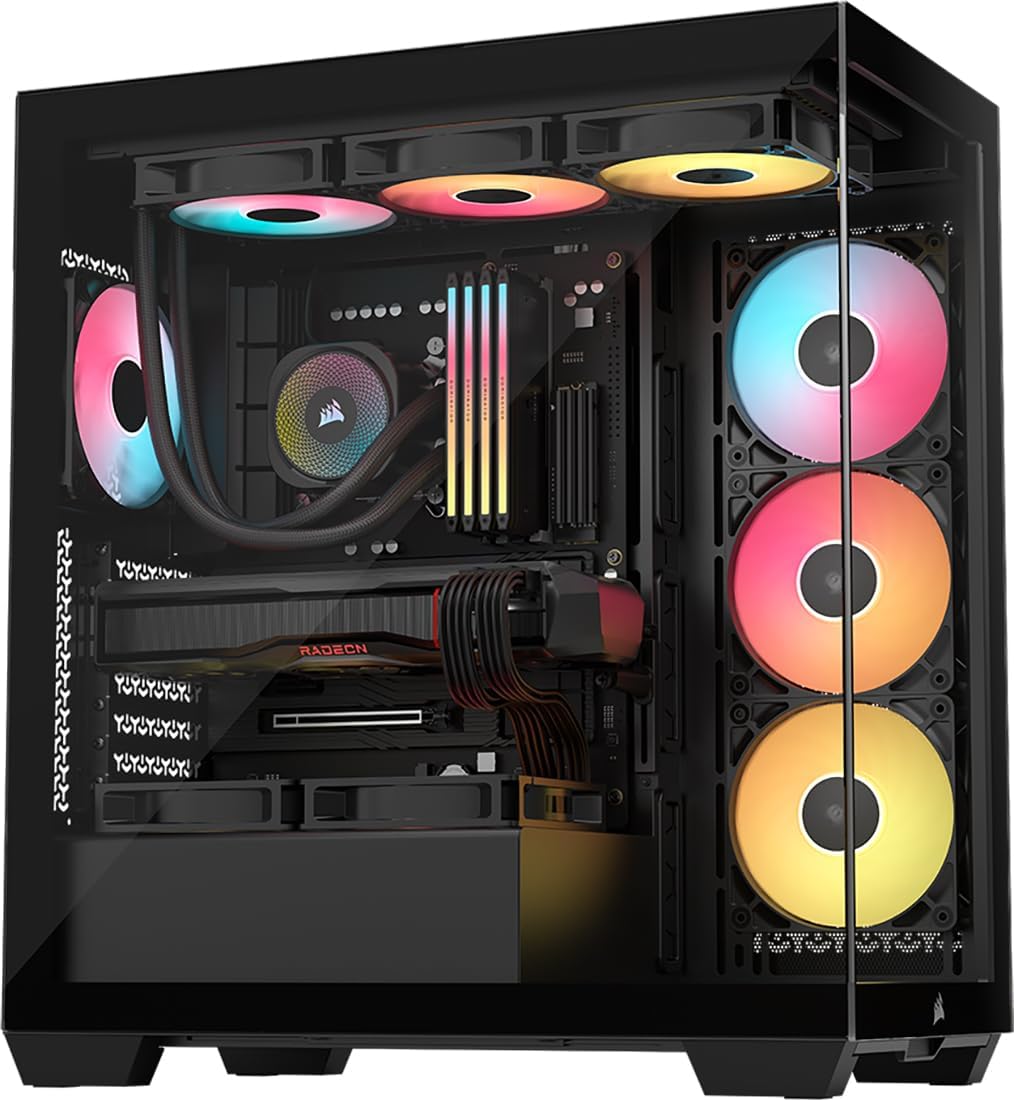


The be quiet! Light Base 900 DX Black stands apart because it is not merely a panoramic case or a chassis designed around a rear-connection motherboard. Its defining feature is a genuine orientation system: removable feet allow the enclosure to be inverted in seconds or placed horizontally. That makes it unusually relevant to buyers searching for an inverted ATX case while also accommodating more conventional desk arrangements.
We may earn a commission when you buy through this link, at no additional cost to you.
The case earns its 4.8 rating through a combination of visual presence and internal flexibility. Large front and side window panels expose the components, while a visible ARGB strip adds illumination around the structure. Internally, the dual-chamber arrangement separates drives and cables from the main hardware zone, helping preserve airflow and create a cleaner presentation. A removable radiator and fan holder in the lid and base can each accept a radiator up to 420mm, while the side position supports an additional 360mm radiator.
There is one important trade-off: fans are not pre-installed. That makes the Light Base 900 DX Black more of a blank canvas for builders who want to select every fan, radiator, and controller themselves. The lighting system also requires the appropriate ARGB and PWM connections, and the case's size may demand more desk space than a compact mid-tower. These considerations make the product less convenient for a plug-and-play build but more rewarding for a carefully planned one.
It is the strongest recommendation for builders who specifically want the visual and practical benefits of an inverted layout without giving up horizontal placement later. It also suits advanced systems using E-ATX boards, powerful graphics cards, and substantial liquid-cooling hardware. For those prepared to select cooling and manage the installation, the case's flexibility, large viewing area, and modular orientation make it the most complete option in this guide.
The removable feet are the most important feature for this audience because they allow the same case to function as a conventional horizontal enclosure or an inverted display-style build. That makes repositioning practical when the available space, viewing angle, or desk arrangement changes.
The lid and base each accept a removable holder for a radiator up to 420mm, and the side supports a 360mm radiator. This creates a three-radiator configuration for builders pairing a high-performance processor with a substantial graphics card.
Mounting drives and cables toward the rear keeps them away from the principal airflow path and reduces visual clutter. The result suits builders who want a polished inverted presentation without sacrificing practical component organization.
We may earn a commission when you buy through this link, at no additional cost to you.
The CORSAIR 3500X RS ARGB is a polished mid-tower for builders who want a broad glass view and a ready-made set of illuminated fans. Its 4.6 rating reflects a balanced combination of visual design, interior capacity, and cooling flexibility. The wraparound glass aesthetic gives the system a display-case appearance, making it well suited to the clean look associated with inverted-inspired builds.
We may earn a commission when you buy through this link, at no additional cost to you.
Three RS120-R ARGB fans come pre-installed, so a new builder can begin with a coordinated lighting setup without selecting a separate starter fan package. Motherboard control through the +5V ARGB header simplifies integration, while side, roof, and power-supply mounting locations allow the case to accommodate up to ten 120mm fans. The removable front and side tempered-glass panels improve access during the build and later when adjustments are needed.
The main qualification is that the listing explicitly includes the three fans but not the other components shown in associated imagery. A liquid cooler, additional fans, and any separately pictured accessories therefore should not be assumed. Even with the included fans, the glass-heavy exterior means thoughtful thermal planning remains important, particularly for a high-power processor and graphics card.
This is a strong option for builders seeking a familiar panoramic mid-tower that already includes ARGB cooling. It works especially well for standard ATX or mATX systems that want a tidy showcase with straightforward motherboard-controlled lighting. Buyers seeking a physically inverted enclosure may find a more direct answer elsewhere, but for a clean glass presentation and strong cooling foundation, the 3500X RS ARGB is difficult to overlook.
The three included RS120-R ARGB fans give the system a consistent starting point for illuminated airflow. Their simple motherboard control reduces the need for extra lighting hardware when basic synchronization is sufficient.
Side, roof, and power-supply mounting points provide room for up to ten 120mm fans. The removable side panel also makes it easier to reach those positions during installation and maintenance.
Both the front and side tempered-glass panels are removable. This is useful while fitting a long graphics card, aligning a radiator, or connecting cables in the more confined areas near the motherboard tray.
We may earn a commission when you buy through this link, at no additional cost to you.
The standard CORSAIR 3500X offers the same broad viewing experience as the illuminated version but leaves fan selection entirely to the builder. Its 4.7 rating reflects a flexible chassis with support for motherboards from Mini-ITX through EATX, multiple fan locations, and several liquid-cooling arrangements. It is a compelling option when the appearance of the final system matters more than having fans in the box.
We may earn a commission when you buy through this link, at no additional cost to you.
Side, roof, and power-supply mounting points provide capacity for as many as ten 120mm fans. Radiators up to 280mm and 360mm can be mounted in the roof, with an additional 360mm radiator supported at the side. The removable tempered-glass panels make component access more convenient, and the wraparound glass front emphasizes the internal hardware from several angles.
The case is validated for ASUS BTF and MSI Project Zero motherboards with connections on the back. This is valuable for a clean inverted-inspired presentation because the motherboard's cable connections do not interrupt the primary viewing area. However, builders using a standard-connector motherboard should not assume equivalent visual results, and they must ensure their chosen board and case are compatible with the necessary cables and mounting requirements.
The CORSAIR 3500X is best for experienced builders who already know which cooling hardware they want. It rewards careful planning with flexible radiator placement, a spacious interior, and a refined glass presentation. For anyone who wants the cleanest possible view without committing to a particular lighting ecosystem, this base chassis is especially useful.
Because no fans are included, builders can coordinate air coolers, reverse-blade fans, and liquid-cooling hardware from the beginning. This freedom is valuable when case geometry, radiator size, and motherboard headers must all be planned together.
The roof accommodates radiators up to 280mm and 360mm, while the side can accept another 360mm unit. This allows a substantial cooling arrangement in a panoramic chassis without relying on a single mounting zone.
Compatibility with ASUS BTF and MSI Project Zero boards keeps motherboard connections behind the tray. For display-oriented builds, that separation can make the visible component area look considerably cleaner.
We may earn a commission when you buy through this link, at no additional cost to you.
The Fractal Design North XL RC combines a distinctive natural-material aesthetic with a purpose-built layout for rear-connection motherboards. Its 4.7 rating reflects the appeal of its wood and alloy detailing, open front, and generous full-tower capacity. Unlike cases that merely offer a glass side panel, this design was created around ASUS BTF-style rear connections and is not listed as supporting standard motherboards.
We may earn a commission when you buy through this link, at no additional cost to you.
Natural airflow enters through the open front and ventilated mesh, while three 140mm Aspect PWM fans provide a substantial starting configuration. The large fan size can move a meaningful amount of air with fewer components than a wall of smaller fans. The full-tower interior also accommodates graphics cards up to 413mm when a front fan is installed, giving builders room for long, high-end cards.
Its limitations are significant but easy to understand. A standard-connection motherboard is not supported, so a builder must choose the case first and then select a compatible board. The full-tower proportions also require more desk and floor space than a mid-tower. Finally, the open-front aesthetic prioritizes airflow and appearance over the same enclosed visual treatment offered by a traditional glass case.
This is the recommendation for a builder who wants an inverted-style, rear-connect configuration to look visibly different from the standard black-glass landscape. The North XL RC rewards deliberate motherboard planning with an uncluttered presentation, natural airflow, and enough room for substantial hardware. It is especially compelling for creators and enthusiasts who value distinctive industrial design alongside strong front-to-back cooling.
The ventilated front provides a clear intake path into the enclosure, while the included 140mm fans create a useful initial airflow configuration. This is a practical approach for systems that need substantial cooling without filling every mounting point.
The case is designed for motherboards whose connectors are located on the back. That removes cable clutter from the visible side and supports a clean display, but it also means the case cannot be used with a conventional motherboard.
The roomy enclosure supports graphics cards up to 413mm with a front fan. It is a useful specification for builders using long, powerful graphics cards who still want a distinctive open-front design.
We may earn a commission when you buy through this link, at no additional cost to you.
The CORSAIR 3500X LX is the most deliberately integrated lighting option in this roundup. It combines a panoramic mid-tower with three pre-installed LX120-R reverse-rotor RGB fans and an iCUE LINK System Hub. Its 4.7 rating reflects the strong visual presentation, spacious interior, and simplified wiring approach, particularly for builders already invested in the iCUE ecosystem.
We may earn a commission when you buy through this link, at no additional cost to you.
The included hub and fans use the iCUE LINK system to reduce the number of individual control and power connections. Reverse-rotor fans present their illuminated faces toward the visible interior side, which produces a cleaner showcase than fans whose frames and lighting face the glass. Side, roof, and power-supply positions support up to ten 120mm fans, and the front and side tempered-glass panels are removable for easier access.
The trade-off is ecosystem dependence. The LX version is most compelling for a builder who wants coordinated iCUE LINK equipment and appreciates fewer separate cables. Those who prefer a different lighting platform, standard fan headers, or a more modular hub may find the basic 3500X more adaptable. The listing also states that only the three fans and system hub are included, so other components visible in promotional imagery are not part of the package.
For a clean white showcase with integrated RGB hardware, the 3500X LX is a strong match. It also supports ASUS BTF, MSI Project Zero, and GIGABYTE Project Stealth boards with rear connections, making it well suited to builders seeking a tidy inverted-inspired view without committing to a physically inverted chassis.
The included System Hub provides the foundation for iCUE LINK components, reducing the number of separate connections required. That simplification can make a visually complex illuminated system easier to organize and maintain.
The LX120-R fans direct their illuminated surfaces inward, away from the glass. This produces a more uniform showcase while retaining the RGB lighting that defines the LX version.
The chassis accepts Mini-ITX through EATX and has been validated with several rear-connection motherboard standards. Builders should still verify their exact board model and required cables before finalizing the installation.
We may earn a commission when you buy through this link, at no additional cost to you.
The HYTE Y50 RGB brings a more expressive visual identity to the panoramic ATX category. Its Taro Milk purple finish, three-piece panoramic glass, and dual-chamber layout distinguish it from conventional black or white chassis. The 4.7 rating reflects a combination of aesthetic character, included lighting hardware, and a layout intended to keep the internal presentation clean.
We may earn a commission when you buy through this link, at no additional cost to you.
The case includes a 120mm FE12RS aRGB fan and a 360mm FE12RTR aRGB reverse-blade fan with standard aRGB and PWM connectors. The large 360mm fan serves as a substantial visual centerpiece while adding front-to-back airflow potential. Compatibility with ASUS BTF, GIGABYTE STEALTH, and MSI Project Zero motherboards means builders can keep board connections behind the tray and preserve the uninterrupted view through the glass.
The dual-chamber concept supports cleaner organization, but the listing does not provide the same detailed radiator, motherboard, and clearance inventory offered by some competing cases. Buyers should therefore confirm exact fitment for their planned CPU cooler, power supply, graphics card, and storage. The purple finish is another deliberate constraint: it is a major part of the case's personality and may not blend with an existing room or desk setup.
The Y50 RGB is most appropriate for a builder who wants the glass-and-light appearance of an inverted-style showcase but prefers a bold color treatment. It offers an easier starting point than a chassis with no fans and more visual drama than a restrained monochrome case. With careful fitment checks, it can serve as an expressive home for a colorful gaming system.
The Taro Milk finish gives the chassis a recognizable identity that is difficult to mistake for a standard black mid-tower. It is especially effective when paired with the included illuminated fans and visible internal components.
The 360mm reverse-blade fan provides a visually prominent cooling component with standard aRGB and PWM connections. Its size helps create the intended front-to-back visual line through the panoramic panels.
The dual-chamber arrangement helps isolate cables and other less-visible elements from the showcase area. It also supports rear-connection boards, which contributes to a less interrupted internal view.
We may earn a commission when you buy through this link, at no additional cost to you.
The CORSAIR 4000D RS ARGB Frame emphasizes airflow and modularity rather than a panoramic glass presentation. Its 4.7 rating reflects a flexible fan platform, a three-dimensional perforated steel front, and three included RS ARGB PWM fans. For inverted-case shoppers, its relevance comes from the support for rear-connection motherboards and its ability to create a clean interior without a conventional side window.
We may earn a commission when you buy through this link, at no additional cost to you.
The InfiniRail steel mounting system allows fans to slide into different positions, including larger fan sizes in the front and 140mm fans in the roof. The side panel near the motherboard tray can remain in place as a cable cover or be removed for additional side-mounted cooling. Three RS fans arrive pre-installed, use daisy-chainable four-pin PWM connections, and support Zero RPM behavior at low loads.
The trade-off is visibility. Unlike the 3500X, this model does not offer the large wraparound glass display area. It also introduces a more involved modular system whose options may take time to understand. Front airflow is strong by design, but builders wanting a bright, uninterrupted showcase would need to create that presentation through lighting and component placement rather than tempered glass.
This case is best for builders who prioritize cooling, fan flexibility, and a clean-looking internal layout over traditional windowed aesthetics. It suits a rear-connection motherboard build in which cable management and front-to-back airflow are the priorities. The included fans and adjustable rails provide a strong foundation, while the modular FRAME system leaves room for later expansion.
The sliding steel rail system supports more placement options than fixed fan positions. Builders can direct cooling where it is needed, use larger front fans, or place up to 140mm units in the roof.
The internal side panel can conceal cables or be removed to create a mounting position for additional fans. That choice allows the owner to prioritize appearance or cooling as the system changes.
The three-dimensional Y-pattern steel panel provides a comparatively unobstructed intake route. Its open metal construction is less visually dramatic than glass, but it is well aligned with systems that need dependable front airflow.
We may earn a commission when you buy through this link, at no additional cost to you.
The NZXT H5 Flow is a compact mid-tower that focuses on effective airflow, straightforward installation, and a smaller desk footprint. Its 4.6 rating reflects a balanced design with fine mesh panels, two pre-installed fans, and support for both front and top radiators. It is not a physically inverted chassis, but its clean cable routing and restrained exterior can suit buyers who want an uncluttered presentation without a display-oriented layout.
We may earn a commission when you buy through this link, at no additional cost to you.
Ultra-fine mesh covers the top, front, and side panels to support airflow while filtering dust. A Quiet Airflow fan is installed at the front and another at the rear, providing a functional starting point. The perforated side and bottom of the power-supply shroud also create intake paths for two additional 120mm fans, although those fans are not included.
The limitations are relatively straightforward. The case is designed around a standard motherboard rather than the rear-connection format found in several showcase alternatives. Its compact structure also provides less expansion room than a full tower, and the listed radiator support focuses on a 360mm front unit and a 240mm top unit. A builder planning a heavily customized loop should verify every fitting and component dimension.
The H5 Flow is a strong choice for a clean ATX gaming or productivity build where desk space is limited and straightforward cooling matters more than a dramatic inverted silhouette. Wide cable channels, hooks, and straps help maintain a tidy interior, while the included fans and dust-filtering mesh make it practical for regular use.
The H5 Flow fits a meaningful ATX build into a smaller mid-tower format while supporting a 360mm front radiator and 240mm top radiator. This makes it a practical option for builders who want liquid-cooling options without moving to a full tower.
The fine mesh across the top, front, and sides promotes airflow while helping trap dust. This balanced approach is useful for systems that will remain in a shared room or be cleaned at different intervals.
Wide routing channels, hooks, and straps make it easier to keep power and data cables organized. A clean interior can provide much of the visual satisfaction sought from an inverted display case.
We may earn a commission when you buy through this link, at no additional cost to you.
The be quiet! Silent Base 802 is built for a refined build with quiet-operation priorities. Its 4.6 rating reflects a decoupled motherboard tray that allows an inverted layout, three installed fans, thick insulation, and a flexible choice of front and top covers. It is one of the clearest matches in the guide when a physically inverted ATX arrangement is specifically desired.
We may earn a commission when you buy through this link, at no additional cost to you.
The decoupled motherboard tray is the key feature. It can be positioned in an inverted layout, allowing the graphics card to sit vertically in the visually dramatic orientation associated with display-style cases. The interchangeable top cover and front panel let the owner favor either airflow or a quieter enclosure, depending on the final configuration. Extra-thick insulation mats further support the noise-reduction focus.
Its front I/O panel includes a fan controller and USB 3.2 Gen. 2 Type-C connectivity, adding practical control and modern peripheral support. The trade-off is that the case prioritizes restrained operation and layout versatility rather than a full panoramic window presentation. Buyers should also verify the exact clearances and included-panel configuration for their motherboard, graphics card, and cooling plan.
This is the recommendation for a builder who values the true inverted format and a quiet presentation, especially one who wants to choose between airflow and sound-control configurations. It bridges the gap between conventional silent cases and flamboyant display enclosures, making it a balanced option for a polished workstation or understated gaming system.
The decoupled tray provides a direct route to the traditional inverted ATX layout. It is especially relevant when the builder wants a vertically mounted graphics card and a display-style presentation rather than a panoramic side window.
Interchangeable top and front covers allow the owner to tune the enclosure's visual and thermal direction. The choice can reflect the final hardware, the available space, and the desired noise profile.
Thick insulation mats help reduce vibration and airborne noise. Three installed fans provide an initial airflow setup while the enclosure's overall design remains focused on a composed, lower-profile presentation.
We may earn a commission when you buy through this link, at no additional cost to you.
The MONTECH XR Panoramic delivers the visual basics of an inverted-style gaming showcase at an accessible tier. Its 4.7 rating reflects panoramic front and side tempered-glass panels, three included ARGB PWM fans, generous graphics-card clearance, and maintenance-friendly magnetic filters. It is a practical entry into a glass-sided ATX build for buyers who want more visible features than a basic chassis.
We may earn a commission when you buy through this link, at no additional cost to you.
Two side-mounted reverse-blade ARGB PWM fans direct their illuminated surfaces toward the interior, while a third rear fan completes the included configuration. The case supports as many as nine fans and can accept a 360mm radiator at the top, giving builders a straightforward path from air cooling to a larger liquid-cooling arrangement.
The main limitations involve component dimensions and design coordination. Graphics-card clearance is listed as 420mm, CPU-cooler clearance as 175mm, and power-supply clearance as 230mm, so long or unusually large components should be checked before purchase. The wood-grain I/O accent also makes this more opinionated than a uniformly black enclosure. While the top, side, and bottom filters are removable and magnetic, routine cleaning still requires access to the system.
The MONTECH XR is best for a builder who wants a conventional ATX layout, a strong glass showcase, and a useful set of included fans without moving to a premium enclosure. It also offers USB-C and two USB 3.0 front ports, making it a well-rounded starting point for a modern gaming system. The result is a versatile, visually engaging mid-tower.
Panoramic tempered-glass front and side panels keep the graphics card, cooling hardware, and lighting visible. The result provides much of the appeal of a display-oriented case within a familiar mid-tower format.
Three ARGB PWM fans provide cooling and coordinated lighting from the start. Two reverse-blade side fans present a cleaner illuminated face while the rear fan helps complete the airflow path.
Magnetic filters at the top, side, and bottom can be removed for routine cleaning. This is a useful feature for a frequently used gaming system where dust would otherwise collect around intake areas.
We may earn a commission when you buy through this link, at no additional cost to you.
An effective inverted case depends on more than a dramatic orientation. Motherboard connections, graphics-card clearance, cooling paths, component access, and cable management determine whether the finished system looks clean and performs reliably.
True inverted cases place the motherboard tray on the right so the graphics card mounts vertically in the traditional display-style orientation. Cases based on rear-connection motherboards keep a standard internal arrangement but route the board's cables through the back. The former changes the system's physical presentation, while the latter mainly cleans up the visible side. Buyers should decide whether the priority is an actual inverted silhouette or simply a less interrupted interior view.
Choose true inversion for a dramatic desk display, and choose rear-connection support for a clean panorama with a conventional chassis structure.
Confirm the supported motherboard sizes and connector arrangement before selecting a case. Many panoramic or open-front models support Mini-ITX, Micro-ATX, ATX, and EATX, but some full-tower designs are restricted to ATX and mATX. Rear-connection compatibility is more specific and may require an ASUS BTF, MSI Project Zero, or GIGABYTE Project Stealth board. The exact model and its required cables should be checked rather than relying on the general chipset family.
Verify form factor, connector location, and cable requirements before buying any case.
Long graphics cards can collide with front fans, radiators, drive cages, or the power-supply area. Check the manufacturer's length specification against the exact case configuration, because installing a front fan or radiator may reduce usable clearance. A case may advertise an impressive maximum figure for an air-cooled arrangement that does not apply once a thick liquid cooler is mounted in the same position.
Compare card length with the clearance for your exact cooling configuration.
Look for a clear intake and exhaust path rather than judging a case only by fan count. Mesh panels, open fronts, perforated shrouds, and properly positioned fans can support airflow more effectively than a densely glazed exterior. For liquid cooling, confirm both radiator size and available mounting positions. Some cases support a 360mm radiator at the top or side, while the most flexible designs can combine radiators in the roof, base, and side.
Prioritize a coherent airflow path and realistic radiator positions over a headline fan total.
Included fans can reduce the number of separate purchases needed for a first build, but their control method matters. Standard PWM and five-volt ARGB headers offer broad motherboard compatibility, while proprietary hubs and systems such as iCUE LINK create cleaner wiring within a particular ecosystem. Confirm whether a cooler, hub, controller, or merely the case is included, and check whether other components shown in promotional images are exclusions.
Confirm the exact included components and whether their controls match your motherboard.
A clean inverted display is difficult to achieve if cables cross the visible area or if every drive sits directly behind the graphics card. Look for dedicated routing channels, straps, hooks, a separated chamber, and mounting positions behind the motherboard tray. Removable front, side, rear, and top panels also matter during assembly because they improve access to tight mounting points and make later maintenance less disruptive.
Prioritize hidden cable paths, separated chambers, and removable panels for easier builds.
Fine mesh and removable filters can restrict dust without blocking as much airflow as a dense screen. Check where filters sit and whether they can be removed without taking apart the entire system. Magnetic attachments are convenient, while screw-mounted filters may still be straightforward if the relevant panel comes off. A case designed for frequent maintenance should also provide access to fans, radiators, and drive mounts without disturbing the graphics card.
Choose accessible filters and panels that make routine cleaning straightforward.
The visual impact of an inverted chassis is meaningful only if it fits the intended space. Full towers and cases with large window panels can dominate a desk, while compact mid-towers may provide a more balanced footprint. Finish, glass coverage, lighting, and included fans should also be considered together, since a case with bold colors or proprietary lighting may not blend with an existing setup. Measure the available area before making a final decision.
Balance the desired display effect with desk space, finish, and existing components.
Begin by assembling the hardware on a stable surface with the case in its intended orientation. If using a rear-connection motherboard, install the board and route its cables behind the tray before securing the cooler, graphics card, or power supply. For a physically inverted model, follow the manufacturer's support arrangement and ensure the case feet or stabilizing hardware are correctly positioned before adding heavy components.
Connect fans to the appropriate PWM headers or approved controller, and connect lighting to the matching five-volt ARGB or proprietary system. Route power, data, and lighting cables through the designated channels, then secure excess lengths away from fans. Fit removable panels only after checking that no cables are pinched and that every filter and bracket can be accessed.
For routine care, power down and disconnect the system before removing panels or filters. Clean removable filters separately according to the manufacturer's guidance, and use gentle, dry methods on glass and mesh surfaces. Inspect fan clearance, cable bends, and dust buildup periodically, particularly if the case is installed beneath a desk or in a tighter entertainment cabinet.
An inverted ATX case places the motherboard tray on the right side so the expansion slots face downward and the graphics card can sit vertically in a display-style orientation. This can create an open, uncluttered presentation, particularly when the graphics card is positioned above the power-supply area. Not every panoramic case is physically inverted, so check the internal layout before purchasing.
No. Panoramic cases mainly describe a case with large viewing panels, while inverted cases describe a particular internal orientation. Some products combine both ideas, but others use conventional layouts and rear-connection motherboards to keep cables out of view. The product's board support and motherboard-tray arrangement determine which category it truly fits.
It depends on the design. A physically inverted chassis can often accept a conventional motherboard because the board remains mounted flat against the tray, merely positioned on the opposite side. A rear-connection motherboard is only required when the case explicitly supports that format. Cases such as the Fractal Design North XL RC require compatible rear-connection boards, while several CORSAIR models offer broader choices.
A vertical card can still be cooled effectively when the case provides suitable intake and exhaust paths and the card has sufficient clearance from intake fans or radiators. Pay particular attention to the graphics card's own cooler orientation and any power or data cables that might obstruct airflow. Liquid-cooled cards and models with large side-facing fans may require more careful planning than compact air-cooled versions.
There is no universal number because the processor, graphics card, case volume, and selected cooling system all affect requirements. A balanced build often needs intake capacity at the front or side and an exhaust route near the rear and roof. A case that includes three fans may be sufficient for many moderate systems, but high-power components can justify additional intake fans and, in some cases, liquid cooling.
Tempered glass is generally suitable for PC cases when ventilation and the intended component heat are properly addressed. The glass itself does not replace airflow, and tightly enclosed designs can perform warmer than open-mesh alternatives. Confirm the case's fan and radiator support, avoid blocking intake or exhaust openings, and maintain the recommended filter and fan configuration.
A proprietary hub can simplify connections and make a coordinated lighting system easier to manage. It is most useful when the case, fans, controller, and motherboard software all support the same ecosystem. A standard PWM and five-volt ARGB setup may be more flexible if you already own components from other brands or expect to change lighting hardware later.
Measure the available desk or cabinet space, including clearance for cables and front ports. Then confirm motherboard form factor, graphics-card length, CPU-cooler height, power-supply length, radiator dimensions, and the position of each fan. Maximum compatibility figures often describe a specific configuration, so removing a front fan or adding a radiator may change the usable space.
The be quiet! Light Base 900 DX Black is the most complete option for buyers seeking genuine inversion because its removable feet allow rapid changes between horizontal and inverted placement. The Fractal Design North XL RC stands out for rear-connection simplicity, natural airflow, and distinctive materials, while the MONTECH XR Panoramic delivers the most accessible combination of glass viewing panels, included ARGB fans, and practical maintenance features.
Before choosing, prioritize the hardware you already own or definitely plan to use. A rear-connection motherboard, long graphics card, large radiator, and tall CPU cooler can make one design more suitable than another. Airflow path, cable visibility, and service access deserve as much attention as the number of fans or the appearance of the glass.
Product bundles, motherboard standards, and component availability can change, so check the current listing and compatibility details before ordering. Compare the final configuration against your exact hardware, and revisit current retailer pricing when you are ready to buy rather than relying on an earlier snapshot.