
Rongta Bluetooth Shipping Label Printer
4.0Editor score
Automatic label detection
Phone and tablet support
203 DPI print resolution
Broad label-size range
Discover the best label printers for Mercari, with ten options compared for connectivity, print speed, label width, platform support, and ease of use at home.
A dependable label printer can make Mercari selling faster, cleaner, and more professional. The right model should produce scannable barcodes, handle your preferred label size, and integrate smoothly with the computer or phone you use every day. Thermal technology is especially practical because it requires no ink or toner.
We compared ten label printers across connectivity, supported dimensions, print speed, resolution, design features, shipping-platform compatibility, and ease of setup. The list includes Bluetooth models for mobile workflows, USB options for steadier computer connections, and compact printers suited to a home office, studio, or small resale operation.
Each pick below highlights the characteristics that matter most for Mercari sellers, including practical advantages and honest limitations. Ratings and specifications reflect the supplied product information, while prices and promotions can change, so compare the current listing details before choosing.
4.0Editor score

4.4Editor score
4.6Editor score
The table below compares all ten printers by rating, connection method, resolution, speed, and label-width support so Mercari sellers can quickly identify the model that matches their preferred workflow.



The Thermal Shipping Label Printer 4×6 Bluetooth Label Maker for Small Business combines a 4.4 rating with a versatile mix of wireless and wired printing. It is a strong all-around choice for Mercari sellers who want to prepare labels from a phone, laptop, or desktop while retaining the option of a stable USB connection. Its direct thermal technology avoids ink and toner, and the 203 DPI resolution is designed to produce clear text, addresses, barcodes, and other shipping details.
We may earn a commission when you buy through this link, at no additional cost to you.
Its most useful feature is the combination of Bluetooth and USB. The FlashLabel Pro app supports wireless label creation and printing from a phone, laptop, or PC, while USB offers a direct route for users who prefer a consistent wired workflow. The included design library contains more than 1,800 templates and over 300 fonts, and offline storage means frequently used layouts can remain available without waiting for cloud downloads. That is particularly valuable for sellers working in areas with inconsistent internet access or preparing a batch of labels in advance.
The printer reaches speeds of up to 150 mm/s, or as many as 72 four-inch by six-inch labels per minute according to the product information. It supports label widths from 1.57 inches to 4.3 inches, giving it flexibility beyond standard shipping labels. Compatibility is listed for Amazon, Shopify, Etsy, USPS, UPS, FedEx, and DHL, making it useful for a broader marketplace operation as well as Mercari. The matte, reinforced finish and built-in print-head overheat protection point to an emphasis on sustained use. The package includes a power cord, USB cable, and 25 four-inch by six-inch thermal labels.
The main limitation is that output is black and white only. Mercari shipping labels generally benefit from high contrast, so that is usually not a problem, but it means the printer cannot reproduce color graphics. Some sellers may also need to confirm that labels, media settings, and any downloaded shipping documents work with the app before committing to a larger workflow. Overall, this model balances mobility, speed, design features, and connection options better than many alternatives, making it our strongest general recommendation for a serious Mercari seller.
FlashLabel Pro gives the printer a consistent design environment across supported devices, while USB remains available when a seller prefers a wired path. This flexibility helps reduce the friction of moving between a phone at a packing table and a computer at a desk.
High claimed print speed, offline template storage, broad label-width support, and included starter media make this a practical option for sellers who regularly prepare multiple Mercari shipments rather than occasional labels.
We may earn a commission when you buy through this link, at no additional cost to you.
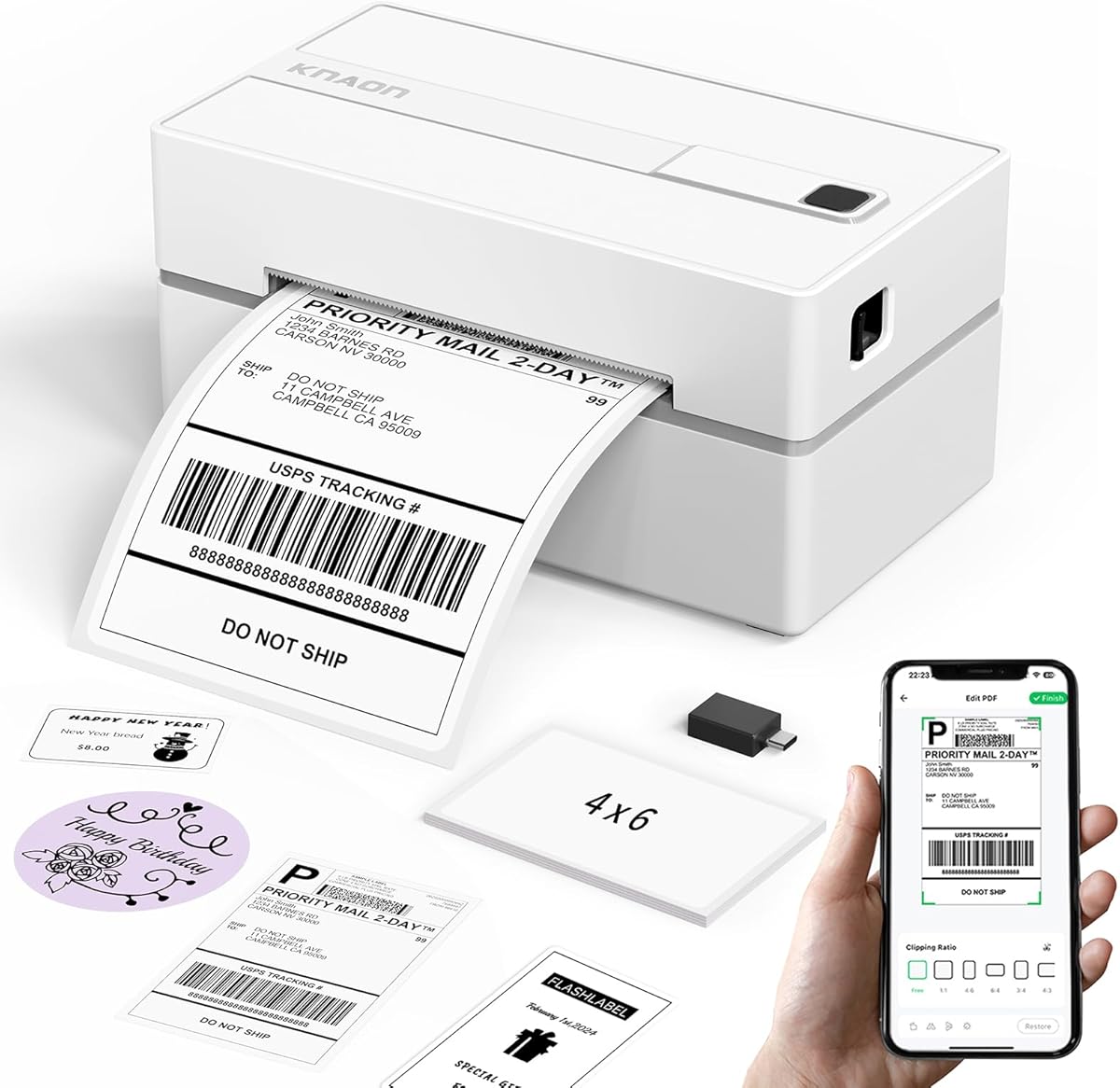
The KNAON Bluetooth Thermal Shipping Label Printer is a speed-focused option with a 4.4 rating. Its stated maximum of 180 mm/s leads this group and could be attractive to Mercari sellers who often prepare several orders at once. The printer supports Bluetooth through FlashLabel Pro and offers USB connectivity for macOS, Windows 7 or later, ChromeOS, and Linux, giving it a useful combination of portable and stationary workflows.
We may earn a commission when you buy through this link, at no additional cost to you.
Customization is one of its defining strengths. The app provides more than 3,000 templates, over 5,000 icons, and more than 100 fonts. Although most Mercari shipping labels are created by downloading a prepaid label, these resources are useful for return-address stickers, thank-you labels, inventory tags, price labels, name tags, barcodes, and other small-business materials. Its label-width range extends from 1.5 to 4.2 inches, covering common shipping formats and several narrower styles.
Compatibility includes Amazon, eBay, Shopify, USPS, UPS, Etsy, PayPal, Poshmark, and DHL. The specified procedure is to save a logistics label as a PDF and import that file into FlashLabel Pro. This is an important distinction for buyers: Bluetooth is not necessarily a universal direct-printing route, because the listed instructions require the app for supported devices. A built-in USB drive contains drivers and tutorial videos, which should make initial setup more approachable for users who are new to thermal printers.
Its compact 7.17 by 3.9 by 3.43-inch housing also suits small workspaces, although that footprint is somewhat larger than a few competing models. The product includes ten test labels. Bluetooth setup may feel less immediate than a cable because the app must be installed, and compatibility should be checked against the seller's specific phone and computer. Even with those caveats, this printer is an excellent choice for a seller who values fast output, extensive design options, and broad platform support.
A listed speed of up to 180 mm/s makes this model attractive when several Mercari orders need labels at once. Actual results depend on file size, device, and label content, but the specification indicates a performance-oriented design.
Thousands of templates and icons extend the printer beyond standard shipping documents. This makes it a strong option for sellers who also organize inventory, create package inserts, or print identification labels.
We may earn a commission when you buy through this link, at no additional cost to you.
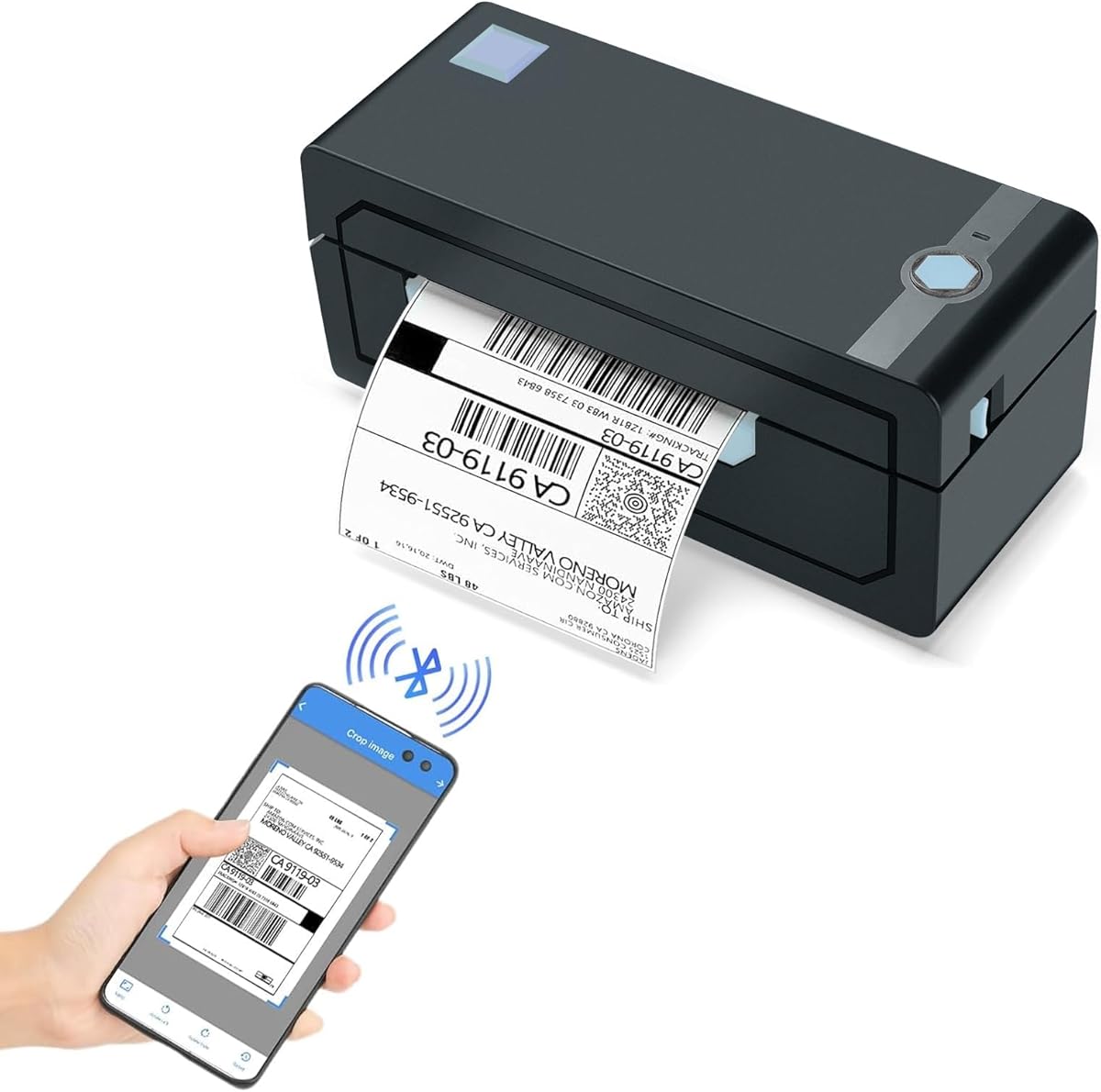
The JADENS Bluetooth Thermal Shipping Label Printer is a well-rounded model rated 4.4, with particular strength in supporting both fanfold and roll labels. It uses a Japanese thermal print head with 203 DPI resolution and works without ink or toner. For Mercari sellers who move between shipping labels and smaller organizational labels, the supported width range of 1.57 to 4.1 inches provides useful flexibility.
We may earn a commission when you buy through this link, at no additional cost to you.
Wireless printing is possible from Windows 8 or later and Mac computers. For Android and iOS, however, the product information directs users to download the Jadens printer app. USB works with Windows 7 and newer and macOS 10.9 and later. This combination is important for anyone choosing between a phone-centered and computer-centered process. Buyers should also note that a long press of the feed button is used to identify and calibrate the label size whenever the loaded media changes.
Its compatibility list includes Endicia, Dazzle, ShipStation, ShippingEasy, Shippo, ShipWorks, Ordoro, eBay, Amazon, and Shopify. The range shows that it can fit within a broader fulfillment system, not merely a single marketplace. The printer is also described as useful for warehouse labels and market labels, which makes it relevant to sellers who manage inventory or prepare packages in batches. A USB drive provides a printer driver, instructional videos, and troubleshooting material to support setup.
The product is backed by a one-year warranty, and customer support is available by email, phone, and remote control according to the supplied information. The need to recalibrate after changing labels adds a small step, and mobile use depends on the app rather than generic Bluetooth printing. Even so, this is a balanced choice for sellers who want dependable 203 DPI output, broad carrier and marketplace support, and the ability to use either rolls or fanfold media.
Supporting both fanfold and roll labels gives sellers more freedom when stocking consumables. It also allows the printer to handle standard shipping labels alongside warehouse, inventory, and barcode labels.
The included one-year warranty and several listed support channels add reassurance for a device that will handle routine shipping work. Setup videos and troubleshooting resources are also supplied.
We may earn a commission when you buy through this link, at no additional cost to you.
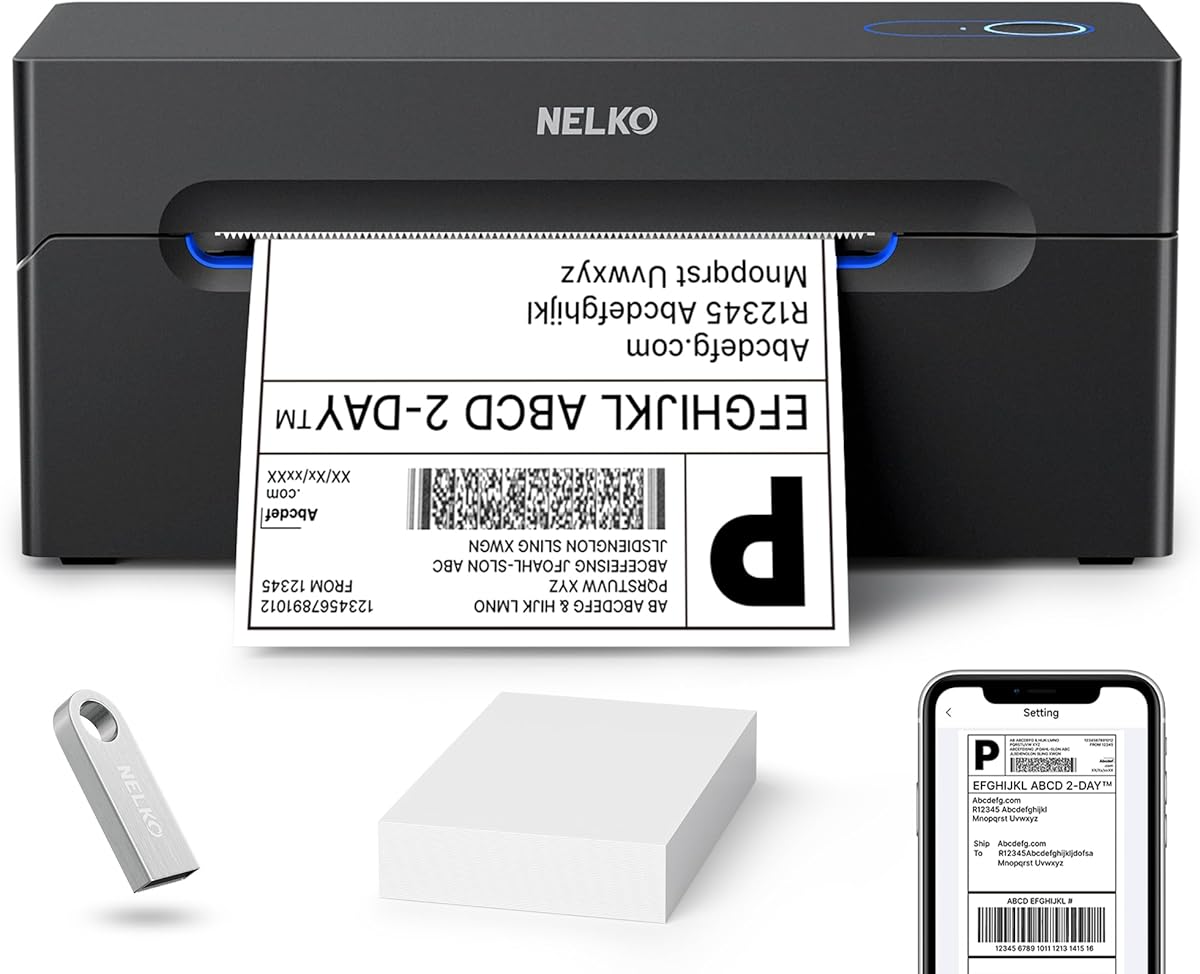
The Nelko Bluetooth Thermal Shipping Label Printer combines a 4.3 rating with a compact design and a solid set of connectivity options. It prints at up to 150 mm/s, with a stated capacity of 72 four-inch by six-inch labels per minute. At 203 DPI, it is suited to producing readable shipping text and barcodes without the ongoing cost of ink or toner.
We may earn a commission when you buy through this link, at no additional cost to you.
Bluetooth support covers iOS and Android through the Nelko app, as well as Windows 7 and later. Mac users with M1 or M2 processors can install the app and connect wirelessly, but the supplied information specifically states that Mac OS works only through USB and cannot print via Bluetooth. USB is also available for Windows, Mac, and ChromeOS. This distinction should be checked before purchase, particularly for sellers whose primary computer is a Mac.
Label support extends from 1.54 to 4.1 inches, including four-inch by six-inch shipping labels and several smaller formats. Both fanfold and roll labels are supported. Compatibility is listed for Amazon, eBay, Shopify, USPS, UPS, Etsy, PayPal, and Poshmark. As with other app-based models, the shipping-platform label should be saved as a PDF and then uploaded to the editor app for printing. A USB drive includes a printer driver and instructional and troubleshooting videos.
The physical design is a major selling point. Nelko describes the PL70E as smaller than traditional printers and suitable for limited spaces, which fits a home office or compact Mercari packing station. The trade-off is that some Bluetooth configurations require an app and Mac users should plan on using a cable. For sellers who want fast output, a small footprint, and flexible label formats, this remains one of the more versatile options in the group.
A compact enclosure is especially helpful when packaging and listing duties share the same desk. The printer can remain ready for frequent jobs without occupying the space of a conventional full-size machine.
The printer accepts multiple standard widths and both roll and fanfold media. That makes it useful for shipping documents, barcode labels, price tags, and inventory organization.
We may earn a commission when you buy through this link, at no additional cost to you.
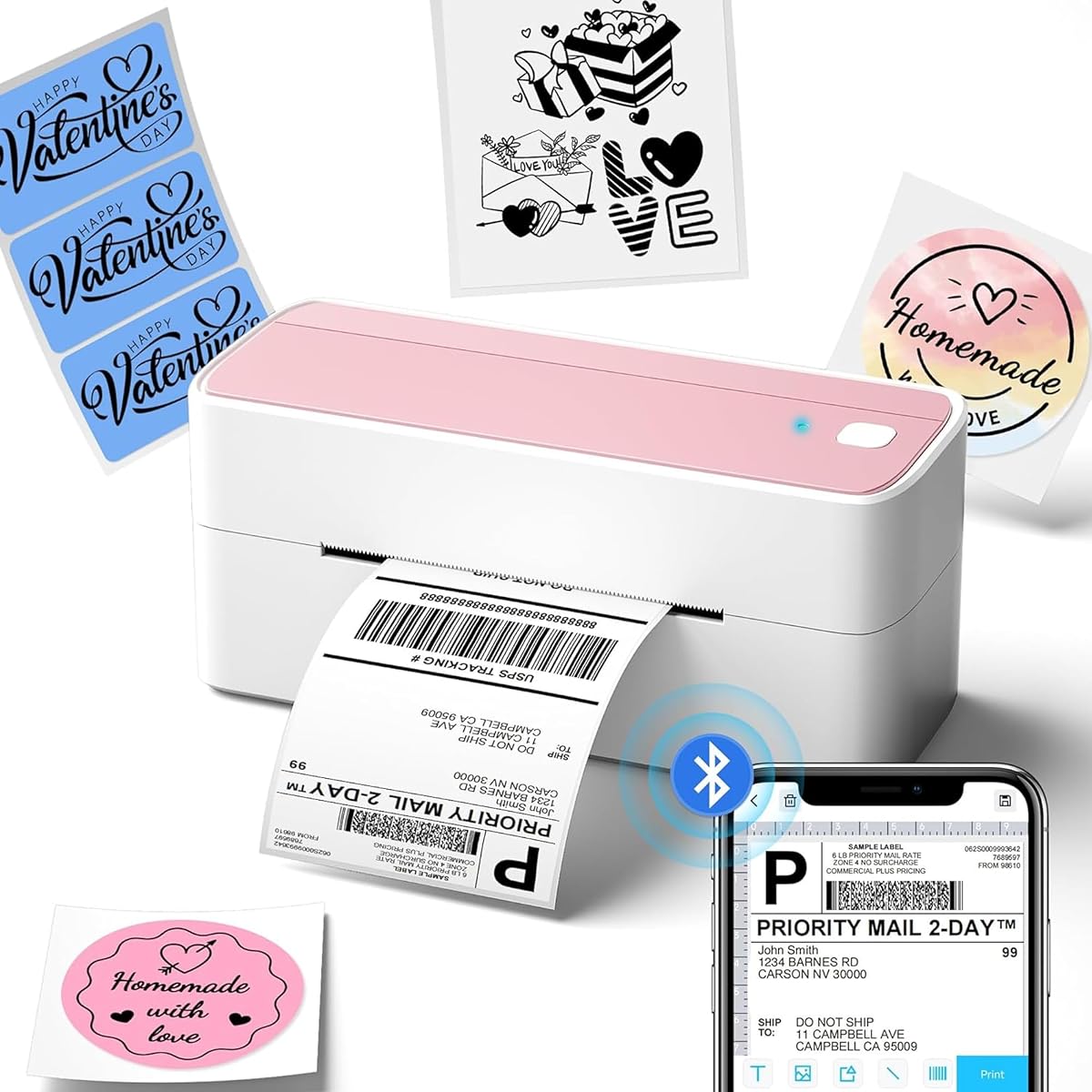
The Rongta Bluetooth Shipping Label Printer stands out as a budget-conscious choice with a 4.0 rating, automatic label identification, and broad platform support. It prints at up to 150 mm/s and 203 DPI, producing clear direct-thermal output without ink or toner. These are meaningful capabilities for a Mercari seller who wants inexpensive shipping and inventory labels without moving to a full-size inkjet system.
We may earn a commission when you buy through this link, at no additional cost to you.
The RP425 is designed for flexible use. It supports iOS and Android phones and tablets through the RONGTA app, while Windows and Mac users can download driver software. The stated operating-system range includes Windows 7 and newer, macOS 10.11 and newer, and ChromeOS. Automatic detection, grabbing, and feeding of labels is particularly useful because it reduces manual adjustment when switching between different label dimensions.
Its supported width range is 0.98 to 4.37 inches, one of the broadest in the comparison. It can handle four-inch by six-inch shipping labels, two-inch by two-inch circular labels, two-inch by one-inch barcode labels, and one-inch by one-inch QR-code labels. That range gives a home seller a way to address shipping documents and smaller organizational needs with one device. The listed 203 DPI resolution helps maintain legibility across those formats.
The tradeoff is that this model has the lowest rating in the group, although a 4.0 remains a reasonable four-star signal. Its listed dimensions of 10.2 by 7.4 by 5.3 inches are also larger than several highly compact competitors, so buyers should consider desk space carefully. Driver downloads are available from the Rongta official website rather than being described as bundled. Despite those limitations, automatic media handling, phone support, and label versatility make this an appealing entry point for a new Mercari seller.
Automatic label detection and feeding minimize the need to adjust the machine whenever a different label size is loaded. This is a meaningful convenience for sellers who alternate between shipping labels and smaller stock.
Support for iOS, Android, Windows, macOS, and ChromeOS provides a broad foundation. The printer can therefore serve a phone-based packing process or a computer-centered listing workflow.
We may earn a commission when you buy through this link, at no additional cost to you.
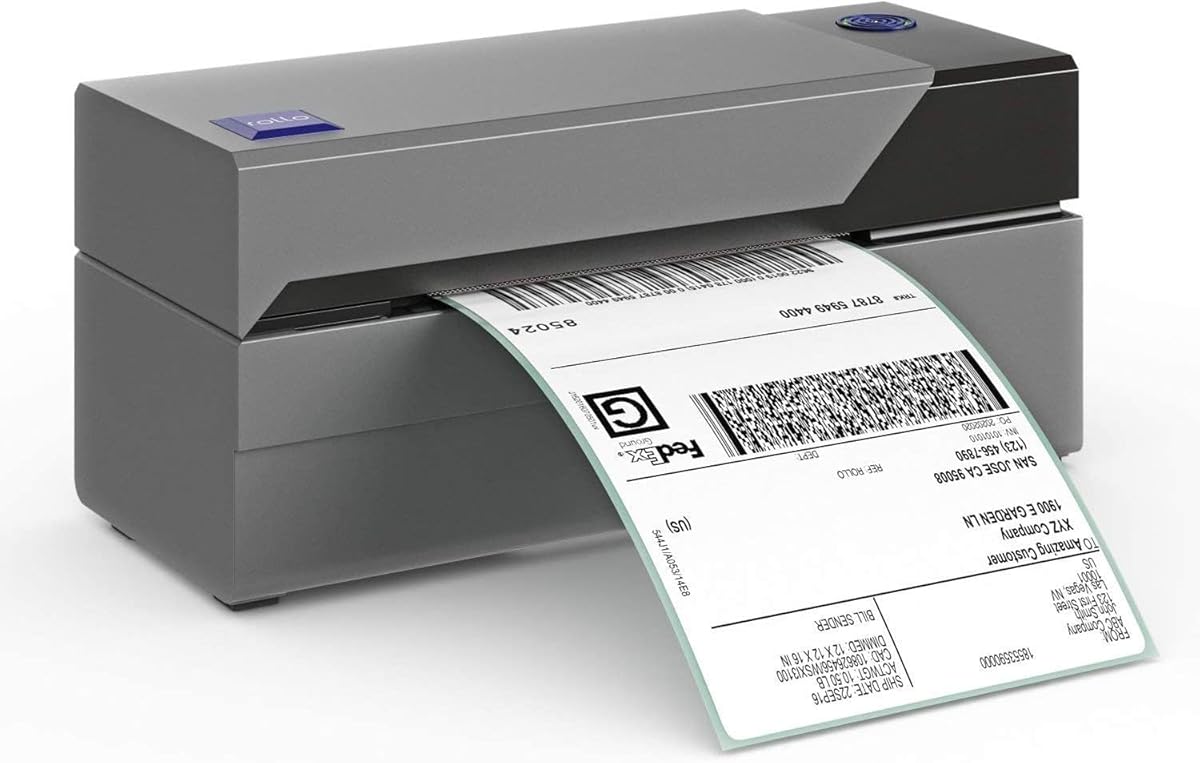
The Rollo USB Shipping Label Printer is the premium-oriented pick in this guide and carries the highest listed rating at 4.6. It is built around a stable USB connection to a Windows or Mac computer, a strategy that can be more dependable for high-volume work than wireless pairing. Its 203 DPI thermal print head and 150 mm/s speed are equivalent to roughly one four-inch by six-inch label per second, according to the product information.
We may earn a commission when you buy through this link, at no additional cost to you.
The Rollo Ship app is included as a companion for connecting e-commerce platforms and managing shipments. Rollo also lists compatibility with FedEx, UPS, USPS, ShipStation, ShippingEasy, Shippo, ShipWorks, and marketplaces such as Amazon, Shopify, Etsy, and eBay. This broad support makes the printer a natural fit for a seller who may begin on Mercari but later adds more sales channels or a formal shipping workflow.
It is not only limited to prepaid shipping documents. The custom label maker supports widths from 1.57 to 4.1 inches and can create barcodes, product labels, thank-you stickers, QR codes, and business or name stickers. That versatility is useful for professional-looking Mercari fulfillment, where a branded seal or package insert can make the overall presentation more consistent. Direct thermal technology eliminates ink and toner, simplifying maintenance for routine operation.
Its main compromise is the absence of Bluetooth. Merchants who need to print from a phone while walking around a packing table will find a wireless model more convenient. The Rollo is instead best for sellers with a dedicated computer and a steady shipping volume. Given the highest rating, stated commercial-grade positioning, one-label-per-second speed, and comprehensive software support, it is the strongest premium choice for scaling a Mercari operation.
A wired USB connection removes wireless pairing as a variable during busy shipping sessions. For sellers who already work primarily from a laptop or desktop, this can provide a more predictable route from downloaded label to printed output.
Rollo Ship and broad marketplace support make this printer relevant beyond Mercari. The custom label features also allow the same device to handle product identifiers, QR codes, and branded package materials.
We may earn a commission when you buy through this link, at no additional cost to you.
The ETIKEZ Bluetooth Thermal Shipping Label Printer offers a 4.4 rating, 203 DPI resolution, and a straightforward division between mobile and computer printing. It is designed for Android and iOS 13 or later through the Labelnize app, while computers connect through USB. The supplied information is unusually specific about this distinction, making it easy for a buyer to understand that mobile Bluetooth is supported but direct device pairing is not.
We may earn a commission when you buy through this link, at no additional cost to you.
The setup process is laid out as a clear sequence: scan the QR code to install Labelnize, allow the required wireless permission, connect to the PL50E printer, choose the correct paper gap and size, select the document, and print. Selecting the correct media size is important for print placement and overall label quality. This guided process could make the model approachable for a first-time thermal-printer owner who is comfortable installing an app and following onscreen steps.
Compatible platforms include Amazon, eBay, Shopify, UPS, FedEx, and USPS. Label widths from 1.57 to 4.1 inches cover standard shipping labels and smaller barcode, price-tag, and QR-code formats. Its upgraded 203 DPI print head is intended to produce clear output for shipping addresses, barcodes, and codes. A USB driver, operation video, and manual support the computer setup process.
The product is also described as compact and lightweight, with a footprint suitable for a studio, home storage room, or other limited space. That makes it practical for Mercari sellers without a dedicated shipping room. The key limitation is that computers cannot use Bluetooth, so phone-based printing and computer-based printing depend on different connection methods. For users who mostly prepare labels on a phone, the model remains convenient; for those who require a wireless desktop workflow, another printer may fit better.
The detailed Labelnize sequence provides a clear route from installation to the first print. Selecting the correct paper size is especially important because that setting affects how the document is positioned.
The compact construction suits sellers who pack orders in a studio, home office, or storage area. It can remain accessible without requiring a large dedicated shipping station.
We may earn a commission when you buy through this link, at no additional cost to you.
The KNAON Shipping Thermal Label Printer in black is a compact option rated 4.3, with several features that make it appealing to Mercari sellers who need flexibility without a large printer. It supports Bluetooth through FlashLabel Pro and USB across macOS, Windows 7 or later, ChromeOS, and Linux. Its claimed 180 mm/s speed is among the highest listed, while its seven-by-three-and-a-half-inch footprint is designed to remain unobtrusive on a desk.
We may earn a commission when you buy through this link, at no additional cost to you.
Phone users can connect through the app on iOS and Android. The product information also states that Mac users with M1, M2, M3, or M4 processors can use FlashLabel Pro, while direct Bluetooth pairing is not available across all devices. A built-in USB drive contains drivers and tutorial videos, and ChromeOS users are directed to install the FlashLabel extension. This gives sellers multiple paths to the same printer, although the exact route depends on their device.
The design resources are extensive, with more than 3,000 templates, over 5,000 icons, and more than 100 fonts. While prepaid Mercari labels may not need elaborate artwork, these tools are useful for product stickers, price tags, thank-you labels, name tags, and inventory organization. Width support runs from 1.38 to 4.41 inches, making the printer adaptable to both shipping documents and smaller labels. Compatibility includes Amazon, eBay, Shopify, USPS, UPS, Etsy, PayPal, Poshmark, and DHL.
The included package contains 20 test printing papers, which are useful for confirming paper handling before a seller commits to a full order. The main trade-offs are the need to use the app for Bluetooth and the inherently monochrome nature of direct thermal printing. For a seller who wants rapid output, broad app-based design features, and a particularly small enclosure, this KNAON model is a strong fit.
The compact 7.2 by 3.15 by 2.65-inch housing makes this one of the more space-conscious options. It still supports widths up to 4.41 inches and multiple common label formats.
Templates, icons, and fonts make the app useful for return labels, inventory markers, package inserts, and small business signage. That versatility can help Mercari sellers create a more consistent presentation.
We may earn a commission when you buy through this link, at no additional cost to you.
The Phomemo 241BT Label Printer and 20-piece label package is a versatile 4.4-rated model with one of the broadest label-width ranges in the comparison. It supports widths from 1 to 4.6 inches and operates at up to 150 mm/s with 203 DPI direct thermal output. The included labels and wide media support make it a practical choice for sellers who want more than standard four-inch by six-inch shipping stock.
We may earn a commission when you buy through this link, at no additional cost to you.
For phones and tablets, the Labelife app handles Bluetooth setup and document printing. PC and Mac users can download the appropriate 241BT driver, while USB is available for PC, Windows, Mac, ChromeOS, and Linux. The instructions for a computer workflow are explicit: install the driver from the listed website, connect with a USB data cable, open the document, and choose the 241BT printer. ChromeOS requires the Labelife extension.
Compatibility includes eBay, Shopify, Amazon, Etsy, UPS, USPS, and FedEx. The printer can handle text, barcodes, QR codes, forms, and templates intended for either home or business use. Its stated output is black and white, and compatible thermal color paper would need to be purchased separately. The product information recommends genuine Phomemo thermal paper for crisp, long-lasting results, making media quality an important part of the overall print experience.
Technical support is offered through live chat, phone calls, email, and remote desktop operation. That level of assistance may be valuable for buyers setting up an unfamiliar printer or troubleshooting a computer connection. The package includes 20 labels, offering a convenient start. This is an appealing option for a mobile-first Mercari seller who values broad label compatibility, clear setup instructions, and access to support, although the driver-download process adds a little more setup than a fully bundled alternative.
The 1-to-4.6-inch range is the broadest among these picks. Sellers can standardize on one printer for shipping labels, barcodes, QR codes, forms, and compact identification labels.
Phone, email, live chat, and remote desktop support provide several ways to resolve configuration issues. This is especially relevant when installing drivers across different operating systems.
We may earn a commission when you buy through this link, at no additional cost to you.
The Rongta Shipping Thermal Label Printer in white is a 4.1-rated model that provides a simple two-path setup: Bluetooth printing from a phone through the RONGTA app and USB printing from a PC or laptop after downloading the appropriate driver. Its compatibility with Windows, macOS, Android, and iOS makes it relevant to sellers who alternate between mobile packing tasks and computer-based label preparation.
We may earn a commission when you buy through this link, at no additional cost to you.
The product is designed for shipping labels and other small-business labels, with support for multiple sizes and wide wireless printing. Direct thermal technology produces sharp, inkless output, removing the need to maintain cartridges or toner. The supplied information does not specify resolution, maximum print speed, or an exact label-width range, so buyers should verify those details against their own needs and the current product listing before purchasing.
Compared with the other Rongta model in this guide, this listing is more concise and does not mention automatic label identification or detailed operating-system version requirements. That makes it appealing to buyers who want an uncomplicated RONGTA app experience, but it also means more pre-purchase verification may be necessary. The absence of a stated speed figure is worth considering for high-volume shipping operations.
Its strongest qualities are the familiar RONGTA app ecosystem, phone and computer connectivity, and a focus on both shipping and small-business label printing. A seller who frequently prints from a phone, needs a clean white desktop model, and prefers simple wireless instructions may appreciate it. Those who need documented speed, resolution, automatic media detection, or detailed carrier compatibility should give the RP425 a closer look. Even so, it remains a practical option for a straightforward Mercari shipping setup.
Phone users can print through the RONGTA app, while PC and laptop users can install a driver and connect by USB. This division keeps each workflow relatively direct.
The printer is built around shipping labels and compact business labels. Its inkless thermal method keeps the setup simple and avoids ongoing cartridge replacement.
We may earn a commission when you buy through this link, at no additional cost to you.
The right Mercari label printer depends on how you prepare orders, what devices you use, and how much control you want over label media. These are the main factors to compare before making a selection.
Bluetooth is convenient when you print labels from a phone or tablet while packing, but it usually depends on a manufacturer-specific app rather than universal direct pairing. USB is less mobile but often more predictable, particularly when a seller works from one computer and creates batches of labels. Windows and macOS support should be checked in detail, including version requirements and whether Bluetooth is available on a particular Mac configuration. ChromeOS and Linux compatibility may also matter if your setup includes those systems.
Most Mercari sellers need four-inch by six-inch shipping labels, but a broader printer can also handle return-address stickers, inventory labels, barcode tags, QR codes, and product identifiers. Review both the minimum and maximum width because the products in this guide range from compact units with narrow minimums to models accepting widths above 4.4 inches. Also verify whether the printer supports rolls, fanfold media, or both. Proper media-width support reduces the chance of placement errors, uneven feeding, or unnecessary calibration after every label change.
A 203 DPI print head is common among these thermal printers and is designed to keep addresses, barcodes, and QR codes legible. The highest listed speed is 180 mm/s, while several models reach 150 mm/s. Speed is most relevant when preparing many orders at once, but a smaller operation may prioritize compactness, ease of setup, or app features instead. Keep in mind that actual output can vary with the device, file, and complexity of the label. For most sellers, a capable 150 mm/s-class thermal printer is more than sufficient.
App-based models commonly include thousands of templates, icons, and fonts. These extras are useful when you create your own packing slips, product stickers, price tags, QR codes, or return labels rather than relying solely on prepaid shipping PDFs. Check whether templates can be stored locally for offline use, whether the app imports PDF shipping documents smoothly, and whether you can select the correct media size within the interface. A well-guided app can make setup easier, but an app without clear instructions may become an obstacle for first-time users.
A printer labeled for major shipping platforms often means it can import saved shipping-label PDFs into its editing app rather than connect directly to every marketplace. This distinction matters for Mercari sellers because the typical workflow involves purchasing or generating a label and then printing it. Make sure the printer supports your operating system, the file format you download, and the courier associated with the shipment. Compatibility with Amazon, Shopify, Etsy, eBay, USPS, UPS, and FedEx indicates broader usefulness if your resale operation later expands.
Label printers range from very compact units to larger enclosures designed for dedicated packing stations. A home seller may have very little room beside a laptop, a roll of packaging material, and inventory, making footprint a practical consideration. Bluetooth models are also easier to move between a desk and a packing table, although a built-in handle or battery is not automatically implied by wireless connectivity. Compare the listed dimensions with your available surface area before buying, especially if you plan to keep multiple label sizes loaded or perform continuous runs.
Direct thermal printers use specialized media rather than ink or toner, reducing routine cartridge maintenance. They still depend on compatible thermal labels, and print quality can be affected by unsuitable stock. Look for models that support the label type you already buy or that recommend a specific compatible media. Automatic label detection and calibration can make changing between sizes easier. If you plan to print continuously, overheat protection and a durable finish may also be worthwhile. Keep labels stored in suitable conditions and clean the print head as directed by the manufacturer.
Thermal printers involve drivers, apps, media calibration, and operating-system-specific procedures, so dependable support can save considerable time. Look for a warranty and useful setup resources, such as instruction videos, troubleshooting guides, built-in USB drives, downloadable drivers, phone support, email support, or remote assistance. The JADENS model lists a one-year warranty, while the Phomemo offers several support channels. These services are especially helpful if the printer is part of a home business where downtime can delay a batch of customer shipments.
Begin by selecting the correct thermal label media, loading it in the proper orientation, and confirming that the printer's width setting matches the installed roll or fanfold stock. Install the manufacturer's app for wireless use or its driver for USB operation, then complete any required calibration. On models with automatic identification, allow the printer to detect the media before printing. If calibration is manual, follow the specified feed or paper-gap procedure whenever the label size changes.
Prepare the Mercari shipping label in the required format and save it as a PDF when the platform or app workflow calls for a file import. Open that document in the printer app, select the correct paper size and orientation, and perform a test print before running a large batch. Check the alignment, barcode definition, address text, and cutoff position. If the output is shifted or appears too small, revisit the media setting rather than repeatedly changing the source document.
For care, use compatible direct thermal labels and keep them away from excessive heat, moisture, and direct sunlight. Follow the manufacturer's guidance for cleaning the print head and exterior, and avoid harsh liquids or abrasive tools. Turn the printer off when it will not be used for an extended period, keep the label path free of debris, and perform periodic test prints if output starts to fade. Proper media selection, careful calibration, and routine cleaning help preserve clear, scannable labels.
A dedicated thermal label printer is not strictly required, but it can make shipping much faster and more consistent than an ordinary home printer. Most sellers generate a prepaid label online, save it as a PDF, and print it on a four-inch by six-inch thermal label. A compatible model can also help when selling clothing, accessories, electronics, collectibles, and other items that need clean packing and barcodes.
The usual workflow involves generating the shipping label on Mercari, saving the required file, and importing it into the printer's app or computer driver. The supplied product information also lists compatibility with major platforms, but that does not mean every marketplace label can be transmitted directly. Before buying, check whether your preferred app imports the exact file format and courier label you plan to use.
Bluetooth is better for sellers who want to print from a phone or tablet at a packing table. USB is usually preferable for a fixed computer workflow because it avoids wireless pairing and can feel more consistent during long batches. Many models support both, which gives you the option to create and print labels from different devices. Check the app and operating-system requirements because Bluetooth support is not always identical across Mac, Windows, and mobile platforms.
No. Direct thermal printers create the image using heat-sensitive label stock rather than ink or toner. This reduces maintenance and avoids cartridge replacements, although the labels themselves remain a recurring supply. Print clarity can vary with thermal-paper quality, so using compatible media and keeping labels stored away from heat and moisture is important.
Yes. Most of the listed printers support smaller widths and can produce barcodes, price tags, QR codes, return addresses, product stickers, name tags, inventory labels, and package inserts. Several apps also provide large template, icon, and font libraries. These features are useful for creating a consistent Mercari brand or organizing stock, but your chosen media and app must support the desired size and layout.
A four-inch by six-inch thermal label is the standard size for many shipping workflows. If you only need return addresses or small product tags, narrower or smaller rolls may be sufficient. The best approach is to confirm the dimensions provided by your shipping platform and then select a printer whose supported range comfortably includes that media. A broader range gives you more options if you later add inventory or package-identification labels.
Faint output can result from unsuitable labels, a dirty print head, incorrect media settings, low battery if the printer is portable, or an unsuitable environment for thermal stock. Check that the paper is direct-thermal compatible and that the loaded size matches the printer settings. Clean the print head according to the manufacturer's instructions and test a fresh label. If the problem remains, try a new roll and verify that the barcode is not being resized or placed too close to an edge.
Higher speed becomes more valuable when several labels must be produced continuously, particularly during peak periods or large restocking events. Models listed at up to 150 or 180 mm/s are well suited to that work. For occasional Mercari sales, connectivity, label handling, app quality, and compact size may matter more. The Rollo model is a strong choice for sellers who prefer a dedicated computer workflow and want broader shipping-software support.
The Thermal Shipping Label Printer 4×6 Bluetooth Label Maker is the best overall option because it combines flexible Bluetooth and USB connections, fast 203 DPI output, a substantial template library, offline support, and broad carrier compatibility. The Rongta RP425 is the best budget choice for sellers who prioritize automatic label detection, phone support, and an unusually broad media range, while the Rollo USB Shipping Label Printer is the premium pick for a stable computer-centered workflow.
Before choosing, prioritize the setup you will actually use. Select Bluetooth if mobile printing is central to packing, USB if you work consistently from a computer, and make sure the printer supports your exact operating system and Mercari label workflow. Also check media width, template tools, driver availability, and desk space. A simple printer that works reliably with your preferred labels is more valuable than a feature-rich model that creates unnecessary setup friction.
Finally, check the current product listing, customer feedback, app availability, and promotion details before purchasing, because specifications and prices can change. Thermal media and compatible accessories may also affect the final experience. With the right combination of connectivity, label support, and setup convenience, a dedicated label printer can make Mercari fulfillment faster and give every shipment a more professional finish.