Dell Chromebook 11 3100
4.2Editor score
Compact 11.6-inch display
Chrome OS web-first operation
Lightweight browsing platform
A laptop built for casual internet use should make opening websites, checking email, watching videos, and joining video calls feel effortless. The best models balance a comfortable display, dependable Wi-Fi, responsive performance, and enough battery life to move around the home without staying tied to an outlet.
We compared ten Chromebooks and entry-level Windows laptops using the information provided for each product. Our evaluation focuses on screen quality, processor and memory, web-focused software, connectivity, portability, battery claims, and practical extras such as touchscreens, webcams, ports, and convertible designs.
Each selection represents a different browsing need, from a compact renewed model to a spacious Full HD Chromebook and a flexible touchscreen laptop. Product ratings and specifications can change, and current prices fluctuate, so shoppers should verify the latest listing details before making a purchase.
4.2Editor score

4.4Editor score

4.2Editor score
As an Amazon Associate we earn from qualifying purchases.
The table below compares all ten recommendations across their most important browsing-related characteristics, helping you distinguish compact, touch-enabled, convertible, Full HD, and standard everyday laptops.


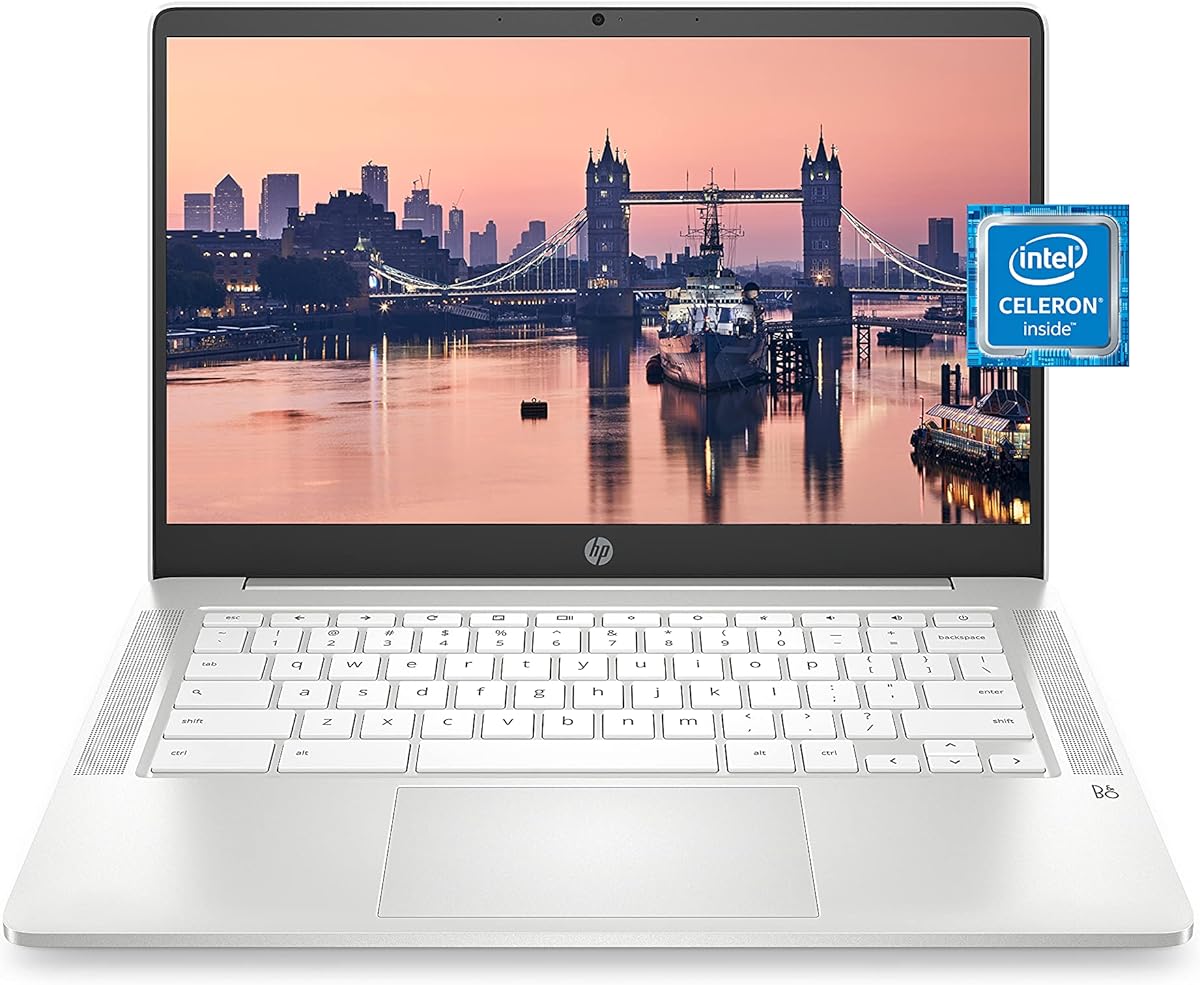


The HP Chromebook 14 is a well-rounded option for people who mainly browse, watch online video, communicate, and manage light school or office tasks. Its 4.3 rating reflects a generally favorable reception, while the combination of a thin 14-inch chassis, Chrome OS, and a claimed battery life of up to 14 hours makes it especially practical for a full day of casual use.
We may earn a commission when you buy through this link, at no additional cost to you.
The Intel Celeron N4120 is a quad-core processor designed around efficient everyday performance, and 4GB of RAM is sufficient for ordinary web workflows. The 1366-by-768 anti-glare display helps keep text and pages visible in bright surroundings, while the 64GB eMMC provides local storage for essential files. Wi-Fi, Bluetooth, stereo speakers, a webcam, and Chrome OS support round out a useful everyday package.
The main limitations are the modest HD resolution and relatively small memory. Larger, more complex pages may feel less polished than they would on a Full HD or higher-resolution display, and heavy use across many applications can strain the available RAM. The 64GB storage also leaves little room for a large local media library, although cloud-based workflows reduce the need for that space.
This is a sensible recommendation for students, travelers, and home users who want a larger screen without carrying a bulky traditional laptop. It is especially suitable when long battery life, an anti-glare panel, and low-friction web access matter more than intensive software performance.
The stated battery life of up to 14 hours gives this Chromebook considerable flexibility for school, work, and entertainment. HP Fast Charge also offers a convenient way to add several hours of use during a short break, although real runtime varies with brightness, connectivity, and workload.
The 14-inch anti-glare panel is useful for reading articles, shopping online, and joining video calls. Its 1366-by-768 resolution is less detailed than Full HD alternatives, but the larger canvas can still make side-by-side browsing and ordinary coursework more comfortable.
We may earn a commission when you buy through this link, at no additional cost to you.
The Lenovo Flagship Chromebook stands out for its sharp Full HD touchscreen and modern connectivity. With a 4.2 rating, it offers a strong browsing combination for users who want detailed pages, responsive touch navigation, and a slim profile without moving beyond the Chromebook format.
We may earn a commission when you buy through this link, at no additional cost to you.
Its 1920-by-1080 IPS display provides more usable space and finer detail than a standard HD panel. The touchscreen supports natural gestures, while the integrated 720p webcam and physical privacy shutter add useful controls for calls and private sessions. An eight-core MediaTek Kompanio 520, 4GB of RAM, 64GB of eMMC, Wi-Fi 6, and Bluetooth 5.1 support everyday online work and entertainment.
Its specifications are not intended to rival higher-end Windows systems for heavy multitasking or demanding desktop applications. Four gigabytes of RAM and 64GB of storage suit web browsing, Google Workspace, communication, and streaming, but large local file collections may quickly reach the storage limit. The 720p camera is adequate rather than exceptional for high-quality video collaboration.
The Lenovo Flagship Chromebook is a compelling pick for students and remote workers who want a crisp, touch-friendly display in a portable chassis. It is also a good fit for users who appreciate a built-in camera privacy shutter and would rather avoid the maintenance demands of a full desktop operating system.
The combination of Full HD resolution, IPS technology, and a touchscreen gives this model a more polished feel for long reading sessions and media viewing. Touch navigation can also reduce reliance on the trackpad when scrolling or repositioning pages.
Wi-Fi 6 and Bluetooth 5.1 provide current wireless standards for compatible networks and accessories. The webcam's integrated privacy shutter provides a straightforward way to block the camera when it is not needed.
We may earn a commission when you buy through this link, at no additional cost to you.
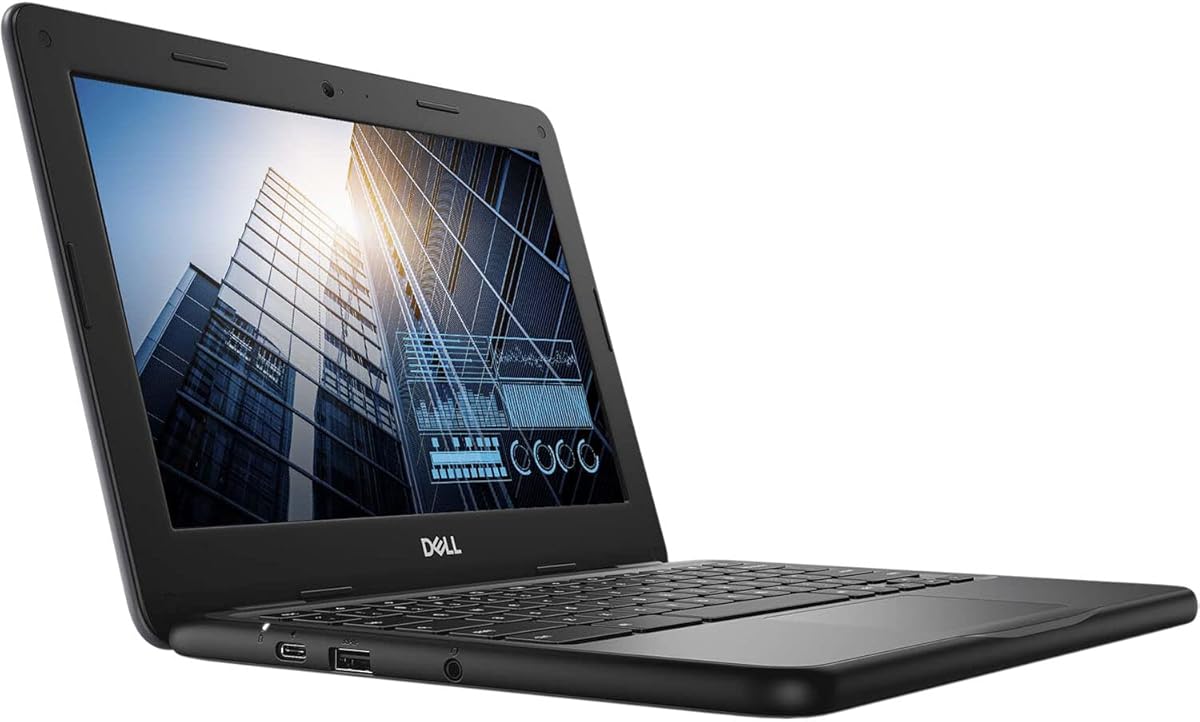
The renewed Dell Chromebook 11 3100 is a practical choice for buyers who want an inexpensive, compact computer devoted to internet browsing. Its 4.2 rating suggests that the core Chromebook experience works well, and the 11.6-inch size makes it easier to carry than a conventional full-size notebook.
We may earn a commission when you buy through this link, at no additional cost to you.
The Intel Celeron N4020, 4GB of RAM, Intel HD Graphics, and Chrome OS form an appropriate foundation for websites, email, video calls, and Google-based productivity tools. Bluetooth is included, while the 1366-by-768 display provides a familiar workspace for ordinary browsing. Because the machine is renewed, it offers a different purchasing route than a new configuration.
The main compromise is the 16GB flash memory. This is enough for a web-centered operating system and a limited set of local files, but it requires regular use of cloud storage and careful file management. The 11.6-inch panel is also less expansive than the 14-inch and 15.6-inch alternatives, which may matter for people who keep several pages open at once.
This Chromebook is best for a student working on assignments, a traveler who needs a lightweight web client, or a secondary household computer. Buyers should examine the renewed condition and included accessories, but for uncomplicated online access it covers the essentials without unnecessary complexity.
The compact 11.6-inch form is particularly useful for students and anyone who moves between home, school, or cafés. It offers enough screen for everyday web tasks without requiring the larger footprint of a media-oriented Chromebook.
With only 16GB of flash memory, the Chromebook encourages users to keep documents and media in cloud services. That limitation is less troublesome for a web-first device, but it is important for buyers who expect to save large files locally.
We may earn a commission when you buy through this link, at no additional cost to you.
The Dell Chromebook 11 Touchscreen adds a convertible 2-in-1 design to the familiar 3100 platform. It earns a 4.3 rating and gives web-focused users more ways to interact with content through a compact touchscreen, which can be particularly handy for reading, media viewing, and casual browsing.
We may earn a commission when you buy through this link, at no additional cost to you.
Inside, a dual-core Intel Celeron N4020 and 4GB of RAM provide enough power for Chrome OS browsing, Google Workspace, online video, and communication. Storage doubles to 32GB compared with the standard renewed model listed in this guide, giving more room for applications and locally saved documents. USB Type-C connectivity, Bluetooth, a power adapter, and the touchscreen round out the practical feature set.
Screen quality remains a compromise because the 1366-by-768 resolution is dated by modern Full HD standards. It is adequate for browsing but will not deliver the same fine detail as the Lenovo, Acer, or HP x360 options. As a renewed product, its physical condition, warranty terms, and included components should also be confirmed before ordering.
This model is a good match for a student who wants touch interaction, a reader who prefers a compact tablet-like format, or a buyer seeking a versatile second computer. It is less appropriate for users who need a highly detailed display or intend to run memory-intensive applications.
The 2-in-1 design lets users switch between a traditional laptop arrangement and more touch-oriented positions. That flexibility can make recipes, articles, video calls, and entertainment easier to view in different locations.
The 32GB flash memory provides a more useful balance than the 16GB version for downloaded files, browser extensions, and offline documents. Online storage remains important, but local capacity is less restrictive.
We may earn a commission when you buy through this link, at no additional cost to you.
The HP Essential Laptop 2026 is the most versatile recommendation in this guide because it combines a familiar Windows 11 interface with current connectivity, a broad port selection, and enough everyday performance for browsing, streaming, document editing, and online learning. Its 4.4 rating is among the highest in the group.
We may earn a commission when you buy through this link, at no additional cost to you.
The Intel N150 processor includes four cores and four threads, while 4GB of LPDDR5 RAM and 128GB of UFS storage support routine productivity. A 14-inch anti-glare HD screen, 720p camera, dual-array microphones, Wi-Fi 6, and Bluetooth 5.4 cover common communication needs. Two USB-A ports, USB-C with DisplayPort, HDMI, a card reader, and an audio jack make peripheral connections straightforward.
Its limitations are typical of a basic Windows notebook. The 1366-by-768 display lacks the detail of Full HD screens, and 4GB of memory is not ideal for many heavy applications or numerous simultaneous tasks. The listed battery figures are useful for planning, although actual runtime depends on settings and activity. Windows also provides more flexibility than Chrome OS but demands more storage and maintenance.
This laptop is an excellent choice for someone who primarily browses but occasionally needs Microsoft Office, a full desktop application, or broader file compatibility. It is also a safer recommendation for households that already use Windows and want a straightforward general-purpose computer.
Unlike a Chromebook, this laptop can run traditional desktop software and work with a wider variety of file formats. That makes it a stronger fit for users whose browsing habits are intertwined with Microsoft Office or Windows-specific applications.
The mix of USB-A, USB-C with video output, HDMI, Bluetooth, and Wi-Fi 6 reduces the need for adapters. A user can connect wired peripherals, external displays, headphones, and wireless accessories without building an elaborate accessory kit.
We may earn a commission when you buy through this link, at no additional cost to you.
The HP Chromebook 14 N4000 is a strong web companion for people who place mobility and battery life at the top of their priorities. Its 4.4 rating reflects a well-received balance of a lightweight 14-inch design, Chrome OS convenience, and a stated wireless streaming runtime of up to 13 hours and 30 minutes.
We may earn a commission when you buy through this link, at no additional cost to you.
The Intel Celeron N4000 and Intel UHD Graphics 600 are designed for everyday browsing, music, movies, and communications. A 4GB RAM configuration supports standard web workloads, while the 32GB eMMC provides basic local storage. The anti-glare 1366-by-768 display, Wide Vision HD camera, dual-array microphones, Wi-Fi 5, and Bluetooth 5.0 cover the core needs of a study or home computer.
The 2021 model designation and N4000 processor indicate an older platform, and the HD display is less detailed than newer Full HD choices. Only 32GB of local storage is also restrictive for downloadable media. Wi-Fi 5 remains useful on many networks, though Wi-Fi 6 models are better prepared for newer routers and crowded wireless environments.
This Chromebook suits users who want to browse away from home without carrying a charger and who are comfortable with a cloud-centered workflow. It is a strong alternative for travel, note-taking, light schoolwork, and streaming, provided current availability and condition meet the buyer's expectations.
A stated runtime of up to 13 hours and 30 minutes during wireless streaming supports all-day use away from an outlet. Actual results vary, but the specification is among the strongest claims in this comparison.
The integrated HD camera and dual microphones provide the core tools for online meetings and remote learning. Wi-Fi 5 and Bluetooth 5.0 also cover everyday network and accessory connectivity.
We may earn a commission when you buy through this link, at no additional cost to you.
The Acer Chromebook 315 is ideal for people who want a generous screen while browsing, reading, or watching video. Its 4.4 rating and 15.6-inch Full HD IPS panel distinguish it from smaller, lower-resolution models, making this a strong option for a home desk or shared family computer.
We may earn a commission when you buy through this link, at no additional cost to you.
The dual-core Intel Celeron N4500, 4GB of LPDDR4X memory, and 64GB of eMMC suit standard Chrome OS tasks. The 1920-by-1080 IPS display offers detailed pages and broad viewing angles, while dual-band Wi-Fi 6, Bluetooth 5.1, DTS audio, and stereo speakers improve media and accessory experiences. Four USB ports support wired peripherals, and the claimed battery life reaches up to 10 hours.
Its larger display also means a bulkier device that may be less convenient for frequent travel. Chrome OS automatically updates and provides Android app access, but 4GB of memory and 64GB of storage are modest for heavy multitasking or offline media. The N4500 is appropriate for browsing but not for demanding software workloads.
Choose the Acer Chromebook 315 when screen size, sharpness, and comfortable media viewing matter most. It is particularly well suited to students working from a desk, families sharing a browsing device, and users who spend long periods reading articles or watching streaming content.
The 15.6-inch Full HD display gives webpages, video calls, and streaming content more visual room than the smaller HD options. IPS technology also makes the screen easier to view from different positions.
Two USB-C and two USB-A ports make it easy to connect existing accessories. DTS audio and stereo speakers add a more satisfying option for casual media consumption than a basic laptop speaker setup.
We may earn a commission when you buy through this link, at no additional cost to you.
The HP Chromebook x360 Plus is the premium choice in this roundup because it combines a high-resolution touchscreen with a flexible 360-degree hinge. The 4.2 rating reflects a modern, flexible product that supports browsing in laptop, tent, stand, and tablet modes.
We may earn a commission when you buy through this link, at no additional cost to you.
Its 1920-by-1200 WUXGA touchscreen offers more detail than the standard HD models, while a 300-nit anti-glare coating helps with readability. The Intel N150, 4GB of LPDDR5 memory, and 128GB of UFS storage are appropriate for browsing, video streaming, document editing, and light multitasking. Wi-Fi 6, Bluetooth 5.4, an FHD camera with temporal noise reduction, and USB-C and USB-A connections provide a current feature set.
The convertible mechanism adds thickness and may be unnecessary for someone who only browses at a desk. Four gigabytes of RAM is still limited, so demanding applications and very heavy tab loads should be approached cautiously. The product information also notes that the computer was resealed for an upgrade, making its condition and remaining warranty terms worth checking.
This Chromebook is a good fit for readers, students, families, and professionals who value a premium display and the ability to switch between typing and touch interaction. It is especially attractive for web research, handwritten notes, presentations, video viewing, and shared household use.
The 360-degree hinge supports laptop, tent, stand, and tablet modes. That flexibility makes the device useful for reading, presenting, video viewing, and collaborative work without requiring separate accessories for every position.
The WUXGA panel provides 1920-by-1200 resolution, a noticeable step up from standard HD screens. Its anti-glare finish and 300-nit brightness balance readability, reflections, and everyday indoor use.
We may earn a commission when you buy through this link, at no additional cost to you.
The HP Chromebook 14 N100 is a strong option for web users who want more memory than most entry-level Chromebooks provide. Its 4.4 rating, 8GB of LPDDR5 RAM, and 128GB of UFS storage make it particularly suitable for keeping multiple tabs and applications open while browsing.
We may earn a commission when you buy through this link, at no additional cost to you.
The Intel N100 offers efficient everyday performance, while Intel UHD Graphics support smooth 4K content streaming. Chrome OS brings a familiar browser-centered interface, automatic updates, and access to Google applications. The 14-inch anti-glare HD screen is designed to reduce reflections, and 128GB of UFS storage offers more room for applications and local files than the 16GB or 32GB alternatives in this guide.
Its main weakness is display resolution. The 1366-by-768 panel is adequate for ordinary sites, videos, and documents but will appear less sharp than the Full HD, WUXGA, and Acer 15.6-inch options. The product data also does not identify a touchscreen, so buyers seeking touch interaction should look elsewhere. A stated long battery life is not included in the supplied specifications.
This model is a good recommendation for a multitasker who primarily works in the browser but still wants an uncomplicated Chromebook. It is also well suited to shared family use, research, online learning, and users who dislike restarting or closing tabs while moving between research and communication tasks.
The 8GB LPDDR5 memory is the main advantage over 4GB models. It leaves more room for browser tabs, communication tools, and lightweight applications to remain active during a typical session.
The 128GB UFS drive provides a useful amount of local capacity while supporting efficient, low-power operation. It is still a Chromebook-class storage amount, so cloud backup remains a sensible practice for important files.
We may earn a commission when you buy through this link, at no additional cost to you.
The Samsung Galaxy Chromebook Go is a refined option for users who want a slim Chrome OS computer for browsing on the move. It has a 4.3 rating and a design that emphasizes portability, durability, battery life, and integration with Google services and a compatible phone.
We may earn a commission when you buy through this link, at no additional cost to you.
Its Intel Celeron N4500, 4GB of RAM, and 64GB of storage provide a conventional Chromebook configuration for websites, Google Workspace, online learning, communication, and streaming. The slim 14-inch form is easy to carry, and the stated 12-hour battery supports extended use away from an outlet. Samsung also highlights its durable construction and the ability to transfer files and control a phone from the Chromebook.
Like most models in this category, 4GB of memory and 64GB of storage are modest. A large collection of open tabs, offline media, or many installed applications could make the system feel constrained. The advanced Wi-Fi claim depends on compatible networks and equipment, while the included Google AI Pro trial and cloud-storage promotion are temporary rather than permanent feature guarantees.
This Chromebook is a good recommendation for a student or mobile professional who values a polished, portable design and uses Google services extensively. It is also attractive to anyone who wants simple file transfer between a phone and laptop without carrying a heavier traditional notebook.
The slim 14-inch chassis balances a useful screen size with portability. It suits students and commuters who want a full laptop experience without the weight of a larger workstation.
Chrome OS includes familiar Google applications, cloud backup, and phone interaction features. These tools make the laptop especially natural for users whose documents, communication, and media already live in Google's ecosystem.
We may earn a commission when you buy through this link, at no additional cost to you.
For casual internet use, prioritize the features that affect everyday comfort rather than maximum performance. Screen quality, wireless reliability, battery life, portability, and operating-system simplicity usually matter more than demanding specifications.
Screen size determines how comfortably you can browse, read, and join calls. An 11.6-inch model is portable and suitable for short sessions, while a 14-inch display offers a more balanced workspace for students and home users. The 15.6-inch Acer Chromebook 315 is best for people who value a large canvas for reading or streaming. Resolution matters as well: 1366-by-768 screens remain functional, but 1920-by-1080 and 1920-by-1200 panels show text and images with noticeably more detail.
Browser tabs, streaming services, video calls, and web applications all benefit from additional memory. Most models here include 4GB of RAM, which is sufficient for light browsing but can feel limited when many tabs are open. The HP Chromebook 14 N100 stands out with 8GB. Storage also varies substantially: 16GB, 32GB, 64GB, and 128GB are all offered. Web-focused users can lean on cloud storage, but anyone keeping downloaded videos, large files, or desktop software should favor more local capacity.
Chrome OS is designed around web browsing, automatic updates, Google applications, Android apps, and cloud-based workflows. It is usually simple to maintain and well suited to students or secondary computers. Windows 11 offers much broader application and file compatibility, making it the better option for users who need Microsoft Office, specialized business software, or traditional desktop programs. That flexibility comes with greater storage and hardware demands.
Battery figures can be misleading because manufacturers often quote a specific activity, such as video playback or wireless streaming. The HP Chromebook 14 claims up to 14 hours, the HP N4000 model up to 13 hours and 30 minutes, the Samsung Chromebook Go 12 hours, and the HP Essential Laptop up to 11 hours of video playback. Real results vary with screen brightness, Wi-Fi strength, video quality, and the number of open applications.
Fast wireless connectivity is essential for smooth pages, streaming, and calls. Wi-Fi 6 appears on the Lenovo, Acer, HP Essential, HP x360 Plus, and HP N100 Chromebook listings, making them a sensible choice with compatible routers. Wi-Fi 5 remains adequate for many homes. Bluetooth support is nearly universal in this group, while USB-C, USB-A, HDMI, card readers, and headphone connections determine how easily you can add accessories or external displays.
A touchscreen can make scrolling, reading, and media viewing more natural, particularly on a compact or convertible model. The Lenovo Flagship Chromebook, Dell Chromebook 11 Touchscreen, and HP Chromebook x360 Plus include touch functionality. The x360 adds four convertible modes, while the Dell offers a smaller 2-in-1 design. If the primary task is typing in a browser, a conventional clamshell with a larger battery claim may provide a better balance.
A laptop intended for browsing in different locations should be easy to carry and comfortable to use. The Lenovo and Dell Chromebooks are particularly compact, while the HP and Samsung models balance larger screens with slim designs. Weight matters when the computer will move between rooms or travel in a backpack. Convertible hinges and premium materials may improve versatility or durability, but they can also add bulk and complexity.
Renewed models can provide a less expensive route to a capable browser, but they differ from new machines in warranty, cosmetic condition, packaging, and included accessories. The Dell Chromebook 11 and touchscreen version are listed as renewed. Buyers should look for seller details, condition descriptions, return policies, battery health information, and confirmation that the power adapter and essential components are included.
Sign in with your preferred Google account when using a Chromebook, then synchronize bookmarks, passwords, documents, and browser extensions through Chrome. Install only the applications you genuinely need, enable automatic updates, and use cloud storage for important files. For a Windows laptop, complete the initial system setup, install essential browser and security updates, and connect your preferred cloud account so that important documents are backed up.
Keep the system responsive by closing unused tabs, removing unnecessary browser extensions, and restarting periodically. Adjust the display brightness and power settings to match your battery needs, and use the included charger during long sessions. When the computer is not in use, save work and close the lid rather than leaving a large number of tabs and applications active.
Protect the device with a clean microfiber cloth, keep liquids away from openings, and avoid placing heavy objects on a touchscreen or keyboard. Use a ventilated surface and clean ports without pushing debris inward. For travel, keep the laptop in a padded case and check that all accessories are secured. Replacing a Chromebook or entry-level Windows laptop every few years can keep security updates, browser compatibility, and battery performance in good shape.
Yes, a Chromebook is designed primarily around web browsing, Google Workspace, communication, streaming, and Android applications. It is a strong choice for students, travelers, and users who spend most of their time in websites and cloud-based tools. Choose Windows instead if you regularly need specialized desktop software or extensive local file management.
Four gigabytes of RAM is adequate for a small number of tabs, email, video calls, and standard web applications. Eight gigabytes provides more breathing room for heavy multitaskers and many open services. The HP Chromebook 14 N100 is the only recommendation here with 8GB, and it is a sensible choice for users who regularly keep numerous tabs open.
A higher-resolution display makes text, photographs, and small interface elements appear sharper, particularly on 14-inch and 15.6-inch models. The Full HD Lenovo and Acer Chromebooks and the WUXGA HP x360 Plus offer finer detail than 1366-by-768 screens. The standard HD resolution remains adequate, but it may look less polished when reading dense pages.
A touchscreen can improve scrolling, reading, and media viewing, but it is not essential for every browser. It is most useful on compact and convertible models such as the Dell Chromebook 11 Touchscreen and HP Chromebook x360 Plus. If you mainly type in a fixed position, a standard clamshell with a long claimed battery life may offer better value.
They can be, provided the device is functioning properly and the expected cosmetic condition matches the seller's description. Check the processor, memory, storage, screen, battery, camera, microphones, Wi-Fi, and Bluetooth before finalizing a purchase. Warranty coverage, included accessories, and return options are especially important with renewed equipment.
Neither is universally better. Chrome OS offers a simpler, security-conscious, browser-centered experience, while Windows supports a much wider range of desktop applications and file types. A Chrome OS laptop is ideal when internet services are the core of the workflow. A Windows laptop is preferable when browsing must be combined with Microsoft Office, specialized business tools, or demanding local software.
The answer depends on whether you rely on cloud storage. Online documents and streamed media can reduce the need for local capacity, while downloaded files, offline videos, and installed applications require more space. Models with 64GB are adequate for web-first use, but 128GB provides more flexibility. The 16GB Dell option is best for buyers willing to manage storage carefully.
That depends on where you use the computer. Frequent travelers and students may value a long claimed runtime more than extra pixels, while people working at a desk will notice Full HD or WUXGA detail throughout the day. Consider screen size, portability, and battery claims together, and check the specific activity used to support each manufacturer's runtime estimate.
The HP Essential Laptop 2026 is the strongest all-around choice for buyers who want Windows flexibility alongside modern wireless connectivity, useful ports, and solid battery claims. The renewed Dell Chromebook 11 3100 represents the most compact and economical route into web browsing, while the HP Chromebook x360 Plus offers the most distinctive premium experience through its high-resolution touchscreen and convertible design.
Most shoppers will get the best results by prioritizing the computer that matches their workspace. Choose a small Chromebook for maximum portability, a Full HD model for sharper reading, an 8GB configuration for heavier browser multitasking, or Windows when traditional applications are essential. Touchscreens and convertible hinges add value for some users but are not necessary for every browsing routine.
Before ordering, verify the current listing, warranty, included accessories, storage, connectivity, and battery details. Product specifications, ratings, availability, and prices can change over time, so the latest Amazon listing should be the final basis for the purchase decision.