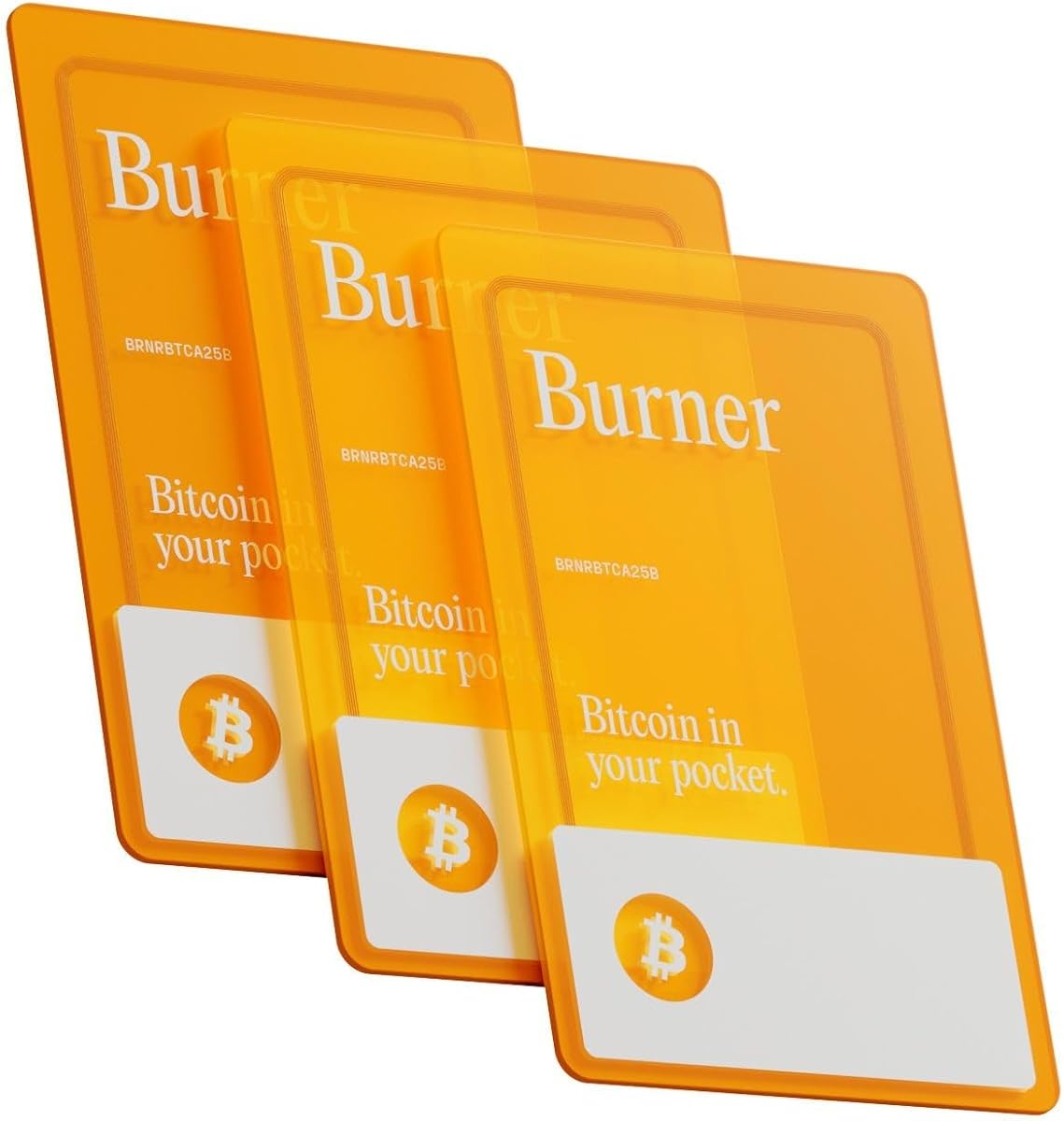
Bitcoin Crypto Wallet 3pk
4.8Editor score
No seed phrase required
PIN-locked browser access
Open-source firmware
A physical Bitcoin wallet gives you direct control over your cryptocurrency by keeping private keys away from the internet. The strongest options combine isolated key storage, clear transaction verification, dependable recovery options, and an interface that makes everyday self-custody easier without weakening its security foundations.
We compared ten hardware wallets and card-based designs across security architecture, Bitcoin support, backup methods, transaction verification, app compatibility, supported assets, and ease of setup. The list covers air-gapped devices, NFC cards, multi-signature systems, and simple offline cards for holding or gifting Bitcoin.
Each pick highlights a distinct way to approach physical Bitcoin ownership, from premium touchscreen models to seed-free cards and expandable multi-device sets. Product details and customer ratings can change, while marketplace pricing also fluctuates, so confirm the latest specifications and current cost before buying.
4.8Editor score

4.5Editor score

4.2Editor score
As an Amazon Associate we earn from qualifying purchases.
The comparison below highlights the main differences in connectivity, key storage, recovery, asset support, and transaction verification. It also shows where simple card designs differ from sophisticated air-gapped devices and multi-signature systems.


The TANGEM Crypto Wallet Pack of 2 is our top overall physical Bitcoin wallet for buyers who want serious offline key protection without the complexity of a screen-equipped device. It carries a 4.5 customer rating and combines an EAL6+ secure element with a card format that needs neither a battery nor a USB connection. Its two physical cards also provide a more practical backup arrangement than relying on a handwritten recovery phrase alone.
We may earn a commission when you buy through this link, at no additional cost to you.
The central security benefit is straightforward: private keys remain inside the protected chip rather than being exposed to a computer, browser, or Bluetooth connection. The wallet supports 90 blockchains and more than 14,100 coins and tokens, giving Bitcoin owners room to manage other assets through the same interface. Transaction signing is performed by tapping a card to a phone, while the second card can store encrypted backup keys that help restore access if one card is lost.
There are some compromises. A smartphone and companion app are required for routine management, and users who want familiar seed-phrase portability can choose the optional recovery method. The card format also provides less on-device transaction context than a touchscreen model. Even so, these limitations are reasonable given the wallet's broad asset support, lack of batteries, strong physical construction, and straightforward tap interaction.
Choose this pack if you want a versatile cold wallet that is easy to carry, backed by more than one physical card, and capable of supporting much more than Bitcoin alone. It is particularly well suited to people who value simple operation and durable hardware without needing a large air-gapped device. For most self-custody shoppers, it offers the most balanced combination of usability, resilience, and functionality in this list.
The EAL6+ secure element stores private keys in a protected environment, while the absence of USB, Bluetooth, and battery hardware reduces the number of communication paths an attacker could exploit. The cards remain offline until the user intentionally taps them to a phone.
Using the second Tangem as encrypted backup storage reduces dependence on a single card or a piece of paper. It can also provide a practical way to keep one card accessible and another securely stored in a separate location.
We may earn a commission when you buy through this link, at no additional cost to you.
The TANGEM Crypto Wallet Pack of 3 is a natural extension of the two-card configuration and is ideal for buyers who want more separation between active and backup credentials. It retains the same 4.5 rating, EAL6+ secure element, 90-blockchain support, and extensive list of 14,100-plus coins and tokens. The additional card gives users more options for distributing recovery information across different physical locations.
We may earn a commission when you buy through this link, at no additional cost to you.
Nothing about the core design requires a USB cable, Bluetooth radio, battery, or complex configuration. Users tap a card to a phone and manage cryptocurrency through the associated app. Multiple cards can be organized as an active wallet, a backup wallet, and a further recovery component, which may suit households, travelers, or anyone maintaining several asset portfolios.
The obvious drawback is that a three-card system requires more planning than a single device. Every card must be labeled and stored responsibly, and users may need to decide which card travels with them and which stays at home. The app is still required for common management tasks, and there is no built-in display for reviewing transaction details on the card itself.
Buy this version if you want the strongest backup flexibility in the TANGEM range. It is especially useful for splitting access across multiple secure locations, keeping separate cards for different purposes, or creating a more comprehensive redundancy plan. The same durable, wireless-free construction makes it suitable for travel and long-term storage.
A three-card arrangement can support a deliberate separation strategy: one card for regular use, another retained as a backup, and a third kept in a different secure location. Clear labeling helps prevent confusion during recovery.
The cards are described as waterproof, shockproof, and tested across temperatures from −25°C to 50°C. Those physical characteristics make the set less dependent on the environmental conditions of a desk or home.
We may earn a commission when you buy through this link, at no additional cost to you.
The ELLIPAL X Card is a compact, NFC-based physical wallet that combines card-like portability with hardware key isolation. It has a 4.4 customer rating, uses an EAL6+ secure element, and supports Bitcoin, Ethereum, XRP, NFTs, and more than 10,000 tokens across 45-plus blockchains. Its battery-free construction eliminates charging and firmware-update concerns.
We may earn a commission when you buy through this link, at no additional cost to you.
Setup is designed to be completed in approximately three minutes using the offline Starter device, after which the card can be tapped to the ELLIPAL mobile app. A particularly useful feature is its ability to import a compatible recovery phrase from wallets such as MetaMask, Trust Wallet, Ledger, or Trezor. That makes it possible to use the X Card as a physical counterpart to an existing wallet rather than starting over.
The main dependency is the phone and mobile app, which are needed to manage buys, sells, swaps, transfers, spending, and staking. NFC compatibility also depends on the phone used. Although the card is marketed as a cold wallet, users should think of the phone as the interface and network gateway while the physical card protects the private key.
This is a good option for people who want a slim hardware wallet with broad token support and an approachable tap workflow. It suits users migrating from a software wallet as well as those who want one card to hold several popular asset types. Existing-wallet import and EAL6+ protection make it especially appealing for experienced crypto users.
Compatible recovery phrase import lets users reproduce the logic of an existing wallet on the X Card. This can make a gradual migration to physical storage more practical than trying to move every asset and account at once.
The card needs no battery, charging cable, or firmware update. Its limited hardware also reduces the attack surface associated with continuously powered connected devices, while NFC provides a direct method for signing transactions.
We may earn a commission when you buy through this link, at no additional cost to you.
The ELLIPAL Titan 2.0 is the premium choice in this guide because it offers a four-inch touchscreen and complete air-gapped operation. It carries a 4.2 rating, supports Bitcoin, Ethereum, Solana, XRP, NFTs, and more than 10,000 tokens, and can manage up to five separate accounts. The device has no Wi-Fi, Bluetooth, or network cable, creating a clear separation between the signing device and the internet.
We may earn a commission when you buy through this link, at no additional cost to you.
Its screen is the key differentiator. Transaction details are laid out in readable language, including the recipient, amount, and smart-contract permissions, and the device double-checks information exchanged with the phone. This approach is intended to reduce blind signing, a common concern when a hardware wallet shows only a shortened destination or abbreviated authorization request.
Air-gapped signing is secure but not entirely frictionless. Transactions commonly pass between the phone and device through QR codes, so users must accept that extra step and carefully inspect the display. The device is also bulkier than card-based options, and its 4.2 rating is slightly lower than the ratings of several simpler products in the list.
This model is best for a Bitcoin owner who wants detailed, independent transaction review and can accept a larger device. It is particularly attractive for users maintaining distinct accounts for savings, spending, trading, or family funds. The combination of a large display, offline account creation, and no connectivity makes it a strong option for security-conscious buyers who value transparency.
The touchscreen presents transaction requests in a format designed to be read before approval. Users can check the destination, amount, and contract authorization rather than approving an opaque instruction with little context.
Support for as many as five accounts makes the Titan useful for distinguishing long-term holdings from everyday spending or active activity. Separate accounts can make organization clearer without requiring a separate physical wallet for every purpose.
We may earn a commission when you buy through this link, at no additional cost to you.
The Ballet REAL Card is the most deliberately simple physical Bitcoin wallet in the list. It has a 4.4 customer rating and contains no electronic components, battery, Bluetooth radio, USB port, or firmware. That makes it fundamentally different from a conventional hardware wallet: the card is designed for secure holding rather than continuous online management or active trading.
We may earn a commission when you buy through this link, at no additional cost to you.
The card also removes seed phrases and passwords from the user experience. Instead, the Ballet app is used when needed to view balances, load cryptocurrency, and withdraw funds by scanning the card's QR code. The card itself remains offline even during those interactions, so the internet-facing app does not directly become the place where private keys are stored.
Its limitations follow directly from that design. The REAL Card is not built for frequent transactions, signing complex smart contracts, or operating like a full mobile wallet. Users who need detailed on-device transaction review may find a larger screen-equipped device more appropriate, while anyone expecting seamless NFC interaction may prefer a different card format.
Choose the Ballet REAL Card if your priority is long-term Bitcoin storage, minimal setup, and physical simplicity. It is also compelling for gifting, introducing someone to self-custody, or creating a secondary holding device that can be stored in a safe. The absence of electronics makes it unusually easy to understand and maintain.
A card without a radio, port, battery, or firmware has a smaller potential attack surface than a connected hardware device. It also has fewer everyday maintenance requirements and can be physically stored like an important document.
The Ballet REAL Card is built for the part of Bitcoin ownership that involves storing value for the long term. It is less appropriate for users who need frequent payments, broad token support, or advanced transaction workflows.
We may earn a commission when you buy through this link, at no additional cost to you.
The three-pack Bitcoin Crypto Wallet from Burner.pro is our best budget pick and the highest-rated product in the guide at 4.8. It offers a physical, reloadable way to hold Bitcoin without requiring a seed phrase, mobile application, exchange account, or complex technical setup. Access is handled through a browser and protected by a PIN.
We may earn a commission when you buy through this link, at no additional cost to you.
Each card provides a way to load Bitcoin, while the wallet locks after failed attempts. The product uses hardware-grade secure elements and open-source firmware, offering a useful combination of physical security and transparency. WalletConnect compatibility also allows interaction with supported decentralized applications, NFTs, and other Web3 services.
The tradeoff is that browser access means the device's operational interface is still connected to the internet even though the stored Bitcoin is intended to remain in cold storage. The feature set is also more Bitcoin-focused than broad multi-chain wallets. Users who need extensive altcoin, DeFi, or smart-contract support may prefer the ELLIPAL cards or Titan.
This pack is a strong choice for beginners, casual Bitcoin holders, and gifting situations. Three cards can be distributed among family members or used for separate holdings without juggling multiple complicated devices. It also appeals to users who value transparent firmware and would rather avoid writing down a recovery phrase.
The no-seed-phrase design lowers the chance that a user will lose access through a forgotten or poorly stored recovery sequence. The card itself becomes the object that must be protected, making the security model easier to explain.
Because each card can be loaded and handed to a recipient, this format works well for introducing someone to Bitcoin. The three-pack also makes it easy to prepare several cards for different people or separate storage locations.
We may earn a commission when you buy through this link, at no additional cost to you.
The ELLIPAL X Card Pack of 3 combines the portability of the single X Card with a more resilient backup arrangement. It has a 4.4 rating, an EAL6+ secure element, and support for more than 10,000 tokens across 45-plus blockchains. Each card works through NFC and requires no battery, charging, or firmware update.
We may earn a commission when you buy through this link, at no additional cost to you.
The pack can serve several purposes. One card may remain with the owner, another may be kept as a backup, and a third may be stored elsewhere. Users who already hold a compatible recovery phrase can import it from popular software and hardware wallets, giving them an option to create a physical counterpart without transferring every asset immediately.
As with the single-card version, management depends on a compatible phone and the ELLIPAL app. The card does not provide its own transaction screen, so users are relying on the phone interface and their own review process. The three-card package can also feel excessive for a buyer interested in only one Bitcoin wallet.
This pack is a good fit for multi-asset investors who want card-format cold storage and value physical redundancy. It is less attractive for someone who only holds Bitcoin or needs advanced on-device transaction inspection. Its strongest combination is broad token support, solid chip protection, and the convenience of several NFC cards.
Three cards allow owners to avoid depending on one item or one location. They can be separated between a daily-carry wallet, a home safe, and another trusted storage point while retaining the same simple tap workflow.
Support for 45-plus networks and more than 10,000 tokens lets a user manage Bitcoin, Ethereum, XRP, NFTs, and DeFi assets through the same card format. That breadth makes the pack more useful than a Bitcoin-only storage card.
We may earn a commission when you buy through this link, at no additional cost to you.
The Bitkey Bitcoin Hardware Wallet is a focused, screen-equipped option for Bitcoin owners who want clear transaction confirmation and a seed-free account structure. It carries a 4.7 customer rating. Unlike general multi-asset wallets, Bitkey is dedicated to Bitcoin, which allows its interface, backup system, and inheritance tools to focus on a single network.
We may earn a commission when you buy through this link, at no additional cost to you.
The device uses a two-of-three multi-signature arrangement. One key is held on the phone, one is held on the Bitkey device, and the third is stored on Bitkey's server. No single component can move the Bitcoin by itself, while any two are required to authorize a transaction. The built-in screen lets users confirm transactions and security settings before approving them, and NFC is used for verification.
Bitkey eliminates the conventional seed phrase and includes encrypted backup and recovery tools. It also allows owners to designate a Recovery Contact and another Bitkey owner for inheritance. These features make it attractive for long-term holders, but the design also depends partly on the vendor's server for one key and recovery services, which some self-custody purists may not prefer.
Choose Bitkey if Bitcoin is your primary or only crypto interest and you value transaction visibility, guided recovery, and inheritance planning. It is less suitable for people who need Ethereum, altcoins, NFTs, or broad smart-contract support. Within the Bitcoin-only category, its combination of a 4.7 rating, screen, and recovery features is particularly compelling.
The built-in display places transaction confirmation directly on the hardware. Users can review details before approval, reducing reliance on a phone screen and making it easier to notice an incorrect destination or unexpected amount.
Encrypted recovery tools, a designated Recovery Contact, and inheritance options address scenarios that a seed phrase alone may not handle smoothly. These tools can help another trusted person regain access under specified circumstances.
We may earn a commission when you buy through this link, at no additional cost to you.
The six-pack Bitcoin Crypto Wallet offers a larger collection of reloadable cards for Bitcoin storage and gifting. It shares the guide's highest customer rating of 4.8 and prioritizes a simple user experience: no application, exchange account, or seed phrase is required. Each card includes a unique deposit address for loading Bitcoin from an exchange or another wallet.
We may earn a commission when you buy through this link, at no additional cost to you.
The cards use a printed, credit-card-style format and can be placed in a wallet, gift envelope, or secure storage location. Once funded, the Bitcoin remains in cold storage away from online threats. This makes the set a practical option for preparing presents for family and friends or creating several small storage cards for different purposes.
The format has clear boundaries. It is focused on Bitcoin rather than broad multi-asset management, and it does not provide a screen for inspecting complex transactions. Access is browser-based and PIN-locked, so while the stored funds are intended to remain offline, the management process still involves internet-connected software.
Buy the six-pack if you want several no-seed-phrase cards for gifting or organized long-term storage. It is less compelling for a single Bitcoin wallet or for active users who need token support, DeFi, and smart-contract functionality. For the stated purpose, however, it is one of the clearest and most approachable options in the guide.
A reloadable physical card turns an abstract digital asset into an object someone can hold and understand. Six cards also make it easy to prepare multiple gifts without setting up a different system for each recipient.
The premium printed materials and sealed card format are designed for long-term handling. A user can store each card in a safe, a deposit box, or another protected location without maintaining batteries or firmware.
We may earn a commission when you buy through this link, at no additional cost to you.
The Pro Crypto Cold Wallet is the most feature-rich conventional device in the list, combining a 3.5-inch touchscreen with four EAL6+ secure elements, fingerprint unlock, and air-gapped QR signing. It has a 4.3 customer rating and supports more than 30,000 coins and tokens across over 100 chains, as well as NFTs and DeFi applications.
We may earn a commission when you buy through this link, at no additional cost to you.
Its security claims are broad and technically specific. The product uses open-source firmware with reproducible builds, has been independently audited, and includes tamper-evident packaging, self-destruct safeguards, and first-boot firmware attestation. Clear-signing software is included to help identify phishing attempts, while the air-gapped workflow keeps the signing process separate from internet-connected systems.
This flexibility also makes the wallet more complex than a card or a single-purpose device. Users must learn the application, QR workflow, firmware verification, and physical safeguards. Fingerprint and Bluetooth or USB-C connectivity improve convenience but add functions that a fully offline card does not need. The device's wide compatibility list is attractive, though users should verify support for the exact assets and services they need.
This product suits technically engaged buyers who want a large screen, extensive asset support, open-source development, and multiple layers of physical and digital protection. It is a strong choice for active DeFi or multi-chain users who still want air-gapped signing. For passive long-term Bitcoin holders, a simpler card may offer a more manageable experience.
Four EAL6+ secure elements offer more specialized protection than a single-chip card. Tamper-evident packaging, self-destruct safeguards, and first-boot firmware attestation add further layers against physical and supply-chain interference.
WalletConnect v2, compatibility with MetaMask, OKX, and Rabby, and support for Windows, macOS, Linux, Android, and iOS make this a practical option for users who maintain different wallets across multiple devices. Open-source, reproducible builds also support more transparent verification.
We may earn a commission when you buy through this link, at no additional cost to you.
The right physical Bitcoin wallet depends on how much you hold, how often you transact, which assets you need, and how much technical complexity you are comfortable managing. Security should always come first, followed by recovery, verification, usability, and product-specific compatibility.
A hardware wallet should keep private keys isolated from the internet and away from the general-purpose device used to manage transactions. Cards that generate keys inside an EAL6+ secure element, or devices with multiple certified secure elements, are designed to limit the paths available to software and physical attackers. Air-gapped operation goes further by removing wireless and wired network connections, while transaction screens help confirm that the device is signing only what the user expects.
Choose products that clearly explain where keys are generated, how they are protected, and how transaction data moves between the wallet and its interface.
A secure wallet is only as recoverable as its backup plan. Seed phrases are familiar and portable, but they must be recorded and protected correctly. Encrypted card backups, multi-signature key splits, designated recovery contacts, and inheritance tools are alternatives that may be easier for some users. Multi-card packs can also let one card be active, one stored at home, and another kept in a separate secure location.
Prioritize a recovery method you understand completely and test it before relying on it for a significant balance.
A Bitcoin-only wallet can offer a focused experience and fewer moving parts. Multi-asset hardware wallets support Ethereum, Solana, XRP, stablecoins, NFTs, DeFi, and thousands of other tokens, but they also expose users to more transaction types, smart-contract permissions, and compatibility questions. Broad asset counts are useful only if the specific networks and tokens you need are genuinely supported.
Match the wallet to your actual portfolio rather than choosing on the largest advertised token count.
Physical Bitcoin wallets range from completely electronic-free cards to NFC, Bluetooth, USB, and fully air-gapped devices. Less connectivity can reduce attack surface but may complicate transfers, while wireless convenience introduces a different security model. Air-gapped systems use QR codes or similar one-way exchanges so signing can occur without linking the device to a live network. A card may remain offline while a phone app handles the connected parts of a transaction.
Decide whether your priority is minimal hardware, complete offline signing, or a smoother interface, then verify how transactions actually move.
A physical wallet should make it easy to confirm the destination, amount, network, and any smart-contract permission. A built-in screen offers a direct way to inspect complete transaction details without trusting a shortened phone prompt. Screenless cards place more responsibility on the companion app and the user's own verification routine. Blind-signing protection and clear-signing features are especially valuable when interacting with decentralized applications.
Choose a design that provides enough context for the transactions you intend to make.
Consider how often you expect to transact and whether you want a simple card, a compact NFC product, or a larger screen-equipped device. Browser-based access can be convenient, while a phone app may provide a richer asset-management experience. Fingerprint unlock, swipe-to-sign controls, guided setup, and rechargeable or wireless-charged devices can improve daily use, although each additional feature also adds complexity that must be understood.
The best wallet is one you can operate correctly without rushing through unfamiliar security steps.
Hardware wallets are exposed to drops, moisture, temperature changes, scratches, and accidental loss. Cards are inherently portable and easy to distribute, but they can be easily forgotten or misplaced. Larger devices may be more comfortable for transaction review but require more space and careful handling. Water resistance, shock resistance, tamper-evident packaging, and the ability to store cards in separate locations all contribute to long-term resilience.
Choose a physical design you are likely to store and use consistently rather than one you will leave in a drawer.
Review the companion software, operating-system support, and any vendor services that form part of the recovery model. Some wallets rely on an app to display balances and prepare transactions, while others use a browser interface or limited card-based workflows. WalletConnect support, open-source firmware, reproducible builds, and published audits can provide useful transparency. For multi-signature devices, consider the role of vendor servers and the availability of recovery contacts or inheritance functions.
Make sure the surrounding software meets your privacy and custody preferences, not just the device specifications.
Begin by purchasing directly from a trusted seller, checking that the packaging is intact, and comparing the hardware with the manufacturer's official images. Before depositing funds, update any required legitimate software, create the wallet using its official setup process, and confirm that the recovery or backup method works as described. Write down or store recovery information according to the product's guidance rather than improvising a shortcut.
To receive Bitcoin, open the wallet's receiving function and verify the address or payment identifier on both the physical device and the connected phone or browser. When sending, verify the recipient, amount, asset, network, and any contract authorization, especially on a screen-equipped model. Use a small test transfer before sending a large amount, and never approve a request simply because the phone prompt looks familiar.
Keep the device dry, away from extreme heat, and physically protected. Store backup cards or recovery materials in separate secure locations, record which card or key belongs to which wallet, and test that your documented recovery procedure remains accessible. Never share a seed phrase or PIN, and do not install unofficial firmware or software. Revisit your backup plan whenever you create a new wallet or change where the primary device is kept.
A physical Bitcoin wallet is a device or card that stores private keys separately from the internet and uses them to authorize transactions. Depending on the model, it may connect through NFC, Bluetooth, USB, QR codes, or a browser-based workflow. Its main purpose is to reduce the risk that a compromised computer or phone can directly extract the keys used to control Bitcoin.
A well-configured hardware wallet is generally safer for long-term storage because keys remain isolated from the internet. Mobile wallets are more convenient for frequent transactions and may be adequate for small balances. The hardware wallet's advantage depends on correct setup, careful transaction verification, secure backup, and protection of the recovery information.
Not every physical wallet requires one. The TANGEM options offer encrypted multi-card backup, while Ballet, Bitkey, and the Burner.pro cards use seed-free recovery approaches. Other wallets still use a seed phrase, and each method has different backup requirements. Learn the exact recovery process before adding a significant amount of Bitcoin.
An air-gapped wallet does not connect through Wi-Fi, Bluetooth, USB, or another network and normally exchanges transaction data through QR codes. An NFC wallet communicates with a nearby phone when tapped, while keeping the private key inside its secure chip. Air-gapped devices add a visible isolation step, whereas NFC products prioritize convenience and compact size.
Many modern devices do, but compatibility varies by model. The TANGEM, ELLIPAL, and Pro Crypto Cold Wallet options support multiple networks and large token collections, while Ballet and Bitkey focus more narrowly on storage or Bitcoin. Verify the exact blockchain, token standard, and application you intend to use before buying.
Store each backup in a separate, secure location so one theft, fire, or accident cannot destroy every copy. Protect seed phrases and access credentials from cameras, household members, cloud synchronization, and discarded paperwork. Label cards clearly without exposing sensitive information, and periodically verify that you can still locate and use the backup.
It can be. A card with a secure element and no wireless capability may have a smaller attack surface than a feature-rich device. However, a card often provides less transaction detail and fewer asset-management functions, so the best choice depends on whether simplicity or advanced verification matters more to the buyer.
Yes. Most hardware wallets generate a receiving address or payment request that can be used as the destination for a transfer from an exchange or software wallet. Verify the destination on the physical device where possible, confirm the asset and network, and wait for the transaction to be recorded before considering the wallet ready to use.
The TANGEM Pack of 2 offers the strongest overall balance of secure-chip protection, broad asset support, durable construction, and simple two-card backup. The Burner.pro three-pack stands out for accessible, seed-free, browser-based Bitcoin storage, while the ELLIPAL Titan 2.0 is the premium option for buyers who prioritize full air-gapped operation and detailed on-device transaction review.
Start with your actual requirements: choose a simple card for passive holding or gifting, an NFC wallet for portable multi-asset use, and a screen-equipped air-gapped device for frequent transfers and complex transactions. Whichever category you select, verify the supported networks, understand the recovery method, and test a small transaction before relying on the device for substantial holdings.
Marketplace availability, ratings, product updates, and pricing can change, so review the current listing and official documentation at the time of purchase. The right physical Bitcoin wallet is not simply the one with the most features; it is the one whose security model, verification process, and backup approach you understand well enough to use consistently.