
SeeVision 4G LTE Cellular Security Camera
4.3Editor score
Built-in cellular connectivity
Solar-powered outdoor operation
3MP color night vision
Compare the best security cameras for rural properties, including cellular, solar, WiFi, local storage, night vision, and multi-camera options.
Rural properties need reliable coverage across long driveways, open yards, barns, gates, workshops, and remote outbuildings. A useful security camera should combine dependable power, flexible connectivity, outdoor weather resistance, and enough resolution to identify meaningful activity rather than simply recording vague movement.
This guide compares ten security cameras for rural properties using the supplied specifications, customer ratings, connectivity options, storage choices, detection features, power systems, and installation requirements. It covers cellular models for off-grid locations, WiFi cameras for properties with dependable networks, solar systems, and kits for wider coverage.
Each selection highlights a different practical advantage, including app-based control, two-way communication, color night vision, flexible local storage, or multi-camera monitoring. Product ratings and availability can change, so readers should confirm current specifications, cellular requirements, access fees, and accessory details before making a final purchase.
4.3Editor score
4.3Editor score

4.0Editor score
The table below compares the ten cameras by connection type, power system, imaging, and storage. These distinctions matter most on rural properties, where distances, cellular coverage, sunlight, and limited network infrastructure can determine which camera is practical.


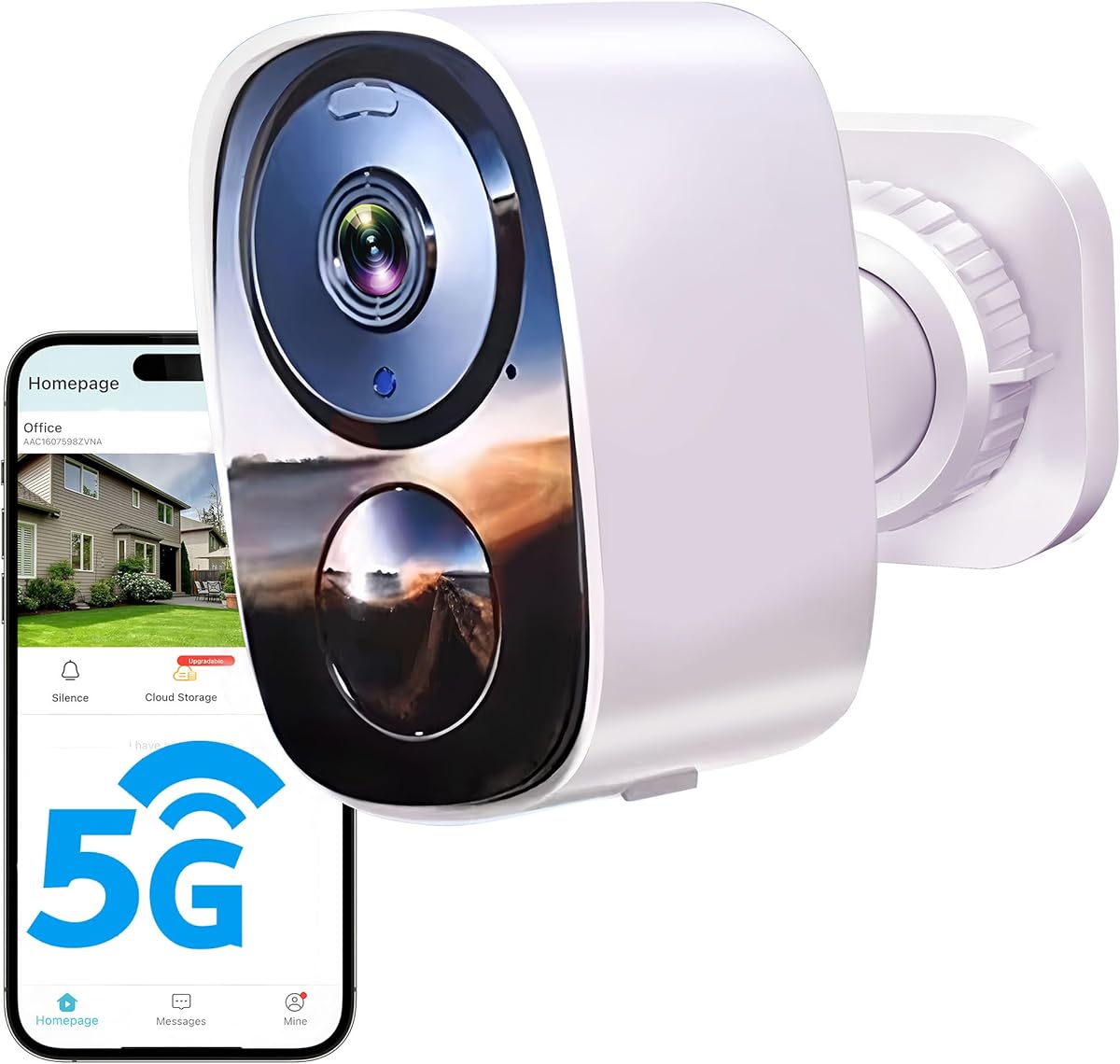

The SeeVision 4G LTE Cellular Security Camera is the strongest overall choice for a rural property where dependable WiFi is unavailable. It has a 4.3 customer rating and stands out with a built-in SIM, 3MP 2K-class imaging, a 10,000mAh battery, and no requirement for a power cable. That combination makes it especially relevant to barns, remote gates, fields, and other locations beyond the reach of a home network.
We may earn a commission when you buy through this link, at no additional cost to you.
Its solar panel is designed to replenish the internal battery, while the IP66 housing supports outdoor use in varied weather. The camera offers 355-degree horizontal and 120-degree vertical rotation, allowing one unit to cover a broad portion of a yard or entrance. Daytime recording uses a 2304-by-1296 resolution, while infrared sensing and two white lights support color night viewing.
The AI-assisted PIR system can distinguish people, vehicles, pets, and packages before sending an app notification. Owners can also use the siren, spotlight, or two-way talk to respond to activity. MicroSD storage up to 256GB and cloud storage are available, and the included U.S.-only SIM supports AT&T, T-Mobile, and Verizon. Ongoing cellular service, however, is an important ongoing consideration rather than a one-time camera purchase.
This is a particularly practical pick for someone who wants a single self-contained camera and does not want to run Ethernet, power wiring, or extend WiFi coverage. The built-in cellular hardware and large battery reduce installation complexity, while the rotating mount provides more directional flexibility than a fixed bullet camera. Buyers should confirm carrier coverage at the intended location and understand the service terms before installing it.
The cellular connection is the defining advantage for isolated locations. Because the camera does not depend on a nearby router, it can serve a remote gate or barn as long as the selected major carrier provides usable 4G coverage.
The 10,000mAh battery and integrated solar panel support cord-free installation. Mounting height and panel exposure should be chosen carefully, because shade from trees or buildings can directly affect how consistently the battery recharges.
We may earn a commission when you buy through this link, at no additional cost to you.
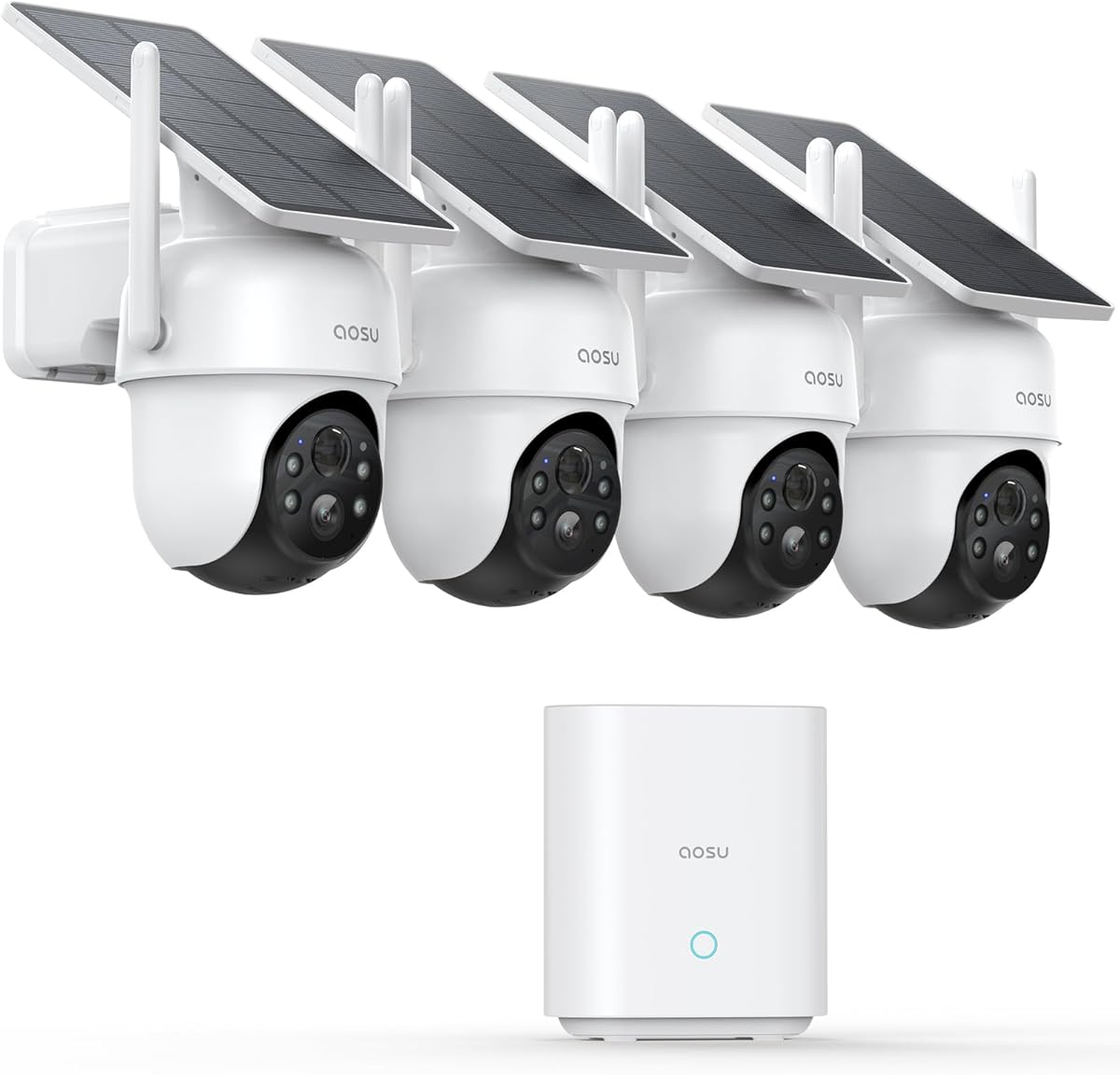
The aosu D1 Classic 4-Cam Kit is the editor's choice for rural homeowners who need to watch several separate areas. Its 4.3 rating is supported by a four-camera configuration, a central aosuBase hub, 32GB of included local storage, and subscription-free recording. Rather than relying on one mobile camera at the main house, owners can cover a barn, driveway, field entrance, and workshop through one coordinated system.
We may earn a commission when you buy through this link, at no additional cost to you.
Storage is handled locally and encrypted, while the included capacity can hold up to four months of loop recording. That makes the kit attractive to buyers who want a meaningful local archive without depending on an ongoing cloud-storage subscription. The base also keeps recording available if an individual outdoor camera is damaged or removed. Notifications and live streaming remain available through the aosu application.
Each camera has a built-in solar panel, and the supplied information states that roughly three hours of daily sunlight can maintain operation, including through cloudy periods. The cameras pan and tilt, automatically track activity within their target area, and record in 3MP. Four brighter LEDs support color night vision. Cross-camera tracking relates recordings of events occurring around the same time, making it easier to reconstruct activity spanning multiple parts of a property.
The central base is the trade-off that separates this kit from standalone cameras. It is most appropriate for a property with dependable WiFi and several points worth monitoring, rather than a single remote shed without network access. Even so, four-camera coverage, local storage, solar power, and coordinated review tools create a more complete security layout than buying several unrelated standalone units.
The 32GB aosuBase stores encrypted loop recordings without a required subscription. Centralized storage also allows the system to retain footage if an individual camera is lost, provided the hub remains intact.
Simultaneous four-view monitoring and cross-camera event tracking make the kit valuable on larger homesteads. A shared workflow is easier to manage than juggling several unrelated applications.
We may earn a commission when you buy through this link, at no additional cost to you.
The SEHMUA 4G LTE Cellular Solar Security Camera offers a straightforward way to monitor a location without WiFi or electrical wiring. It has a 4.2 rating and includes a built-in EIOTCLUB SIM compatible with major U.S. carriers. The camera supports 2K recording, four-times digital zoom, wide-angle pan and tilt, color night vision, PIR detection, and two-way communication through the Ubox app.
We may earn a commission when you buy through this link, at no additional cost to you.
A large internal battery and 6W solar panel create a genuinely cordless installation. The camera must be fully charged with the supplied power cable before its first use, after which the panel is intended to maintain long-term operation. This initial charging requirement is worth noting for buyers expecting immediate off-grid use, but it is standard for a camera designed around a rechargeable power system.
The PIR sensor can identify movement from people or animals and send alerts to the phone, while sensitivity can be adjusted in the app. Night viewing is supported by color night vision, although the spotlight must be manually enabled. The built-in SIM includes a trial period, after which cellular service is required to preserve network operation. Cloud storage is also available with a trial, making long-term storage planning important before installation.
SEHMUA is well suited to a second home, isolated workshop, farm building, or remote entrance where extending WiFi would be impractical. It is less appropriate for buyers seeking a complete multi-camera system or one without recurring cellular costs. Within that category, it offers a balanced combination of cellular independence, solar charging, flexible viewing, and useful remote communication.
The included U.S.-only SIM reduces the need to source and install a separate cellular device. Coverage must still be confirmed at the exact installation site, particularly in valleys, wooded areas, or other locations with inconsistent reception.
The 2K sensor and digital zoom provide more detail than a basic fixed-definition security camera. For nighttime evidence, manually enabling the spotlight gives the color mode the lighting it needs.
We may earn a commission when you buy through this link, at no additional cost to you.
The 2K Security Camera System with four solar cameras is a flexible WiFi-based option for rural properties that need multiple viewpoints but have reliable home internet. It carries a 4.3 rating and supports both 2.4GHz and 5GHz WiFi, giving owners more choices when placing cameras around buildings, gates, or workshops. The two frequencies also serve different roles: 2.4GHz can travel farther through obstacles, while 5GHz can provide smoother high-speed streaming.
We may earn a commission when you buy through this link, at no additional cost to you.
Each camera has a detachable solar panel and a backup battery. The supplied information states that two hours of daily sunlight can maintain continuous operation, while the battery helps carry the cameras through cloudy conditions. The IP65 housing is designed for rain, snow, dust, and temperature changes. Remote pan, tilt, and zoom controls provide broad coverage without requiring a separate fixed camera at every angle.
The spotlight activates in response to motion and supports full-color night video at a 2K resolution. PIR and AI detection are used to identify people rather than treating every moving object equally, which can reduce nuisance notifications. Owners can also speak through the built-in microphone and speaker, making it possible to greet a visitor or warn someone near a driveway.
Recordings can be stored on a MicroSD card or in optional cloud storage, without a forced subscription for basic local use. Alexa compatibility adds another way to view feeds. The main limitation is WiFi reach: unlike cellular models, every camera still needs a stable route to the router. For a rural homestead with a strong network and several monitored areas, this system provides an adaptable middle ground.
Supporting both WiFi bands helps buyers optimize camera placement. The longer reach of 2.4GHz can help cameras communicate through barns and outbuildings, while 5GHz can benefit cameras with a clearer path to the router.
The motion-triggered spotlight avoids illuminating an entire property continuously. Combining it with AI human detection can make nighttime monitoring more useful while limiting unnecessary recordings and alerts.
We may earn a commission when you buy through this link, at no additional cost to you.
The Fazoxo 2K Security Camera is a practical single-camera choice for a rural home that has 2.4GHz WiFi at the installation site. It has a 4.3 rating and combines 2K recording, infrared night vision, a spotlight color mode, three-times digital zoom, and a solar panel. The camera can monitor a garage, shed, gate, or section of yard without a power cable.
We may earn a commission when you buy through this link, at no additional cost to you.
The supplied solar panel has a 59-inch wire, giving owners some flexibility when the camera and panel cannot share the same sunny mounting surface. This can be useful near trees, eaves, or other shaded structures. An IP65 housing supports exposure to rain, snow, dust, and other common outdoor conditions. The rechargeable battery and solar supplementation reduce routine charging work.
Basic motion detection works without a subscription and can be configured to recognize people, reducing triggers from unrelated movement. Event footage can be placed on a MicroSD card up to 128GB, while a cloud trial is included for users who prefer remote backup. Optional premium cloud plans extend that service. Two-way talk allows direct communication with visitors or people near the monitored area.
This camera is less suited to buyers who need 5GHz WiFi, cellular connectivity, or a bundled multi-camera system. Its simple single-camera format, however, makes it easy to understand and install. It is a sensible option for expanding coverage one location at a time, especially when a rural property has reliable 2.4GHz service and a suitable place for the solar panel.
The extended solar-panel cable makes it possible to position the camera where activity is most important and the panel where sunlight is strongest. This separation can improve charging potential without adding a permanent power connection.
Local MicroSD recording provides a no-subscription path for event capture. Cloud storage remains optional, so owners can select it based on their preferred balance of remote access, retention, and recurring service.
We may earn a commission when you buy through this link, at no additional cost to you.
The AlkiVision Solar Security Camera has the highest customer rating in this selection at 4.6. It also offers one of the more active deterrence packages, combining AI motion detection, instant phone notifications, automatic recording, a siren, spotlight illumination, and two-way audio. These functions make it especially relevant to rural driveways, yards, gates, and other areas where owners may want to respond immediately to unexpected activity.
We may earn a commission when you buy through this link, at no additional cost to you.
The camera records at a 2304-by-1296 resolution, and its large-aperture lens and built-in spotlights support full-color nighttime views. Its adjustable housing provides a 360-degree panoramic field of view, reducing the need to point a fixed camera in only one direction. The compact body and separate solar panel make it relatively unobtrusive on a wall, roof, shed, or pole.
The 5000mAh battery is designed to operate for extended periods between charges, while the supplied information states that two hours of direct sunlight per day can support all-day operation. AI recognition can identify people, vehicles, pets, and packages, but several advanced functions—including those recognition categories, cloud memory, and custom alert areas—require a subscription. A seven-day trial is available for the AI cloud service.
Local MicroSD storage up to 128GB provides an alternative to cloud recording. The IP67 housing offers weather resistance, and 2.4GHz WiFi keeps the connection process relatively straightforward. The main trade-off is subscription dependence for the most advanced AI tools. Buyers who want those features, automatic warnings, and strong nighttime color should scrutinize the service terms before installing the camera.
The camera does more than send an alert. It can activate a siren and spotlight while recording a short event clip, creating visible and audible warnings that may discourage unwanted activity near a rural property.
Built-in spotlights help the camera preserve color detail in darkness. This is useful for recognizing clothing colors, vehicle shapes, and other visual clues that may be lost in standard infrared footage.
We may earn a commission when you buy through this link, at no additional cost to you.
The TACTACAM Defend 360 Cellular Security Camera is the premium recommendation for users who value remote camera control on an off-grid property. It has a 4.0 rating and is designed to connect over LTE rather than a home network. That makes it relevant for remote gates, cabins, barns, and other rural positions where extending WiFi or running cables would be inconvenient.
We may earn a commission when you buy through this link, at no additional cost to you.
Its defining feature is remotely controlled pan, tilt, and zoom. Rather than installing several fixed cameras, an owner can redirect the view from a phone to investigate different parts of the property. The camera produces 4K still photographs and 1080p video, sending imagery and instant motion notifications when activity is detected. The trade-off is that its video resolution is lower than the 2K and 4MP alternatives in this roundup.
A solar charging system keeps the built-in rechargeable battery topped off, eliminating the need for a wall outlet at the camera location. The enclosure is described as weather resistant and intended for long-term outdoor exposure in rain, heat, and cold. These characteristics align well with rural monitoring, where durable equipment and independent power are often more important than ultra-compact design.
TACTACAM is the best choice for someone who wants straightforward cellular connectivity and strong remote steering. It may also suit buyers who consider still-image clarity more important than high-resolution continuous video. Cellular coverage and service terms must be confirmed before installation, and the lower listed rating means buyers should pay particular attention to current customer feedback and compatibility information.
Pan, tilt, and zoom controls let the owner follow activity rather than relying on one fixed field of view. That flexibility is valuable at a long driveway, a broad yard, or an entrance approached from several directions.
The camera relies on a rechargeable battery maintained by solar power. Proper panel orientation is essential, particularly where fencing, trees, or buildings create long periods of shade.
We may earn a commission when you buy through this link, at no additional cost to you.
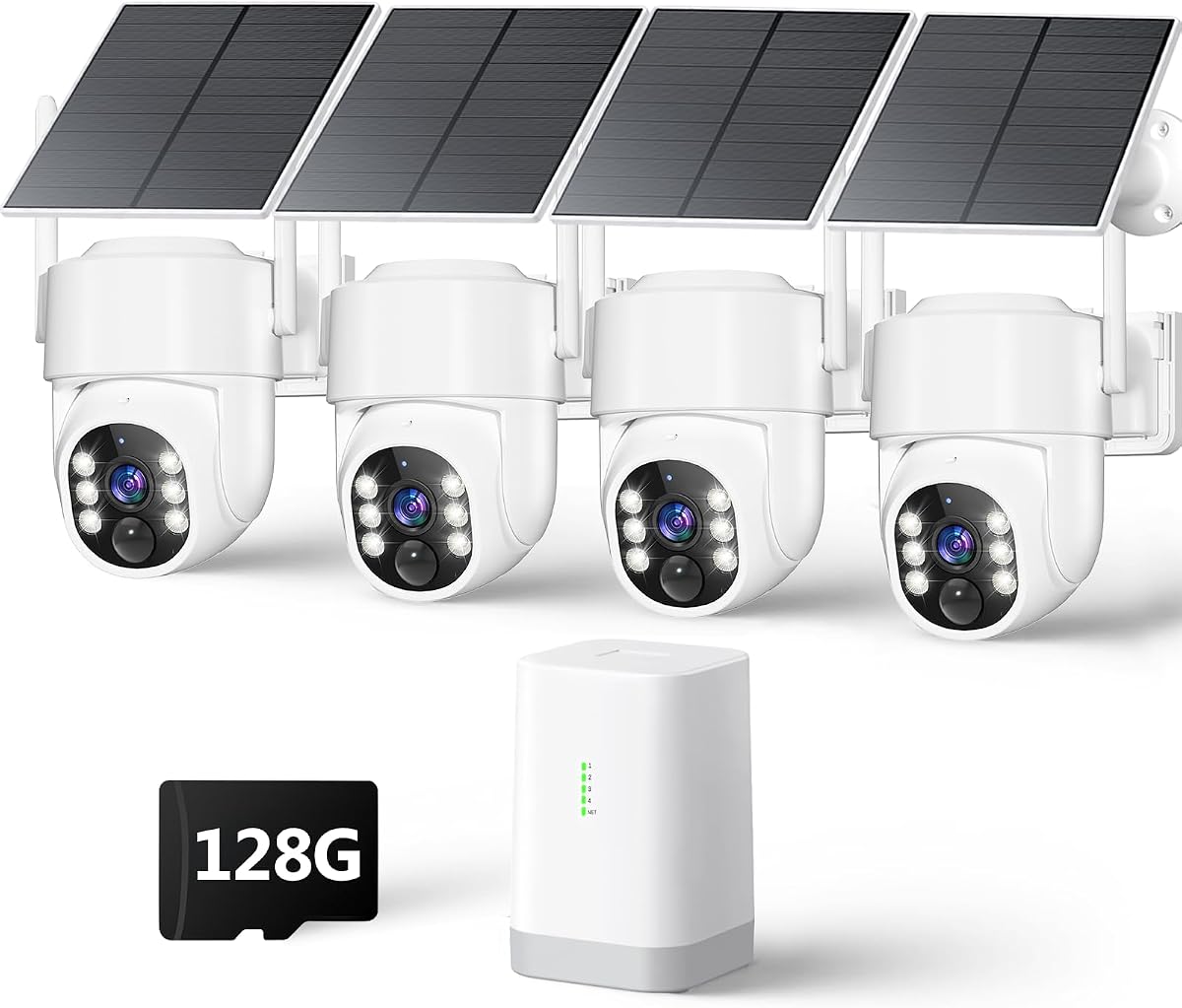
The 4MP Security Cameras Wireless Outdoor four-camera kit is an advanced choice for rural properties that need broad coverage and detailed imagery. It has a 4.5 rating and includes four PTZ solar cameras, a home hub, 128GB of local storage, and support for both 2.4GHz and 5GHz WiFi. The 4MP sensor is among the highest-resolution options in this comparison.
We may earn a commission when you buy through this link, at no additional cost to you.
The home hub stores encrypted recordings locally and can retain up to three months of loop footage for the system. Because recordings remain on the hub, they can survive the loss or damage of an individual camera. That approach supports property owners who want dependable local evidence without recurring cloud-storage fees. Remote viewing and playback are available through the phone application.
Each camera includes a 5W solar panel and an 8000mAh battery, with the supplied information stating that three hours of daily sunlight can sustain operation. Six LEDs provide color night vision up to 65 feet. AI human detection, activity zones, adjustable sensitivity, and two-way audio help owners identify relevant activity. Cross-camera tracking synchronizes recordings from different cameras, simplifying the review of events that unfold in more than one location.
Automatic tracking is turned off by default and must be enabled manually in the app. The kit also depends on a central hub and dependable WiFi, making it more involved than a standalone camera. For a larger homestead with several structures and a need for detailed nighttime evidence, the combination of resolution, storage, solar power, and coordinated views is the central appeal.
The 4MP sensor can preserve more detail than 2K and 1080p cameras. That advantage is especially helpful for distant driveways, gates, and broad rural fields where people or vehicles may occupy only a small portion of the frame.
Keeping encrypted loop recordings on the 128GB hub avoids a required storage subscription. It also provides resilience when an outdoor camera is stolen or damaged, assuming the hub itself remains secure.
We may earn a commission when you buy through this link, at no additional cost to you.
The 2026 Upgraded 2K Security Camera is appealing for rural areas where seasonal sunlight and activity levels can change considerably. It has a 4.3 rating and supports both 2.4GHz and 5GHz WiFi, along with 2K video, full-color night vision, two-way audio, an AI motion spotlight, and a siren alarm. It also supports local storage up to 256GB.
We may earn a commission when you buy through this link, at no additional cost to you.
Its headline power feature is a stated battery life of one to six months. The supplied test data says a fully charged camera can run for 60 days when motion is triggered 100 times per day, while less frequent activity can extend runtime toward six months. Actual performance depends on trigger frequency, recording mode, and temperature, so these figures should be treated as usage scenarios rather than guaranteed results.
The free cloud plan keeps recordings accessible without a subscription, although the footage is provided at SD quality. HD cloud access requires a paid plan. Local MicroSD recording gives owners another way to preserve higher-quality events. The IP66 housing is designed for dust and weather exposure, and dual-band WiFi can provide a more stable connection when distance or nearby structures make one band less effective.
This camera is well matched to lower-activity areas such as a seldom-used gate, secondary barn, or remote parking area, where frequent recording would shorten battery life. The free cloud option and local card support reduce storage pressure. Users should fully charge the camera before operation and pay attention to the recommended 5-to-8-meter motion range when positioning it.
A camera monitoring a quiet field can operate much longer between charges than one facing a busy driveway. Owners should compare their expected daily triggers with the stated test scenario before choosing a mounting position.
The free cloud plan offers convenient remote access at SD quality, while paid upgrades provide HD cloud footage. A local MicroSD card can serve owners who prioritize control, retention, and original recording quality.
We may earn a commission when you buy through this link, at no additional cost to you.
The GMK Four-Camera System combines four wireless outdoor cameras with flexible installation and power options. It has a 4.3 rating and records 2K video at 3MP, with advanced color night vision and infrared modes. Each camera supports 2.4GHz WiFi and has an IP65 housing, making it suited to barns, chicken coops, fences, garages, driveways, and other outdoor areas around a rural home.
We may earn a commission when you buy through this link, at no additional cost to you.
The battery system is advertised for one to six months of standby time and can support more than 3,000 motion triggers on a full charge. Owners can also connect cameras to constant power in high-traffic areas. This hybrid approach is especially useful at a main gate or frequently used entryway, while cordless operation remains convenient for remote corners and temporary placements.
AI-assisted PIR detection supports instant mobile alerts and configurable activity zones. A built-in microphone and speaker provide two-way talk, while flashing white lights and a siren offer active deterrence. Local MicroSD storage is available, and cloud storage comes with a seven-day trial before advanced AI and cloud features require a subscription. The VicoHome app also supports multiple users, privacy sleep mode, and custom schedules.
Each camera can sit on its stable base for indoor or temporary use or attach to a wall bracket for permanent outdoor placement. That versatility makes the kit useful for landlords, farm operators, and homeowners who may move cameras as their monitoring needs change. Its 2.4GHz-only connection is the main limitation, while shared access and scheduling add convenience for multi-user rural households.
Battery operation is convenient at isolated corners, while plug-in power is better for busy entrances that generate frequent alerts. The hybrid design lets owners match power strategy to each camera's workload.
The included wall mounts support permanent outdoor placement, while the upright bases allow indoor or portable use. Family sharing and privacy schedules add practical controls for properties occupied by multiple people.
We may earn a commission when you buy through this link, at no additional cost to you.
The best rural security camera depends on the distance between buildings, available cellular service, local weather exposure, desired recording coverage, and willingness to manage recurring plans. Evaluating these factors before installation prevents an unsuitable camera from creating blind spots or unreliable alerts.
A WiFi camera can be simpler and more economical when dependable 2.4GHz or 5GHz service already reaches the location. Dual-band support offers greater placement flexibility, but a nominal connection may still fail if the signal is weak. For a rural property divided into several zones, a centralized multi-camera hub can make network management easier. The right choice is the connection method that remains stable at the intended location, not simply the one with the longest listed transmission distance.
Battery runtime depends on motion frequency, recording mode, temperature, signal strength, and night illumination. Stated maximum runtimes often assume light activity and should not be treated as guarantees. Plug-in hybrid systems offer an alternative for high-traffic areas where constant alerts would drain a rechargeable battery quickly. Choose a power approach based on real activity, seasonal sunlight, and the distance you are willing to maintain.
Digital zoom can help isolate a distant subject, but it does not create detail that the sensor and lens never captured. Wider fields of view are useful for monitoring large yards, while adjustable PTZ cameras can narrow attention toward gates or access roads. Compare lens coverage, viewing angle, and remote controls instead of relying on zoom numbers alone. The best combination is enough resolution for useful identification and enough field of view to keep important areas out of blind spots.
Consider how notifications will work in daily life. Repeated alerts can cause owners to ignore the system altogether, especially when livestock or wind are common near rural cameras. Detection zones and human filtering help, but proper placement remains equally important. Aim the camera across the expected approach path rather than directly at a nearby road, tree line, or animal area. Two-way audio and siren functions can also serve as active deterrents, but local noise regulations and neighbor relations should be considered.
Think about evidence retention rather than only live viewing. A rural property may have infrequent but important events, making continuous loop recording valuable. At the same time, the storage format and capacity determine how many days or weeks remain available. A balanced setup may use local recording as the primary archive and optional cloud storage for convenient sharing or redundancy. Check the app's export and sharing tools before committing to a platform.
Sun exposure deserves separate attention even when a camera has a strong weather rating. Prolonged heat can shorten battery life, and direct sunlight can make an image harder to view on a phone. Secure mounting prevents wind from shifting the aim. Farm environments also introduce dust, insects, and agricultural debris, so owners should inspect the lens periodically and keep the solar panel clear. A durable enclosure protects the electronics, while routine maintenance protects image quality.
More cameras are not automatically better. Every additional viewpoint increases power demands, storage requirements, WiFi congestion, and the number of devices that need maintenance. Map the property's critical areas first, prioritize access points and valuable assets, and then decide whether one adjustable camera or several fixed or PTZ units provide better coverage. The most effective system is the one that maintains stable operation across the locations you actually need to watch.
Before mounting each camera, walk the property during daylight and again after dark. Identify the approaches most likely to be used by visitors, delivery drivers, or intruders, then position each unit where it can see those areas without being blocked by vehicles, vegetation, or livestock. Test cellular reception or WiFi strength at the exact mounting point, and confirm that the solar panel receives direct sunlight rather than relying on the camera's location alone.
Install the app on the phone that will receive alerts, create the required account, and connect one camera before mounting the remaining units. Adjust motion sensitivity, detection zones, notification preferences, recording schedules, and privacy settings. Test both day and night views, verify that two-way audio is clear, and walk through the view to make sure the camera follows activity. For hub-based kits, confirm that the hub is connected to the correct network and that each camera remains reachable.
Clean the lens and solar panel on a regular schedule, especially after dust, rain, snow, or insects interfere with the view. Check brackets for looseness and confirm that cables have not been pinched. Review storage capacity, active subscriptions, battery condition, and cellular coverage as the seasons change. Test remote access and alert delivery periodically so that a failed camera or expired service is discovered before it becomes a critical blind spot.
Cellular cameras are often better when a barn, gate, workshop, or cabin has no dependable WiFi. They connect through LTE and do not require network cables, but they still need adequate carrier coverage at the installation site. Their cellular service may also involve a recurring plan after a trial period. WiFi cameras can be more economical when strong network coverage already exists.
It depends on the model and the features you want. Many cameras support local MicroSD recording without a subscription, while hub-based kits can provide encrypted local loop recording through the hub. Cloud storage, HD cloud footage, AI object recognition, and advanced alert zones may require payment on some products. Always check which capabilities remain available without a plan.
Solar cameras can work through winter, but performance depends heavily on local sunlight, snow cover, temperature, and camera activity. Batteries may also lose runtime in cold conditions. A larger panel and higher-capacity battery can help, as can positioning the panel where it is not shaded or buried under snow. Low-activity cameras generally require less frequent recharging than cameras monitoring busy gateways.
The correct number depends on the property's size, terrain, buildings, and critical access points. One adjustable PTZ camera may cover a small property, while a larger homestead may need cameras at the main gate, barn, workshop, and secondary entrances. Avoid placing cameras too close together if they will record essentially the same scene. A coverage plan based on walking routes usually produces better results than simply estimating from acreage.
Local storage is useful for maintaining recordings without relying on a cloud connection, and a hub can preserve footage if an outdoor camera is damaged. Cloud storage adds convenient remote viewing, sharing, and backup, though premium features may require a subscription. Owners who need evidence should consider loop retention, export tools, and the security of the account as well as the available capacity.
Color night vision can help identify clothing colors, vehicle details, and other visual clues that infrared footage may not preserve. It depends on a sufficiently bright spotlight or nearby lighting. Standard infrared can still reveal movement effectively in darkness and may be less conspicuous, so color is most valuable at entrances, gates, and other areas where identifying details matters most.
It can, but adequate direct sunlight is essential for maintaining the battery. A separate solar panel with a longer cable may allow the camera to sit in a better viewing position while the panel sits in a clearer location. Periodic cleaning is important because leaves, dust, and snow can reduce charging performance. If the area receives very little direct sun throughout the year, a wired or cellular camera with continuous power may be more reliable.
Mount cameras high enough to discourage easy removal, use tamper-resistant fasteners, and position them where a visible event still provides useful evidence. Recording locally in a hub can preserve footage after an outdoor camera is removed, while remote alerts allow a quick response. Solar panels and exposed cables should also be positioned so they do not make removal or tampering easy. Securing the network account with a strong password adds another layer of protection.
The SeeVision 4G LTE is the most practical overall pick for a single remote location because it combines cellular independence, a high-capacity solar battery, broad rotation, and useful AI detection. The aosu D1 Classic takes the lead for coordinated four-camera coverage with local storage, while the TACTACAM Defend 360 stands out for premium remote steering and cellular operation without WiFi.
Prioritize the obstacle that is hardest to solve after installation. Use cellular when network coverage is weak or absent, verify WiFi bands when a router is available, and select solar or continuous power according to sunlight and activity. Resolution, night illumination, smart detection, storage, and weather resistance should then be matched to the areas and events that matter most across the property.
Before ordering, confirm the current product specifications, card capacity, carrier compatibility, subscription terms, included accessories, and warranty information. Ratings, plans, and product availability can change, and the supplied information may not capture every installation detail. Checking those points at the time of purchase will make the final choice more dependable.