
HP 14-inch HD Student Chromebook
4.4Editor score
Chrome OS student experience
Four-core Intel processor
Anti-glare HD display
A laptop for a junior high student should balance schoolwork, web research, video calls, creative projects, and entertainment without becoming difficult to carry or complicated to manage. The right model also needs a comfortable display, dependable battery life, suitable performance, and enough connectivity for the devices a young learner uses every day.
We compared ten student-oriented laptops and Chromebooks using the specifications and feature details supplied for each product. The list covers Windows and Chrome OS options, HD and Full HD screens, touch and non-touch designs, different processor levels, storage capacities, connectivity standards, webcams, batteries, and portability.
Each entry explains the product's strongest benefits, practical limitations, and likely fit for a junior high student. The top recommendations emphasize the best balance of educational value, performance, and everyday flexibility, while individual budgets, software requirements, and current prices should be checked before making a final purchase.
4.4Editor score
4.6Editor score

4.3Editor score
As an Amazon Associate we earn from qualifying purchases.
The comparison below highlights the principal differences in operating system, display, processor, memory, storage, and student-focused features. It is designed to make it easier to narrow the field based on school software, home study habits, and the importance of portability, touch input, or expanded storage.




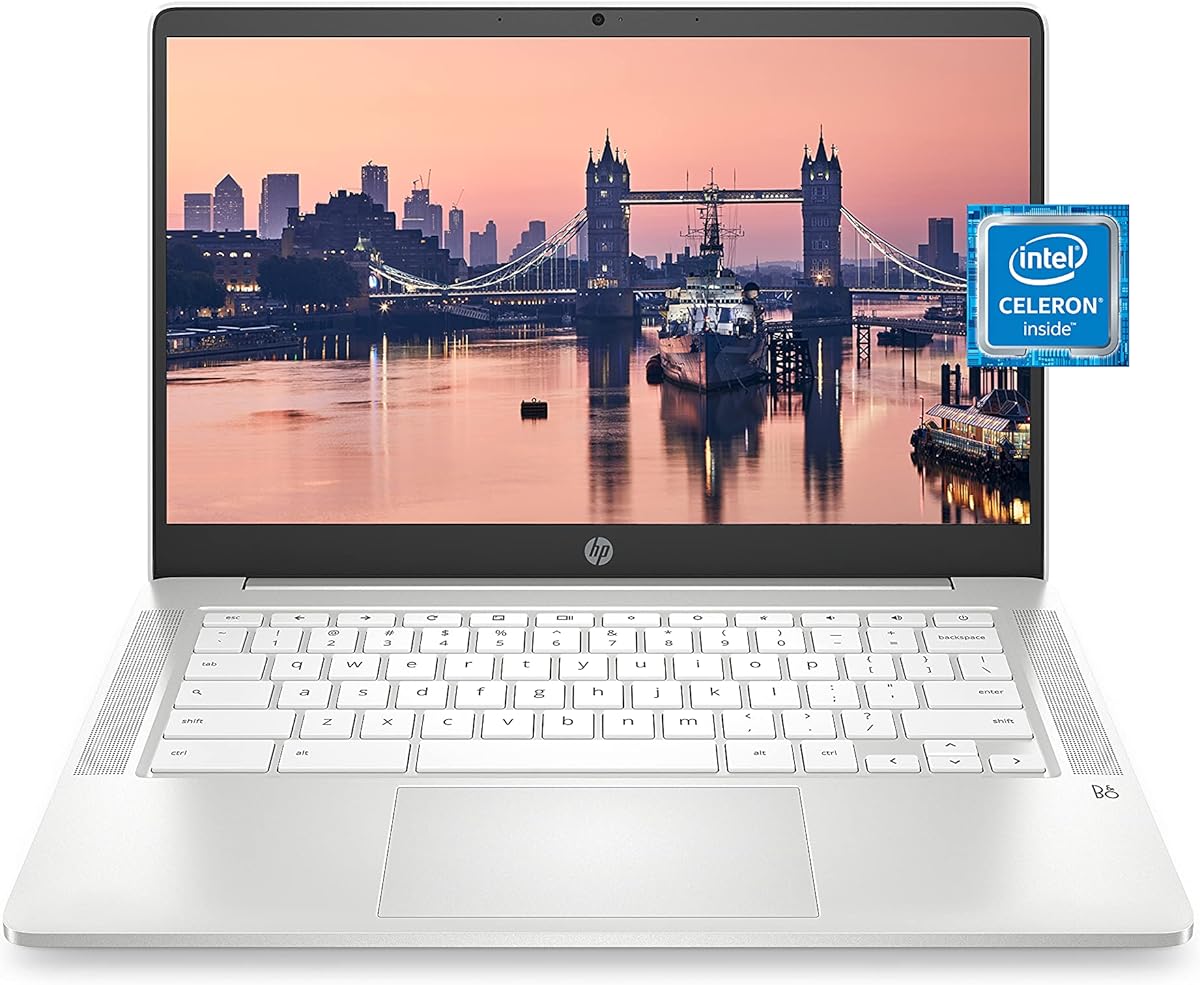

This HP Chromebook is a practical entry point for junior high students who primarily need web-based assignments, Google Workspace tools, video calls, and document work. Its supplied rating is 4.4, and the combination of a 14-inch anti-glare display, Chrome OS, a quad-core Intel Celeron N4120, and up to 14 hours of advertised battery life makes it particularly appropriate for students who move between classes, study areas, and home.
We may earn a commission when you buy through this link, at no additional cost to you.
The N4120 processor includes four cores and four threads, with a 1.1GHz base clock and boost capability up to 2.6GHz. Paired with 4GB of LPDDR4x memory, it is designed to handle browser tabs, Android applications, and common Chrome OS workloads efficiently. The 64GB eMMC drive provides local storage for applications and files, while Chrome OS cloud integration helps keep schoolwork accessible across compatible devices.
Its anti-glare 1366 by 768 screen is less detailed than a Full HD panel, but the matte treatment can be useful during long reading and writing sessions. Connectivity is well suited to school needs, with two USB-A ports, one USB-C port, HDMI, and a headphone jack. The compromise is that 64GB is not generous for a large local media library or years of downloaded files, and the processor is intended for education rather than demanding games or creative workloads.
This is an attractive recommendation for a first laptop, a family sharing a device, or a student whose school relies on browser-based tools. Choose it when battery life, low-fuss operation, and broad connectivity matter more than a high-resolution screen or large local storage. It stands as the budget-focused top pick because it concentrates on the essentials of online learning, communication, and portable everyday computing.
The advertised 14-hour battery life provides a useful margin for a full day of classes, homework, and study. Actual runtime varies with screen brightness, video calls, and application load, but the long advertised figure makes this model appealing for students who cannot always charge near a classroom desk.
Two USB-A ports, one USB-C port, HDMI, and a headphone jack cover many common student needs. That mix is useful for a wired mouse, flash drive, external display, classroom projector, or headset without requiring a large collection of adapters.
We may earn a commission when you buy through this link, at no additional cost to you.
The HP Stream combines Windows 11, an Intel N150 processor, 4GB of memory, and a generous storage bundle aimed at students and home-office users. With a supplied rating of 4.2, it stands out for the included one-year Office 365 subscription, 720p webcam, AI Copilot, and a docking-station package that can make the laptop more useful at a fixed study desk.
We may earn a commission when you buy through this link, at no additional cost to you.
Its 14-inch HD anti-glare display provides a practical work area without the bulk of a larger notebook. The Intel N150 is designed for efficient everyday productivity, while the dock adds a 1TB storage option alongside the laptop's 128GB UFS storage. The bonus set also includes a 32GB microSD card with adapter, a Type-C data cable, a three-in-one charging cable, and a cleaning cloth.
The principal weakness is the modest 4GB of DDR4 memory. That should serve ordinary browsing, Office applications, and school portals, but it leaves less room than an 8GB or 12GB machine for many simultaneous browser tabs and heavier multitasking. The supplied description also presents the 1.12TB as combined laptop-and-dock storage, so buyers should understand exactly which components hold their files.
This model makes sense for a student who expects to use Microsoft Office, likes a conventional Windows interface, or wants a laptop and desk setup in one package. It is less attractive for gaming or demanding creative software, yet its portability, useful port selection, office bundle, and expandable desktop arrangement make it a flexible choice for homework and organized study.
The included seven-in-one dock is particularly useful when the laptop is used at a home desk. It provides a convenient connection point for accessories and adds a full 1TB of storage, helping separate the portable computer from files that remain on the desk.
One year of Office 365 supports familiar tools such as Word, Excel, and PowerPoint, while AI Copilot is included for everyday assistance. These features are most relevant to students already working in Microsoft-based assignments and learning environments.
We may earn a commission when you buy through this link, at no additional cost to you.
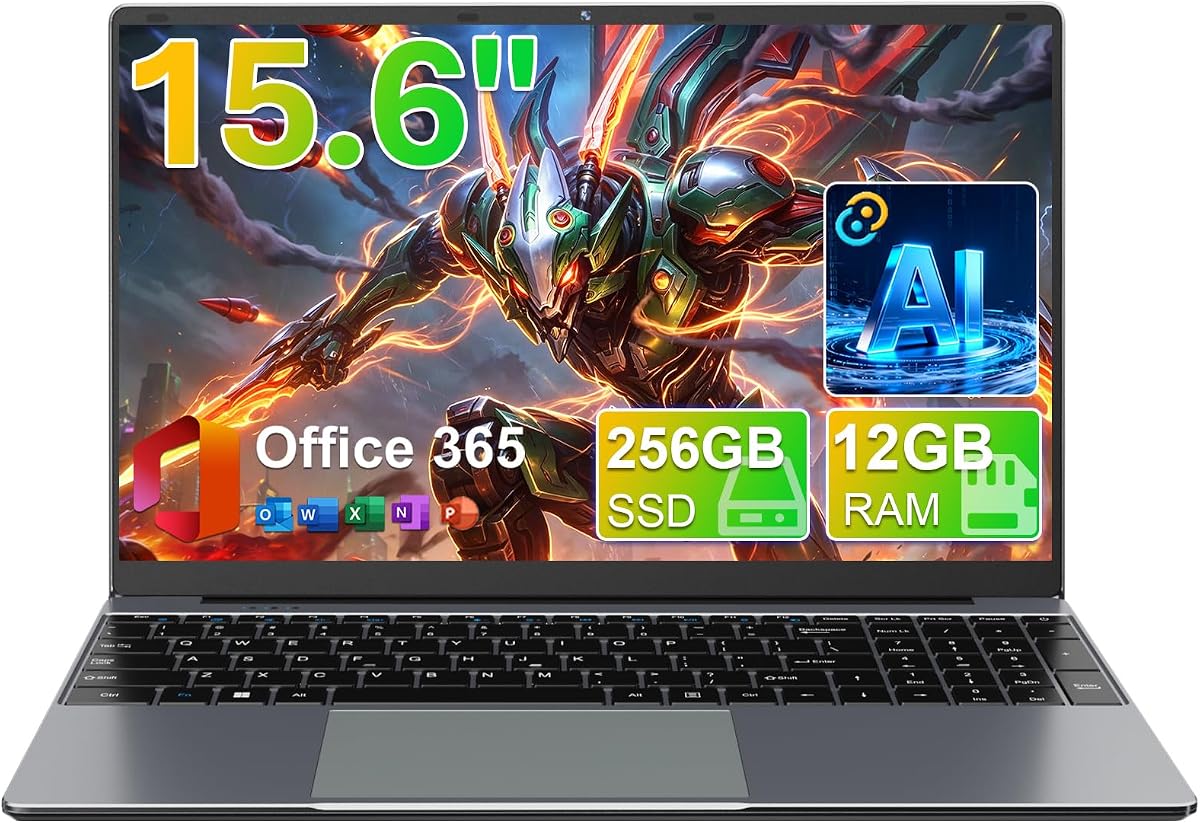
This 15.6-inch student laptop offers the strongest overall balance in the list for a student who wants a clear display, plenty of memory, flexible screen positioning, and substantial battery capacity. Its supplied rating of 4.6 is the highest among these products, and the combination of 12GB RAM, a 256GB SSD, Full HD IPS visuals, and a 180-degree hinge distinguishes it from simpler entry devices.
We may earn a commission when you buy through this link, at no additional cost to you.
The Celeron J4105 is a quad-core processor intended for productivity, browsing, streaming, and routine school applications. With 12GB of RAM, it has more room for simultaneous tabs and learning software than the 4GB configurations elsewhere in the list. The 256GB SSD also provides a useful balance between local file capacity and everyday responsiveness, while expansion is possible through SSD storage up to 2TB or a TF card up to 1TB.
The 1920 by 1080 IPS panel offers substantially more detail than a standard HD screen, making it a good fit for documents, presentations, videos, and lessons. A 7000mAh battery and 5G Wi-Fi support extended school use, while Bluetooth 4.2, USB 3.2, Type-C, and Mini HDMI provide practical connections. The flexible hinge can be helpful for group work or presentations, although the processor should not be mistaken for a high-end gaming or professional workstation.
This is the most versatile recommendation for a junior high student whose work may include Microsoft applications, online learning, research, communication, and light multimedia. It is especially attractive when screen quality and memory matter more than having a very small chassis. For those priorities, the extra specifications provide a convincing all-around choice without moving to the top premium tier.
The Full HD IPS screen supplies a sharper 1920 by 1080 image and wide viewing angles, useful when reading small text, comparing reference material, or sharing a lesson. The 16:9 format is familiar for videos, documents, and online presentations.
Twelve gigabytes of RAM gives this laptop a meaningful advantage for students keeping browser tabs, documents, video-call windows, and educational applications open together. It also makes the computer a more comfortable general-purpose family device.
We may earn a commission when you buy through this link, at no additional cost to you.
The Lenovo Flagship Chromebook is a touch-focused alternative for students who learn through interactive material. It has a supplied rating of 4.2 and combines a 14-inch Full HD IPS touchscreen, an eight-core MediaTek Kompanio 520, 4GB of memory, and 64GB of eMMC storage in a chassis weighing only 2.86 pounds.
We may earn a commission when you buy through this link, at no additional cost to you.
The 1920 by 1080 panel supports natural finger navigation, while IPS technology supports wider viewing angles than many basic laptop panels. An integrated 720p HD webcam has a physical privacy shutter, and the dual-array microphone supports online classes and meetings. The Kompanio 520 has four A73 and four A53 cores operating at 2.0GHz, making it a capable Chrome OS platform for web applications and everyday multitasking.
Its 4GB of memory and 64GB storage are modest, particularly if a student expects to retain large videos or many offline files. On the other hand, a weight of 2.86 pounds, a thickness of 0.73 inches, and Wi-Fi 6 make it easy to carry between classes. USB-A, USB-C, a microSD reader, and a headset jack cover the essential accessory needs.
The strongest reason to choose this model is its combination of Full HD clarity, touchscreen interaction, privacy controls, and low weight. It is a convincing match for remote learning, interactive classroom tools, and a student who prefers navigating directly by touch. For a buyer who does not need advanced Windows software, it offers a more specialized and polished study experience than a basic HD Chromebook.
Finger touch makes the Full HD display more than a passive viewing area. Interactive worksheets, touchscreen activities, and casual tablet-style browsing can feel more natural, particularly for younger students accustomed to touchscreens.
At 2.86 pounds, the Chromebook is among the lightest models in the comparison. Its slim profile and compact 13.23-by-8.7-inch footprint make it more convenient to move between classes or carry alongside books and supplies.
We may earn a commission when you buy through this link, at no additional cost to you.
The Lenovo IdeaPad 3i Touch Chromebook is a well-rounded Chrome OS choice with a 14-inch Full HD anti-glare touchscreen and the same eight-core MediaTek Kompanio 520 platform. Its supplied rating is 4.4, and the combination of 300-nit brightness, 100% sRGB color coverage, a webcam privacy shutter, and up to 13 hours of advertised battery life makes it well suited to lessons and daily communication.
We may earn a commission when you buy through this link, at no additional cost to you.
Its display provides 1920 by 1080 resolution and supports finger touch, giving students a detailed and interactive surface for browsing, classwork, and video. The Kompanio 520 processor and 4GB of soldered LPDDR4x memory are designed for Chrome OS workloads, including multiple browser tabs and Android applications. Wi-Fi 6, Bluetooth 5.1, USB-C, USB-A, a microSD reader, and a headset jack offer solid everyday connectivity.
Storage totals 128GB through a combination of 64GB eMMC and an attached 64GB SD card. That is more practical than a 64GB-only configuration, but the SD-card portion can be removed and is not the same as permanent internal storage. The 4GB of soldered memory cannot be upgraded, so students with many simultaneous applications should keep their workflow focused.
This Chromebook is a good fit for a student who values a crisp touch display, long advertised battery life, and a balanced portable design. Its advantages over a standard HD model are especially apparent during document reading, interactive lessons, and video viewing. It is a particularly solid selection for families seeking Full HD and touch features within a Chrome OS-focused study machine.
The anti-glare Full HD touchscreen balances detail with a surface that remains comfortable for reading and writing. Color coverage of 100% sRGB also gives it an advantage for photographs, diagrams, and video content compared with more basic displays.
Up to 13 hours of advertised battery life supports a full school routine. A physical webcam shutter and integrated camera also help students manage privacy during online classes or personal video calls.
We may earn a commission when you buy through this link, at no additional cost to you.
This HP student laptop emphasizes Windows familiarity, cloud access, and easy portability. Its supplied rating is 4.2, and the package includes Microsoft 365, 1TB of OneDrive cloud storage, Windows 11 in S Mode, Wi-Fi 6, Bluetooth 5.4, and a chassis weighing 3.24 pounds.
We may earn a commission when you buy through this link, at no additional cost to you.
The Intel N4102 processor and Intel graphics are intended for browsing, online classes, office work, and streaming. An HD anti-glare display with micro-edge design offers a practical viewing area, while a 720p True Vision camera with temporal noise reduction and dual-array microphones supports clearer video calls. A dedicated Microsoft Copilot key and multi-touch HP Imagepad add convenient everyday features.
The laptop includes up to 11.5 hours of advertised video playback or 7.5 hours of wireless streaming. Its USB-C, two USB-A ports, HDMI, and headset jack provide a practical selection for accessories. However, the 1366 by 768 display is less detailed than Full HD alternatives, and Windows 11 S Mode can limit installing certain desktop software and games outside the Microsoft Store.
This model works well for a junior high student whose schoolwork revolves around web-based services, Microsoft applications, and cloud-shared documents. It offers a conventional Windows environment without the software demands of a premium laptop. The main decision is whether the family values OneDrive and a familiar interface enough to accept the modest screen resolution and S Mode constraints.
The included 1TB of OneDrive storage keeps school documents available across compatible devices and reduces reliance on limited internal storage. It is a convenient arrangement for assignments stored in Microsoft 365 and for students moving between school and home computers.
The 720p camera includes temporal noise reduction, while dual-array microphones help capture voices in online lessons. These features make the system a straightforward choice for students who regularly participate in remote instruction.
We may earn a commission when you buy through this link, at no additional cost to you.
The HP 14a-na0226nr Chromebook is a dependable, established-style Chrome OS option for homework, web research, communication, and media. It carries a supplied rating of 4.3, with an Intel Celeron N4120, 4GB of RAM, 64GB eMMC storage, a 14-inch HD anti-glare display, and long advertised battery life.
We may earn a commission when you buy through this link, at no additional cost to you.
Its quad-core processor and Intel UHD Graphics 600 support everyday Chrome OS tasks and smooth 4K content streaming. The thin, portable design includes custom-tuned stereo speakers, a full-size keyboard, and a true multi-touch touchpad with four-finger gestures. Wi-Fi and Bluetooth provide standard wireless connectivity, while Chrome OS offers a secure, updated browser-based workflow with Android app access.
HP Fast Charge can take the battery from zero to 50% in approximately 45 minutes, which is helpful for students who use the laptop heavily. The compromises are a 1366 by 768 display and 64GB of storage. Its listed 802.11a/b/g/n/ac Wi-Fi is also older than Wi-Fi 6 models, although it remains suitable for many homes and schools.
This Chromebook is a sensible choice for a student who wants a simple machine with long advertised endurance and fast recharging. It works particularly well for browser-based learning, Google Classroom, and typical communication apps. Buyers seeking a sharper display, more local storage, or the newest wireless standard may prefer a different model, but this one remains a practical basic.
The advertised 45-minute charge to 50% reduces downtime when a student needs a quick boost between classes. It complements the long battery figure and makes the Chromebook easier to use throughout a full school day.
Chrome OS keeps the learning workflow direct through the browser, Google applications, and Android apps. Built-in protection, automatic updates, and cloud backup features suit students who need a straightforward device with little local administration.
We may earn a commission when you buy through this link, at no additional cost to you.
The Dell 15.6-inch laptop is the strongest premium performance option in this guide. Its supplied rating is 4.3, and it combines an Intel Core 3 100U processor, 8GB of RAM, a Full HD display, and Windows 11 Home. That specification level gives it more headroom for demanding school software, multiple applications, and a laptop expected to last through several school years.
We may earn a commission when you buy through this link, at no additional cost to you.
The Core 3 100U is a more capable platform for sustained productivity than the entry-level Intel N-series processors in several other picks. Eight gigabytes of memory is comfortable for browser research, Microsoft Office, communication apps, and more intensive school projects. The 15.6-inch Full HD panel provides a detailed and generous workspace for writing, presentations, and multimedia.
Dell adds several user-focused details. ComfortView software is designed to reduce harmful blue-light emissions during extended viewing, lifted hinges create a more ergonomic typing angle, and a roomy keyboard includes a separate numeric keypad and calculator hotkey. Energy-efficient batteries and Express Charge support the goal of maintaining focus. One Year Onsite Service can also provide support at home, office, or another chosen location when a covered issue cannot be solved remotely.
This laptop is ideal for a family that wants a student device with more processing power and a premium-feeling specification set. It is particularly suitable for older junior high students moving into more advanced coursework or sharing a computer with a parent for demanding everyday work. The trade-off is that the larger chassis may be less convenient to carry than a compact 14-inch Chromebook.
The Intel Core 3 100U and 8GB of memory provide a higher-performance foundation for demanding applications and sustained multitasking. This makes the Dell a practical choice for students who may later need advanced coursework, coding tools, or more complex creative software.
ComfortView software, lifted hinges, and a roomy keyboard are designed to improve the experience during extended work. The separate numeric keypad is particularly useful for math, spreadsheets, finance exercises, and other tasks involving frequent number entry.
We may earn a commission when you buy through this link, at no additional cost to you.
The HP 14a-na0021nr Chromebook is a basic, lightweight model for students whose schoolwork is primarily online. It has a supplied rating of 4.4, an Intel Celeron N4000 processor, 4GB RAM, 32GB eMMC storage, a 14-inch HD anti-glare display, and a body that weighs 3.24 pounds.
We may earn a commission when you buy through this link, at no additional cost to you.
Its quad-core-style entry platform and Intel UHD Graphics 600 are suitable for browser-based assignments, Google applications, videos, and communication. The Wide Vision HD camera and integrated dual-array digital microphones support online lessons and video chats. Chrome OS keeps the interface simple and centered on the browser, with Android applications available through the Google Play Store.
The most significant limitation is 32GB of local storage. A student should plan to keep large files in compatible cloud services and use the microSD or other external storage when necessary. Wi-Fi 5 and Bluetooth 5.0 are also older standards, and the HD screen does not offer the detail of Full HD alternatives. Nevertheless, the device weighs only 3.24 pounds and is easy to carry.
This is a reasonable entry Chromebook for a younger student or a household seeking a second computer for browsing, assignments, and video calls. It is best when the student uses online storage and does not need large offline media libraries. Its low weight and long advertised battery of up to 13 hours and 30 minutes make it convenient for school and travel.
At 3.24 pounds, the Chromebook is light enough for a younger student to carry between classes without adding much bulk. The 14-inch anti-glare screen balances a useful work area with a relatively portable form factor.
Chrome OS and its cloud-oriented workflow help compensate for the small 32GB storage capacity. Students who consistently save documents to connected cloud accounts can use the laptop comfortably for web-based assignments and communication.
We may earn a commission when you buy through this link, at no additional cost to you.
The HP Essential Laptop combines Windows 11, an Intel N150 processor, 4GB LPDDR5 memory, 128GB UFS storage, and one year of Microsoft 365 Personal. Its supplied rating is 4.4, and the modern connectivity, lightweight dimensions, and useful port selection make it a well-rounded option for ordinary junior high assignments and general home use.
We may earn a commission when you buy through this link, at no additional cost to you.
The N150 has four cores and four threads, a base clock that can boost up to 3.6GHz, and 6MB of L3 cache. It is designed for browsing, streaming, document editing, and routine multitasking. A 720p HP True Vision camera with noise reduction and dual-array microphones assists with online learning, while a dedicated Copilot key, AI Noise Reduction, and dual speakers support communication and everyday productivity.
The 14-inch 1366 by 768 anti-glare display offers a practical but modest resolution. Memory remains the main constraint, as 4GB is less generous than the 8GB and 12GB configurations in the guide. On the positive side, the USB-C port supports DisplayPort 1.2, the computer includes Wi-Fi 6 and Bluetooth 5.4, and an SD media card reader adds flexible file-transfer options.
The supplied battery information includes up to 11 hours of video playback and 7.5 hours of mixed use or wireless streaming. At 3.24 pounds, it is easy to carry. This laptop is a good fit for a student using Word, Excel, PowerPoint, web research, and video-call tools, particularly when Microsoft 365 and current wireless connectivity are important.
Wi-Fi 6 and Bluetooth 5.4 make this a forward-looking choice for compatible home and school networks. These specifications are useful when a student regularly moves between locations and connects wireless headphones, a tablet, or other accessories.
One year of Microsoft 365 Personal provides Word, Excel, PowerPoint, and cloud storage for assignments. Combined with Windows 11, it creates a familiar and complete environment for students accustomed to Microsoft-based schoolwork.
We may earn a commission when you buy through this link, at no additional cost to you.
A student laptop should be selected around the software used in school, the device's portability, the quality and size of the display, memory requirements, battery endurance, and available connections. The right choice for one student may be a lightweight Chromebook, while another may need a Windows laptop with more processing power and a full-size screen.
Choose the operating system that matches the student's schoolwork rather than whichever looks more advanced. Chromebooks may be sufficient for most daily learning, while Windows offers more flexibility for specialized programs and a broader mix of applications.
For ordinary school use, focus on a responsive everyday processor rather than a maximum specification. Choose a stronger Core processor only when specific coursework or shared family use requires it.
At least 4GB works for basic study, but 8GB or more is preferable when several apps and tabs remain open. More memory is more useful for daily comfort than a small increase in screen size.
Choose storage based on how much content remains on the device. Cloud-focused students can manage with less, while students saving videos and large project files benefit from an SSD or expandable configuration.
Balance screen size with portability, then prioritize resolution and anti-glare treatment. Full HD touch is valuable for interactive learning, but it is optional for standard typing-based schoolwork.
Treat advertised battery life as a comparative guide rather than a guarantee. For all-day school use, long advertised endurance and a manageable weight should take priority.
Prioritize a clear camera, usable microphones, a privacy shutter, and the ports the student will actually use. Check whether the school supplies adapters before paying for extra accessories.
Treat bundled software as useful only when it matches the student's needs. Verify included components, renewal terms, warranties, and accessory compatibility before purchasing.
Start by signing into the student's school account and confirming that the required browser, learning platform, communication apps, and document-editing tools are installed and updated. Create separate school and personal browser profiles, enable appropriate parental and account protections, and set a consistent cloud location for assignments. Before the first week of school, test the webcam, microphone, speakers, headphones, charger, and any classroom display adapter.
Create a simple routine for files. Use clearly named folders for subjects and terms, save large videos to appropriate storage, and keep the internal drive from becoming full. Reminder apps or calendar blocks can help with homework, but the student should still own the process of checking due dates. For a Chrome OS model, learn where offline files are saved; for a Windows model, verify that important documents are synchronized before traveling without internet access.
Protect the computer with a padded school bag, a sleeve for the chassis, and a clear routine for plugging in the charger at home. Keep food and drinks away from the keyboard, use dry microfiber cloths for cleaning, and avoid harsh liquids. Update the operating system and applications when prompted, maintain available storage, and have the family review screen time, browser history, permissions, and account security together as the student becomes more independent.
A Chromebook is usually simpler for browser-based assignments, Google Classroom, and Android applications, while a Windows laptop offers broader compatibility with traditional desktop software. Check the school's required platforms before choosing. If the student uses Microsoft Office heavily or needs specialized programs, a Windows model may be more appropriate.
The 4GB models in this guide can support ordinary web browsing, documents, and video calls, but 8GB or 12GB is preferable for many simultaneous tabs and applications. More memory improves multitasking comfort and leaves more room for future software. Students should also keep enough free storage for updates and active files.
A Full HD screen is helpful when reading small text, viewing detailed diagrams, or editing presentations because it displays more information than a standard HD panel. It is not essential for every assignment, however. An anti-glare HD screen can still provide a comfortable and practical school experience at a lower specification level.
A long advertised runtime, around 11 to 14 hours for many of the models listed, is useful for carrying a computer throughout a school day. Actual results vary with video calls, streaming, brightness, and workload. A fast-charging function can also help when a student only has a short opportunity to restore power between classes.
Usually, yes. A 14-inch model around three pounds takes up less room than a larger notebook and is often more comfortable for younger students to transport. The Lenovo touch Chromebook in this guide is lighter at 2.86 pounds, while several 14-inch alternatives weigh 3.24 pounds. Screen quality and keyboard comfort remain important considerations alongside weight.
A touchscreen is most useful for interactive learning, diagram work, and tablet-style navigation. Many school tasks can be completed effectively on a conventional display, so it is not essential for every student. If a family expects regular touch use and can prioritize a Full HD touch panel, it can make the laptop more versatile.
Having both can prevent inconvenience with older accessories and classroom displays. USB-A is useful for flash drives, mice, and other peripherals, while HDMI makes connecting a projector or monitor straightforward. Students should confirm which adapters the school provides so they do not purchase unnecessary extras.
Use separate school and personal accounts, a strong password, automatic operating-system updates, and parental controls appropriate for the student's age. A webcam privacy shutter offers added privacy during online classes. Families should also agree on backup procedures, communication rules, and routines for installing software or opening links received from other students.
The HP 14-inch HD Student Chromebook is the best budget route for a young learner who needs simple Chrome OS operation, useful ports, and long advertised battery life. The 15.6-inch FHD IPS Student Laptop is the best overall choice because its sharper screen, 12GB memory, SSD, flexible hinge, and expandable storage support a broad range of school and home tasks.
The Dell 15.6-inch Core 3 laptop is the premium option for families wanting stronger performance, 8GB of memory, a Full HD display, and onsite service. Between those extremes, the Lenovo touch Chromebooks suit students who value interactive Full HD screens, while the HP Stream and HP Essential models provide a useful Windows path with Microsoft productivity tools.
Before purchasing, confirm the operating system, required school applications, screen needs, available ports, warranty, and included storage. Product specifications and current prices can change over time, so check the latest listing carefully and compare the complete package rather than judging by one headline feature.