
FIFINE HD8
4.5Editor score
50mm dynamic drivers
Detachable dual cables
Passive noise isolation
Compare 10 closed back headphones for tracking across sound, isolation, comfort, drivers, connectivity, and practical recording needs in this expert guide for
Closed back headphones for tracking give performers and producers a practical way to hear a live signal without exposing the surrounding room to playback. A dependable pair should make vocals and instruments easy to monitor, limit distracting sound, remain comfortable through extended sessions, and connect cleanly to an audio interface, mixer, laptop, or mobile device.
This guide compares ten wired models from established studio headphone makers, including beyerdynamic, Sony, Sennheiser, Audio-Technica, FIFINE, and AKG. The comparison considers isolation, driver and frequency-response information, comfort-related construction, cable design, monitoring features, portability, and practical compatibility with recording equipment.
Each product review explains the features that matter during tracking and identifies the type of user most likely to benefit from it. The top selections range from a value-oriented monitoring option to established professional standards and a premium closed-back model. Product availability and prices can change, so check the current listing before purchasing.
4.5Editor score

4.6Editor score
4.8Editor score
The table below places all ten models side by side, highlighting their principal driver characteristics, isolation approach, connection methods, and practical monitoring features for recording and tracking sessions.


The beyerdynamic DT 770 Pro receives a 4.6 rating and stands out as a versatile closed-back studio headphone for tracking. Its 80-ohm all-round design is intended to work best with an audio interface or headphone amplifier, although the supplied information also notes that it can be loud enough for many laptops. That makes it a flexible option for performers moving between temporary and more permanent recording spaces.
We may earn a commission when you buy through this link, at no additional cost to you.
Isolation is a central strength. The closed-back passive shielding helps keep the click and playback out of a nearby microphone, reducing the chance that monitoring sound will enter a recording in a vocal booth, podcast room, or loud shared workspace. The construction supports sustained use through replaceable grey velour ear pads, a spring-steel headband, and a design intended for years of daily sessions.
There are practical compromises. The included 3-meter straight cable is fixed rather than detachable, so replacing a damaged cable means replacing the headphones unless a specialist offers a compatible solution. Its 80-ohm impedance is not as easy to drive as many lower-impedance models, and the product information specifically recommends an interface or amplifier for best results. Buyers who routinely record through a laptop may need to account for output strength.
The DT 770 Pro is best for musicians and producers who want a dependable all-purpose tracking headphone rather than a specialized accessory. It is particularly attractive for vocal recording, podcasting, instrument tracking, and general monitoring where isolation and durability matter. Among the ten choices, it offers the strongest combination of established studio positioning, passive noise control, repairable comfort components, and compatibility with typical recording setups.
The passive closed-back isolation is particularly valuable when a performer is recording beside the same speakers or interface used for playback. It helps reduce leakage into a microphone, making it easier to judge a performance without continuously hearing and recording the monitor mix.
Replaceable velour ear pads and a spring-steel headband make the DT 770 Pro more practical for regular studio use. The pads can be renewed as they wear, helping preserve comfort and fit through long recording and mixing sessions.
We may earn a commission when you buy through this link, at no additional cost to you.
The Sony MDR7506 holds a 4.7 rating and is a familiar choice for tracking because it combines a 40mm neodymium driver design with a secure, highly effective closed-ear structure. Its listed frequency response extends from 10Hz to 20kHz, giving the headphone a broad monitoring range for vocals, instruments, playback, and general music listening.
We may earn a commission when you buy through this link, at no additional cost to you.
The closed-ear design is intended to provide comfort while reducing external noise, which is important when a performer needs to concentrate on a click, backing track, or live input. The large-diaphragm drivers and neodymium magnets are designed for powerful, detailed sound, while the rugged construction suits repeated use in recording and production environments.
Its 9.8-foot cord ends in a gold-plated plug and is not detachable. A 1/4-inch adapter is included for larger headphone inputs, but the fixed connection limits cable-routing choices and can be inconvenient at a crowded desk. The earcups fold for storage or travel, and a soft case is provided, although the full-size construction remains less compact than some on-ear alternatives.
The MDR7506 is a strong recommendation for performers who prioritize a proven closed-back monitoring format, dependable noise reduction, and a broad frequency range. It is especially relevant for tracking vocals, rehearsing with a backing track, and monitoring through a professional audio interface. Anyone who frequently changes cables or expects a very compact travel package should consider that limitation before buying.
The MDR7506 uses large 40mm neodymium drivers within a closed-ear housing. This traditional studio configuration supports clear monitoring while limiting how much sound escapes into a recording space.
The folding earcups and included soft case make the headphones easier to organize between sessions. They remain full-size over-ear headphones, so storage convenience does not make them unusually small.
We may earn a commission when you buy through this link, at no additional cost to you.
The Sennheiser HD 280 Pro has a 4.5 rating and focuses on isolation, low weight, and practical maintenance. Its dynamic closed-ear design provides up to 32dB of attenuation from outside sound, a useful specification for tracking in environments where the performer wants less distraction and less chance of playback leaking into a microphone.
We may earn a commission when you buy through this link, at no additional cost to you.
The headphones use an ergonomic around-ear shape with padded earcups and padded headband sections. The listed sound is warm and natural, with an extended frequency response intended to cover both music and practical monitoring. Their collapsible earcup design also makes them easier to transport than a headphone with rigid, non-folding cups.
Long-term ownership is supported by replaceable ear pads, headband padding, and an audio cord. That is a meaningful advantage for studio users because these are the components most exposed to daily handling and skin contact. The cable is coiled and listed at 3.3 meters, which can take up more desk space than a straight cable but may help keep it away from the performer and microphone.
The HD 280 Pro is a good fit for home recordists, podcasters, and musicians who prioritize isolation and comfort over maximum portability. Its replaceable components make it suitable for regular work, while the attenuation specification is reassuring in a moderately distracting room. It is less compelling for users seeking the highest listed rating in this group, but it remains a balanced, maintenance-friendly tracking option.
The stated attenuation of up to 32dB gives the HD 280 Pro a clear focus on reducing outside sound. Passive isolation can make a click or instrumental cue easier to hear without relying on higher playback levels.
Replaceable earpads, headband padding, and cord reduce the concern that one worn component will determine the useful life of the entire headphone. The collapsible design also supports easier transport between rooms.
We may earn a commission when you buy through this link, at no additional cost to you.
The Audio-Technica ATH-M20x carries a 4.6 rating and offers a focused set of features for entry-level tracking. Its 40mm drivers use rare-earth magnets and copper-clad aluminum wire voice coils, while the tuning emphasizes enhanced low-frequency performance. The result is a specification set aimed at users who need a clear, practical monitoring tool without moving to the most premium studio models.
We may earn a commission when you buy through this link, at no additional cost to you.
The circumaural design contours around the ears and is intended to provide sound isolation in loud environments. That helps during tracking because the performer can hear the playback without increasing the level unnecessarily. A single-side cable exit also helps keep the connection less cluttered and makes the headphones convenient for use with an audio interface or other wired source.
The supplied information does not identify the ATH-M20x as having a detachable cable, so buyers should not expect the same cable flexibility offered by models such as the ATH-M50X or Sennheiser HD 569. Its simpler feature set focuses on monitoring fundamentals rather than one-ear cueing, swiveling earcups, or extensive replaceable components.
This is a compelling recommendation for a new singer, instrumentalist, or home producer building a first recording setup. The combination of advanced construction, 40mm drivers, enhanced low-frequency tuning, and circumaural isolation gives it more purpose than a basic media headphone. The ATH-M20x is especially attractive for those who want a straightforward and uncluttered wired monitoring experience.
The ATH-M20x is specifically tuned for enhanced low-frequency performance. That emphasis can help a performer hear bass cues and low-end movement clearly, while the 40mm driver format maintains a familiar full-size studio profile.
A convenient single-side cable exit reduces the number of cables running down both sides of the headband. This is useful in a tracking room where a visible or loose cable could interfere with the performer.
We may earn a commission when you buy through this link, at no additional cost to you.
The Audio-Technica ATH-M50X earns a 4.7 rating and combines monitoring performance with features that are useful during both tracking and mixing. Its proprietary 45mm large-aperture drivers use rare-earth magnets and copper-clad aluminum wire voice coils, while the listed performance emphasizes clarity across an extended frequency range and deep, accurate bass response.
We may earn a commission when you buy through this link, at no additional cost to you.
Its 90-degree swiveling earcups are particularly useful for one-ear monitoring. A performer can raise one cup to hear a nearby microphone, live instrument, or room sound without removing the headphone entirely. The circumaural shape is designed to contour around the ears and deliver isolation in loud environments, supporting focused playback during tracking.
The detachable cable is another major practical advantage. It makes it easier to replace a damaged connection or choose a cable length suited to a particular interface, mixer, or recording position. The supplied description does not specify the included cable length, and the swiveling earcup design can make the headphones less compact than a simple fixed-cup model.
The ATH-M50X is a strong all-round recommendation for musicians who record and mix, because it can handle both performance monitoring and later evaluation. It is particularly well suited to anyone who records in the same room as a live source and needs a quick way to compare headphone playback with the physical performance. Its high rating, detachable cable, and one-ear capability give it broad appeal.
The ATH-M50X is not limited to one workflow. Clear extended-range performance supports general mixing, while the rotating earcups provide the one-ear awareness that can be essential while tracking a live performance.
A detachable cable simplifies replacement and allows the user to adapt the connection to different recording locations. It also means a cable failure does not necessarily require replacing the entire headphone.
We may earn a commission when you buy through this link, at no additional cost to you.
The beyerdynamic DT 270 Pro has a 4.4 rating and is positioned as a straightforward closed-back wired headphone for home recording, podcasting, and general monitoring. It connects to audio interfaces, laptops, and mobile devices, allowing the user to monitor a recording without the delay associated with wireless or Bluetooth signal paths.
We may earn a commission when you buy through this link, at no additional cost to you.
The closed-back isolation is the central tracking feature. It is designed to keep a click or playback mix out of a nearby microphone, helping singers and voice performers record more cleanly. Soft grey ear pads and a lightweight fit support longer sessions, while the included 3-meter cable provides a standard wired connection to an interface.
The 4.4 rating is the lowest in this comparison, and the supplied product information provides fewer detail points than some of the other models. It does not list a frequency response, driver diameter, impedance, folding design, or detachable cable. Buyers who depend on a rotating earcup, replaceable cord, or portable folding structure may want to look elsewhere.
Despite those limitations, the DT 270 Pro is a sensible option for someone who wants a lightweight and uncomplicated headphone for tracking. It is best suited to performers who value low-latency wired monitoring, passive isolation, and a soft fit over advanced accessory systems. It also provides a logical alternative to the DT 770 Pro for users who prioritize a lighter on-session feel.
The wired connection supports zero-latency monitoring when used with a compatible interface, laptop, or mobile device. For performers accustomed to hearing themselves without delay, that direct signal path is a meaningful benefit.
A lightweight fit and soft grey ear pads are intended to reduce fatigue during extended use. These features are particularly useful for podcast editing, vocal rehearsals, and home tracking sessions that extend beyond short takes.
We may earn a commission when you buy through this link, at no additional cost to you.
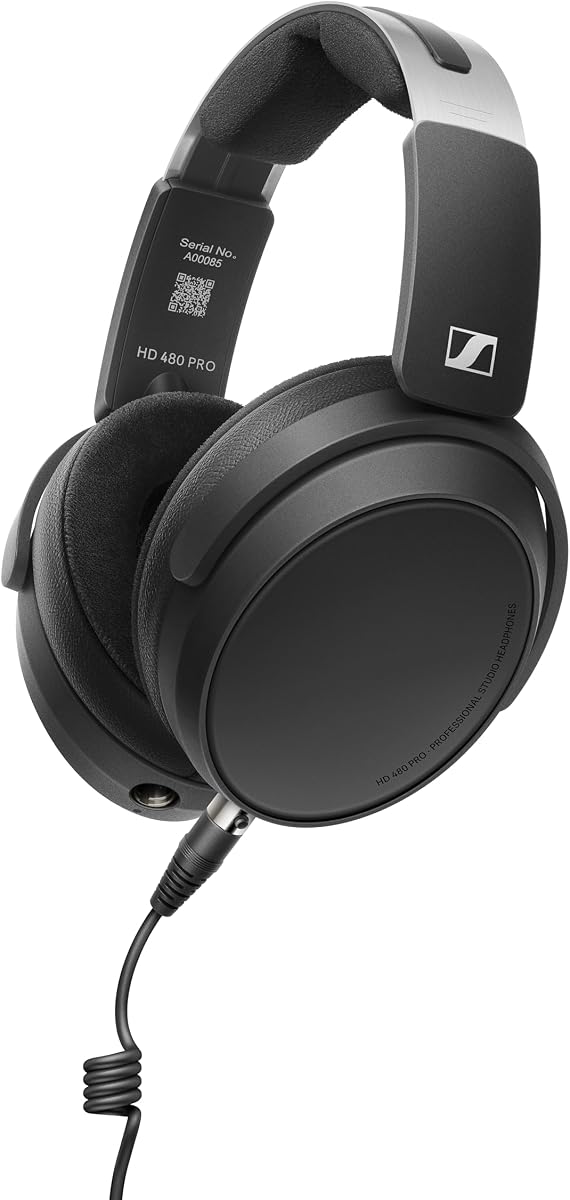
The HD 480 PRO carries the highest listed rating in the comparison at 4.8 and presents the most elaborately described feature set. It combines advanced neodymium drivers, an ultralight voice coil, multi-stage passive shielding, and a Vibration Attenuation System intended to reduce distortion and leakage during close monitoring.
We may earn a commission when you buy through this link, at no additional cost to you.
Its fit is designed around all-day use. Angled earcups help eliminate pressure points and reduce leakage, while grooved pads are intended to improve comfort for people who wear eyeglasses. The vibration-control design is especially relevant to tracking because it addresses unwanted movement and leakage without requiring an active electronic system.
The HD 480 PRO also emphasizes flexible studio connections. It includes dual L/R jacks and a detachable cable that can adapt to different setups. A patented cable coil is designed to block noise, and braille L/R markers improve accessibility and make orientation easier in dim conditions. The headphone is engineered in Germany and hand-assembled in Romania.
This is the most ambitious choice for musicians who want premium passive isolation, a refined full-spectrum monitoring design, and flexible connectivity. It is particularly appealing to tracking engineers, vocalists, and producers who spend long periods in a booth or control room. The specialized connection and premium construction may be unnecessary for a casual user, but for focused professional work they provide a compelling reason to choose this model.
Multi-stage shielding and the Vibration Attenuation System work together to limit leakage and unwanted vibration. Passive isolation can provide cleaner tracking without adding battery-powered circuitry or a complicated digital control system.
Angled earcups are intended to distribute pressure more evenly and help prevent sound leakage. Grooved pads and an accessibility-minded cable design show attention to long-session comfort, glasses, and practical studio use.
We may earn a commission when you buy through this link, at no additional cost to you.
The FIFINE HD8 earns a 4.5 rating and delivers a notable combination of driver size, cable flexibility, and equipment compatibility. Its 50mm dynamic drivers cover a listed 20Hz–20kHz frequency range, with the manufacturer describing the presentation as dynamic bass, stable mids, and accurate treble for DJ work, mixing, monitoring, and vocal recording.
We may earn a commission when you buy through this link, at no additional cost to you.
For tracking, the circumaural closed-back shell is designed to provide passive cancellation by blocking high-frequency environmental noise. The goal is to create a more focused work area without requiring active electronics. A supportive adjustable headband and soft padded ear cushions are intended to remain comfortable through long creative sessions, while the listed 265g weight helps avoid a bulky feel.
Two detachable 9.8-foot DJ-style coiled cables are included, one ending in a 3.5mm plug and the other in a 1/4-inch plug. This broadens compatibility with mixers, audio interfaces, microphones with headphone outputs, and devices with a headphone jack without requiring a separate adapter. The tradeoff is that coiled cables can occupy more desk space and create more loops around the performer.
The HD8 is an excellent starting point for a singer, voice actor, beat maker, or home studio owner who wants a monitor-specific headphone on a more modest budget. It is best for users who value a complete detachable cable package, a full-size driver, and a wide frequency response. While its isolation is not described as the most advanced in the group, it remains a versatile and practical tracking option.
The included 3.5mm and 1/4-inch detachable cables make it possible to move between smaller and larger headphone outputs. This is useful for musicians who record through more than one interface, mixer, or portable device.
The 50mm dynamic drivers and stated 20Hz–20kHz range give the HD8 a more substantial monitoring foundation than a conventional media headphone. Stable mids and accurate treble are particularly relevant to checking vocal balance and mix clarity.
We may earn a commission when you buy through this link, at no additional cost to you.
The AKG K72 has a 4.4 rating and offers a straightforward over-ear, closed-back monitoring option. Its 40mm drivers are described as high-sensitivity and high-output, while the circumaural shape places the ear pads around the ears for a studio-style monitoring experience.
We may earn a commission when you buy through this link, at no additional cost to you.
The headphones connect through a 1/8-inch steel plug, making them suitable for portable devices that use a standard headphone jack. A screw-on 1/4-inch steel adapter extends that compatibility to larger studio inputs, so the user does not need to move between different headphone cables when changing equipment.
The supplied information is limited compared with the feature-rich descriptions of several other models. It does not mention a detachable cable, a folding mechanism, replaceable pads, swiveling earcups, or a specific noise-attenuation figure. That simplicity makes the K72 easy to understand, but users seeking advanced monitoring conveniences may find fewer options.
The K72 is a useful choice for a beginner, a mobile musician, or anyone who wants a direct closed-back headphone with broad plug compatibility. It is best for simple tracking, practice, and general listening where the priority is an over-ear studio format rather than extensive setup-specific features. It also serves as a backup pair for a setup where easy connection to portable and studio equipment is valuable.
The 1/8-inch plug works directly with compatible portable equipment, while the included screw-on 1/4-inch adapter supports larger inputs. This makes the K72 useful for a musician moving between rehearsal, home, and studio locations.
The closed-back circumaural configuration and 40mm drivers follow a familiar studio-monitoring format. The design focuses on direct, wired listening without added electronics or complicated controls.
We may earn a commission when you buy through this link, at no additional cost to you.
The Sennheiser HD 569 holds a 4.5 rating and combines a closed-back, around-ear design with proprietary 38mm, 23-ohm transducers. The relatively low impedance is a practical characteristic for direct connection to a wide range of playback devices, making it suitable for musicians who may alternate between an interface, laptop, and mobile source.
We may earn a commission when you buy through this link, at no additional cost to you.
Two detachable cables are included: a 3-meter cable with a 6.3mm jack and a 1.2-meter cable with a 3.5mm jack. The shorter cable includes an inline microphone and remote for call and music control, adding convenience outside the studio while allowing the longer lead to be used with professional equipment.
Soft, replaceable ear pads improve comfort and help extend the useful life of the headphones. However, the supplied feature list does not mention swiveling earcups, one-ear cueing, an attenuation figure, or a dedicated tracking control. The HD 569 is therefore better viewed as a flexible closed-back audiophone that can support tracking than as a highly specialized performance monitor.
The HD 569 is a good recommendation for musicians who want comfortable long-session listening, straightforward wired compatibility, and the option to switch between long and short cables. It is particularly useful for producers who also listen to finished music on mobile devices. Those who need pronounced physical cueing or maximum isolation should compare those requirements with the more specialized models in the guide.
The detachable 3-meter and 1.2-meter leads cover long studio runs and compact mobile listening. The included inline microphone and remote on the shorter lead make the headphone useful for calls as well as monitoring.
Soft replaceable ear pads support comfortable over-ear use, while the 23-ohm transducer design simplifies connection to a variety of sources. It is a practical choice for long sessions that involve both tracking and critical listening.
We may earn a commission when you buy through this link, at no additional cost to you.
A useful tracking headphone must combine dependable isolation, an appropriate wired connection, accurate monitoring, and comfort that holds up over repeated sessions. The right balance varies according to the recording environment, playback hardware, and whether one-ear cueing or portable transport is important.
Closed-back isolation helps limit how much playback reaches the surrounding room and how much outside noise reaches the performer. That matters most when recording vocals, voice-over, or live instruments in the same room as the monitoring system. Models such as the beyerdynamic DT 770 Pro and DT 270 Pro explicitly emphasize keeping the click and mix away from a microphone, while the Sennheiser HD 280 Pro lists attenuation of up to 32dB.
Choose strong passive isolation for a shared or reflective room, but also recognize that no closed-back headphone completely removes sound leakage. Keep the microphone positioned carefully and use the closed-back advantage as one part of a controlled recording setup rather than the only protection.
Driver size, magnet construction, and frequency response can give clues about how a headphone presents musical information. The listed products range from the AKG K72's 40mm drivers to the FIFINE HD8's 50mm units, while the Audio-Technica ATH-M50X uses proprietary 45mm large-aperture drivers. Explicit response information includes 10Hz–20kHz for the Sony MDR7506 and 20Hz–20kHz for the FIFINE HD8.
Look for a response that covers the range of material you monitor and focus on stated clarity, bass behavior, and isolation rather than driver size alone. A large driver can be useful, but the tuning, enclosure, electronics, source, and room all influence the final result.
Impedance matters because a headphone that is difficult to drive may play quietly or alter its perceived balance through an underpowered source. The beyerdynamic DT 770 Pro is an 80-ohm model that the product information says sounds best from an audio interface or headphone amplifier, although it can be loud enough from many laptops. The Sennheiser HD 569 uses lower-impedance 23-ohm transducers, which generally makes it easy to pair with a broader range of devices.
Check the output of your interface, mixer, laptop, or mobile device before buying. Use an appropriate amplifier when required, and avoid assuming that a quiet source will provide enough level for comfortable tracking or accurate low-frequency assessment.
Cable design affects both setup flexibility and desk organization. Fixed cables appear on the Sony MDR7506, beyerdynamic DT 770 Pro, and DT 270 Pro. Detachable systems appear on the Audio-Technica ATH-M50X, HD 480 PRO, FIFINE HD8, and Sennheiser HD 569, allowing replacement and, in some cases, selection between cable lengths or connector formats.
A detachable cable is useful in a permanent studio, but a fixed cable can be simpler for a mobile setup with only one device. Long coiled leads can keep connections away from the performer, although they also occupy desk space. Consider cable length, plug size, and how the headphone will sit during a performance before selecting a model.
Comfort is not simply a matter of softness. Weight, clamping pressure, pad shape, headband padding, eyeglass compatibility, and the room temperature all affect how a headphone feels. The Sennheiser HD 280 Pro is described as lightweight and ergonomic, the beyerdynamic DT 270 Pro emphasizes a lightweight fit and soft pads, and the HD 480 PRO uses angled earcups with grooved pads for people who wear glasses.
Look for replaceable or easily renewed contact surfaces if you expect regular studio use. The DT 770 Pro includes replaceable velour pads, the HD 280 Pro has replaceable earpads and headband padding, and the HD 569 uses soft replaceable ear pads. A comfortable fit also allows you to monitor at lower levels, which can be better for long sessions and accurate listening.
One-ear monitoring lets a performer compare headphone playback with a nearby live source without removing the entire headphone. The Audio-Technica ATH-M50X supports this with 90-degree swiveling earcups, making it particularly suitable for recording live instruments or checking a room. For transport, the Sony MDR7506 folds into its supplied soft case, and the HD 280 Pro has collapsible earcup pieces.
Decide whether one-ear cueing is essential or merely convenient. If you move between takes, performers, or locations, foldable construction can save space. If your setup remains stationary, a durable fixed design with comfortable pads may be more valuable than a folding mechanism.
Your environment can matter as much as the specification. In a controlled studio, accurate monitoring, flexible connection, and comfort may be the priority. In a home booth or shared office, passive isolation and cable management become more important. A podcast desk benefits from a lightweight, low-leakage headphone, while a control room may favor detailed full-range performance and replaceable components.
Map the headphone to the job rather than expecting one model to cover every location perfectly. Consider whether you track voice, instruments, electronic music, or a mixture, and whether the same headphone will also be used for editing and final mixing. The most suitable purchase is the one that supports your regular workflow and hardware.
Begin by matching the headphone to the correct output. Connect it to the headphone jack on an audio interface, mixer, laptop, or mobile device, and use the included adapter when the connection requires a 6.35mm or 1/4-inch plug. Check the device volume before putting the headphones on, then raise it gradually to a comfortable monitoring level. For latency-free tracking, use a wired connection rather than a wireless signal path.
Set the source for a flat, reference-oriented starting point before making adjustments for personal taste. Listen to the arrangement at a level that lets you evaluate balance, vocal clarity, and timing without straining. If recording a nearby live source, briefly lift or rotate an earcup if the model supports one-ear monitoring, then return it to a consistent position. Keep cables routed away from doors, chairs, microphone stands, and performers' foot traffic.
Store the headphones in a way that protects the earcups, headband, and cable. Fold or collapse only models designed for it, and avoid twisting a fixed cable into a tight coil. Clean removable ear pads according to the manufacturer's care instructions, keep moisture away from the drivers and connectors, and replace worn pads or cables before they affect fit or signal reliability. Periodically inspect the plug, cable, hinges, and cushion contact points for visible damage.
Yes, closed back headphones are commonly used for vocal tracking because their passive isolation helps keep playback and click sounds from reaching a nearby microphone. They are especially useful in home studios, podcast rooms, and shared recording spaces. Isolation is not complete, so microphone placement and room treatment still matter. A model with a comfortable fit also makes it easier to monitor at lower levels throughout a long session.
They can leak some sound, although the sealed closed-back design generally limits leakage compared with an open-back headphone. Leakage depends on the fit, volume, pad seal, frequency range, and microphone position. Tracking a loud vocal or instrument close to a microphone can require additional measures. Keep the microphone at a suitable distance and use isolation or room treatment when the recording demands a very clean result.
A detachable cable is easier to replace and may let you select a different length or connector, making it valuable in a permanent studio. A fixed cable can be simpler and less likely to leave a loose connection during a performance. The best choice depends on portability, cable routing, and how often you move between equipment. Check the included cable and plug format before making a selection.
The headphone output of your interface should have enough power to drive the selected impedance at a comfortable level. The beyerdynamic DT 770 Pro is an 80-ohm model that is specifically described as sounding best with an interface or headphone amplifier. The Sennheiser HD 569 uses 23-ohm transducers and is generally easier to drive from different sources. If the output is weak, add a suitable headphone amplifier rather than forcing an extreme volume level.
Many models can be used with a laptop or phone when the device has a compatible headphone output. The AKG K72 includes a 1/8-inch plug and a screw-on 1/4-inch adapter, while the FIFINE HD8 includes detachable 3.5mm and 1/4-inch cables. The Sennheiser HD 569 also includes a 1.2-meter cable with a 3.5mm jack. Check the device and interface before purchasing, and use the appropriate adapter when needed.
It can be extremely useful when a performer needs to hear both headphone playback and a nearby live source. The Audio-Technica ATH-M50X has 90-degree swiveling earcups specifically for easy one-ear monitoring. Other models can be partially removed, but that is less convenient. If you regularly record live instruments in the same room as the performer, rotating earcups deserve close consideration.
Choose a fit that does not create pressure around the head or ears, and take short breaks when possible. Replaceable pads can restore cushioning and seal after prolonged use, while lightweight models may place less strain on the head. Eyeglass users should look for pads and earcup shapes that avoid pressing the frame against the temple. A comfortable fit also makes lower monitoring levels easier to maintain.
It depends on the headphone impedance and the power of your source. Some headphones, including the 80-ohm DT 770 Pro, are specifically recommended for use with an audio interface or headphone amplifier. An amplifier can provide a stronger, cleaner signal and a useful level control, but it is not automatically necessary for every model. Confirm that your playback hardware can drive the selected headphone comfortably before adding extra equipment.
The beyerdynamic DT 770 Pro is the strongest all-round selection in this guide, combining passive isolation, replaceable velour pads, an 80-ohm studio design, and a durable frame. The FIFINE HD8 stands out as the value-oriented choice with 50mm drivers and two detachable cables, while the HD 480 PRO represents the premium option with advanced shielding, angled comfort features, and flexible dual-jack connectivity.
Prioritize the features that directly affect your sessions. Strong isolation matters in shared rooms, detachable and correctly sized cables simplify setup, and comfortable replaceable pads help sustain long-term use. Models with rotating earcups deserve extra attention when tracking live sources, while lower-impedance designs can be easier to pair with different playback devices.
Before purchasing, check the latest product details, connector requirements, and current price for your selected model. Product offerings and prices can change, and compatibility depends on the interface, mixer, computer, or phone you actually use. A careful fit between the headphone, playback hardware, and recording environment will provide the most dependable tracking experience.