
Weuaste BSD01
4.5Editor score
Rear blind-spot radar coverage
Thirty-meter detection range
Three-directional vehicle detection
IP69K weather-resistant housing
Automatic motorcycle power connection
Our radar detector for motorcycle guide compares ten options for police signal detection, rear radar, blind-spot awareness, weather resistance, alerts, and
A motorcycle radar detector can provide valuable awareness, but the term covers two distinct categories: devices designed to detect police radar and laser signals, and motorcycle safety systems that monitor approaching traffic in rear and side blind spots. A useful purchase must match the rider’s intended purpose, motorcycle electrical system, mounting needs, and tolerance for handling different alert methods.
This guide compares all ten available products on core capabilities, detection coverage, environmental resistance, display and audio options, installation demands, and practical usability. It separates purpose-built motorcycle equipment from conventional car detectors and clearly identifies which products are designed for police-signal detection, blind-spot monitoring, rear collision awareness, or a combination of these functions.
Each review explains the strongest reasons to consider the model while acknowledging important limitations. The top picks represent the most compelling options for general motorcycle-specific use, a lower-cost rear-awareness system, and advanced detection features. Product availability and current prices can change, so riders should verify specifications, fit, and compatibility before purchasing.
4.5Editor score

4.2Editor score

3.4Editor score
The comparison below separates motorcycle-specific police-signal detectors, car-mounted radar and laser units, and rear blind-spot radar systems so riders can compare the products by function rather than by name alone.



The Adaptiv Technologies TPX Pro is the most complete purpose-built police radar and laser detector in this group. Its 4.2 rating reflects a practical motorcycle package rather than a generic car unit adapted after the fact. The standout feature is its native design: a front-mounted, daylight-visible LCD, large backlit buttons, a quick-release mounting mechanism, and a wiring harness intended for installation on a bike.
We may earn a commission when you buy through this link, at no additional cost to you.
Signal coverage is another major strength. The system detects all listed police radar and laser bands, provides 360-degree radar and laser protection, and includes data points for red-light and speed cameras. Those locations are updateable at no charge according to the supplied information. The screen is angled for visibility while riding, and the adjustable ultra-bright LED alert gives the rider an immediate visual signal without requiring repeated interaction with a small control panel.
Weather and vibration resistance make the TPX Pro more credible in real motorcycle use than an unmodified automotive detector. Its waterproof construction addresses a common concern with electronics exposed to rain, while vibration resistance is especially relevant to a compact unit attached to a moving bike. The integrated quick-release plate also makes removing the system more practical than dealing with a permanently mounted car bracket.
This is the strongest all-around recommendation for someone who specifically wants a motorcycle police-signal detector and values a visible display, simple physical controls, and a removable installation. Audio output works with a sound or communication system, but a wireless headset remains optional, so riders should plan that additional accessory if they want private spoken alerts. It is less suitable for someone who actually wants rear blind-spot monitoring because it is built to detect police signals rather than nearby vehicles.
The TPX Pro avoids the most obvious weakness of conventional car detectors by providing a motorcycle-oriented display, controls, mounting hardware, and wiring arrangement. That purpose-built approach makes it easier for a rider to check information at a glance and remove the unit without disassembling an awkward suction or dashboard mount.
Large backlit buttons, an adjustable LED alert, and a daylight-visible LCD provide several ways to receive information. The optional audio output and wireless headset add another route for riders who prefer spoken warnings while remaining focused on the road.
We may earn a commission when you buy through this link, at no additional cost to you.
The TPX A-01-01 Version 2.0 is a straightforward motorcycle police radar and laser detection system with a strong 4.4 rating. It shares the central strengths of the TPX Pro without presenting the same extensive feature list in the supplied description. Riders seeking a dedicated motorcycle unit with broad signal detection and uncomplicated installation will find the core proposition easy to understand.
We may earn a commission when you buy through this link, at no additional cost to you.
The system detects all police radar and laser bands and provides 360-degree radar and laser protection. That makes it relevant to riders who want early warning from multiple directions rather than a simple forward-only alert. Its waterproof construction is also a major benefit in an exposed motorcycle environment, where wind-driven rain and road spray can reach equipment mounted near the cockpit or fairing.
Installation is described as simple and plug-and-play, which helps this model stand apart from complicated motorcycle wiring arrangements. An adjustable ultra-bright LED alert is included, providing a visible notification method without relying entirely on sound. The system also carries a top-rated sensitivity claim, although actual performance can depend on installation, traffic conditions, and the specific signals encountered.
The main compromise is that the available product information is less detailed than that of the TPX Pro. The description does not identify a daylight LCD, red-light or speed-camera database, wireless headset integration, or a comprehensive quick-release mounting system. Riders who want the fullest feature set should move up to the Pro, while those who prioritize a simpler dedicated police detector may find this model a more focused option.
This detector focuses on the essential categories of police radar and laser signals without requiring riders to sort through a broader collection of car-focused connectivity features. Its 360-degree coverage and all-band detection make it a credible core system for motorcycle riders.
Waterproof construction and a plug-and-play setup address two common motorcycle concerns at once: exposure to the elements and complexity during installation. Riders should still position the unit where it remains visible and accessible without interfering with controls.
We may earn a commission when you buy through this link, at no additional cost to you.
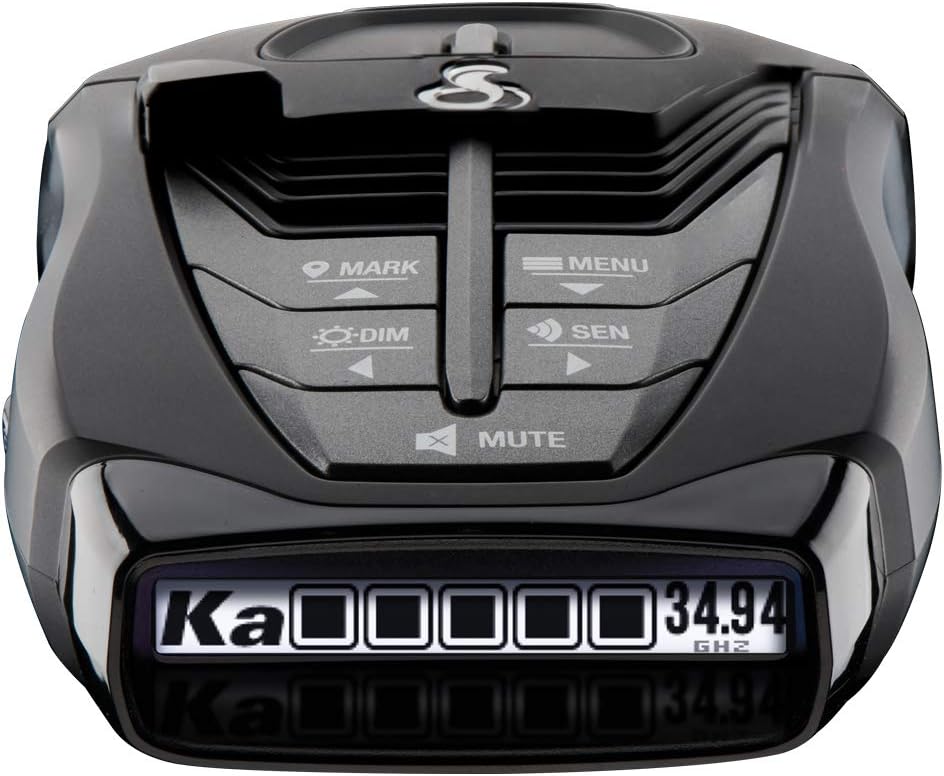
The Cobra RAD 480i is a connected laser and radar detector with a 4.2 rating, bringing mobile and community features to a more conventional automotive package. Its front-and-rear LaserEye technology, long-range detection, Bluetooth connectivity, and compatibility with the Drive Smarter ecosystem make it an interesting option for riders who want more app-based functionality than the dedicated Adaptiv systems provide.
We may earn a commission when you buy through this link, at no additional cost to you.
The included 12V power cord, suction-cup windshield mount, and hook-and-loop dash fastener reveal the primary limitation: this is a car detector rather than a purpose-built motorcycle system. No motorcycle power adapter, weatherproof motorcycle housing, or bike-specific mounting arrangement is listed. A rider would need to verify whether the included power connection and mounting hardware suit the motorcycle, and would still be responsible for securing and weather-protecting the device.
Signal processing is a meaningful strength. The updateable IVT filter and anti-falsing circuitry are designed to reduce alerts from blind-spot monitoring and vehicle-avoidance systems, while digital signal processing is intended to process laser signals quickly. The Drive Smarter app and shared alerts can add information beyond direct detection, and compatibility with Apple CarPlay and Android Auto may be useful for some connected riding arrangements.
This product is best considered by a rider who prioritizes connectivity and a car-detector feature set, and who is comfortable adapting it to a motorcycle. It does not monitor nearby vehicles in the rider’s rear blind spot, and its supplied mounting package is not motorcycle-specific. A rider searching for a turnkey bike system should favor the Adaptiv products, while a rider interested in app-based alerts should investigate this model’s installation requirements carefully.
Bluetooth, the iRadar and Drive Smarter ecosystem, shared community alerts, and smartphone display compatibility give the RAD 480i a broader information network. These features can complement direct signal detection, although their usefulness on a motorcycle depends on the rider’s phone, display setup, and safe integration.
The updateable IVT filter and advanced anti-falsing circuitry target the kinds of signals produced by other modern vehicle systems. For a rider using the detector in dense traffic, reducing irrelevant warnings may be as important as maximizing the detection range.
We may earn a commission when you buy through this link, at no additional cost to you.
The Uniden R8W is a flagship portable windshield-mount laser and radar detector with a 4.3 rating. Its defining feature is directional awareness: dual antennas detect threats from all four directions, and voice alerts identify the direction, band, and signal strength. For a rider who wants precise information rather than a simple on-or-off warning, this is one of the most technically advanced models in the list.
We may earn a commission when you buy through this link, at no additional cost to you.
Two Blackfin digital signal processors support the performance claims, while the built-in GPS adds route-based false-alert memory. The detector can remember locations that repeatedly produce false warnings and mute them on familiar routes. It also includes preloaded red-light and speed-camera locations with free database and firmware updates, making it more useful for proactive awareness beyond moving police radar.
Connectivity broadens the R8W’s appeal. Wi-Fi, Bluetooth, GPS, real-time voice alerts, and the R/TACH app place it firmly in the connected-detector category. Programmable voice alerts are especially relevant to motorcycle use because they can communicate the threat direction without requiring the rider to look away from traffic. However, the product remains described as a portable windshield-mount detector, and no dedicated motorcycle wiring, weatherproof enclosure, or bike mounting kit appears in the supplied information.
The R8W is best suited to technically confident riders who want a high-end signal-detection system and can safely adapt its installation to a motorcycle. Its sophistication also creates a learning curve compared with the more direct Adaptiv models. Before buying, riders should confirm power, mounting, weather exposure, and audio routing for their specific motorcycle.
Dual antennas and directional voice alerts help a rider understand where a threat is coming from. That additional context can support earlier and more appropriate responses while reducing the need to inspect a screen at speed.
Built-in GPS allows the detector to remember familiar false-alert locations along regularly ridden routes. This route-based filtering is particularly valuable for commuters who repeatedly pass the same retail entrances, parked vehicles, or other recurring signal sources.
We may earn a commission when you buy through this link, at no additional cost to you.
The Uniden R7 combines long-range radar and laser detection with a 4.6 rating, the highest among the police-signal detectors in this roundup. It is designed for drivers who want detailed information, and its large multi-color OLED display can present up to four signals simultaneously. That makes it easier to understand multiple nearby sources and their relative strength.
We may earn a commission when you buy through this link, at no additional cost to you.
Dual antennas provide 360-degree coverage with directional arrows, plus band and signal-strength information. The design gives a rider more context than a basic audible warning. A large screen can also be easier to interpret, although that same visual complexity may be less desirable on a motorcycle than in a car, where the detector can be mounted lower and viewed with a glance.
GPS technology records common false-alert locations along familiar routes, while preloaded red-light and speed-camera data receives free database and firmware updates. The result is a detector that combines immediate signal detection with proactive awareness of fixed enforcement locations. Its advanced filtering is also intended to keep alerts useful in busy traffic.
The R7 is a compelling advanced detector for riders who can solve mounting, power, and weather-protection issues, but its description does not identify a motorcycle-specific installation kit. Compared with the R8W, its standout strength is the large multi-color OLED display and the ability to show several signals together. Compared with the dedicated Adaptiv models, it is less turnkey for motorcycle use. Verify fit and integration before making it part of a bike.
The large multi-color OLED display can show up to four signals at once, together with direction, band, and strength details. Riders gain a more complete picture of the traffic environment, especially when several potential sources are detected together.
Dual antennas cover all four directions, allowing the R7 to distinguish where a detected signal originated. The arrows and signal-strength readouts turn a generic warning into a more useful piece of information.
We may earn a commission when you buy through this link, at no additional cost to you.
This 24GHz rear radar system is a motorcycle blind-spot detection device rather than a police radar and laser detector, making that distinction central to its 4.9 rating and overall recommendation. It continuously watches traffic approaching from behind, covering the left rear, right rear, and direct rear areas that can be difficult to assess through conventional mirrors alone.
We may earn a commission when you buy through this link, at no additional cost to you.
The stated operational range reaches 98 feet across an approximately 130-degree sensing area. A compact set of warning lights indicates direction without requiring a screen: the left yellow light identifies traffic on the left, the right yellow light identifies traffic on the right, and both red indicators activate for a vehicle directly behind. This approach keeps the cockpit uncluttered and allows the rider to receive information with a quick glance.
Target-speed filtering is set to alert only when the detected vehicle is moving faster than 1.9 mph. The intent is to reduce unnecessary notifications caused by static or slowly moving targets, though riders should understand the threshold before relying on it. The housing has an IP69K weather-resistant rating, which makes the unit suitable for outdoor use in rain, fog, snow, and changing road conditions.
A dedicated USB cable is included for motorcycles with a compatible USB port, reducing the need for extensive wiring. This is a strong choice for riders seeking compact rear awareness rather than police-signal detection. It is not a replacement for a police detector, and it will not provide direction, band, or strength information about radar and laser enforcement signals.
Separate left, right, and dual red indicators communicate the location of an approaching vehicle. The low-profile lighting can sit near the mirrors or another visible point, reducing visual clutter and helping the rider check a blind area before changing lanes.
The system activates for targets traveling above the specified threshold, which helps suppress distracting notifications. Its IP69K weather-resistant housing is also well matched to the exposure and changing conditions encountered during regular motorcycle use.
We may earn a commission when you buy through this link, at no additional cost to you.
The Weuaste BSD01 is a 24GHz millimeter-wave motorcycle blind-spot and rear collision warning system with a 4.5 rating. It is designed for riders who want to know when another vehicle enters the rear portion of the bike, not for detecting police radar or laser transmissions. That makes it especially useful for commuting, highway riding, and lane changes involving limited mirror visibility.
We may earn a commission when you buy through this link, at no additional cost to you.
The system provides simultaneous three-directional detection, covering the left rear, right rear, and area directly behind the motorcycle. Its stated range reaches 30 meters, with approximately 130-degree blind-spot coverage and automatic object recognition inside that perimeter. Dual-stage, real-time visual warnings are delivered through LED indicators, giving the rider prompt information without a large display.
Weather resistance is a clear strength. The housing carries IP69K protection and is described as waterproof, dustproof, and fogproof, with a stated tolerance from minus 40 to 176 degrees Fahrenheit. The alert threshold is set at more than 10 kilometers per hour, or approximately 6.2 miles per hour, for the detected target, which helps reduce interference from cluttered or slow-moving objects.
Installation uses the motorcycle’s ACC line and battery negative terminal. According to the product information, the system powers on and off with the motorcycle and does not drain the original battery. This is a compelling value-oriented rear-awareness package, but it does not identify police signals, report radar bands, or provide camera-location warnings. Those requiring enforcement detection should choose one of the dedicated radar detector models instead.
Simultaneous monitoring of the left rear, right rear, and direct rear areas gives the rider a broader view of approaching traffic. This is particularly helpful during lane changes when a vehicle occupies a position poorly represented by conventional mirrors.
The IP69K housing and wide temperature tolerance suit regular outdoor riding in rain, fog, snow, and seasonal temperature changes. A sealed radar unit is especially valuable for commuter motorcycles exposed to daily weather.
We may earn a commission when you buy through this link, at no additional cost to you.
The Cobra RAD 700i is a premium connected laser and radar detector offering a 4.2 rating. It sits above the RAD 480i in the supplied range through its antenna platform, high-quality five-color OLED display, and AutoLearn filtering behavior. It is aimed at riders who want detailed feedback and advanced connectivity rather than a simple, motorcycle-specific installation.
We may earn a commission when you buy through this link, at no additional cost to you.
Digital signal processing is designed to handle incoming laser signals quickly, while the upgraded antenna platform supports premium detection range. LaserEye technology extends detection to both the front and rear of the vehicle. Built-in GPS, advanced filtering software, and AutoLearn Intelligence work together to recognize recurring false signals, allowing the detector to reduce nuisance warnings over time.
The five-color OLED display can be customized to match a vehicle’s interior lighting, and the Drive Smarter ecosystem provides shared alerts from drivers across the country. Compatibility with Apple CarPlay and Android Auto allows route viewing and alert interaction on a supported display. These features make the RAD 700i a polished automotive product, although the supplied information does not mention motorcycle-specific mounts, power adapters, or waterproofing.
This is a strong choice for a technically equipped rider who can integrate a car detector into the motorcycle safely. Its large display may be less convenient on a crowded cockpit, and riders should ensure that the power setup remains stable and the unit is protected from weather. It detects police radar and laser signals rather than monitoring nearby vehicles in the rear blind spot, so it serves a different role from the motorcycle BSD systems.
AutoLearn Intelligence is designed to recognize recurring false signals and reduce them over time. Combined with GPS and advanced filtering software, this can keep alerts more relevant for riders who follow the same roads repeatedly.
The five-color OLED provides clear visual information and can be adjusted for aesthetic consistency. On a motorcycle, a compact or minimally intrusive placement is essential, so riders should assess how much display area they are willing to devote to the detector.
We may earn a commission when you buy through this link, at no additional cost to you.
This 24GHz side-and-rear radar system is a motorcycle blind-spot device with a 4.0 rating. It is listed for motorcycles, bicycles, and electric bikes, making it broader in potential application than some motorcycle-only units. Like the similar 24GHz system in this roundup, its core function is monitoring nearby traffic rather than detecting police radar and laser signals.
We may earn a commission when you buy through this link, at no additional cost to you.
The radar reaches 98 feet and covers an approximately 130-degree area behind the rider. Left-side traffic activates the left yellow indicator, right-side traffic activates the right yellow indicator, and a vehicle directly behind activates both red indicators. These physical cues let the rider understand the general position of a hazard without looking at a screen, which supports safer checks before changing lanes.
The target-speed filter activates when a detected target is moving faster than 6.21 miles per hour. This threshold differs from the closely related 24GHz system, which uses a lower speed threshold. Riders should compare those differences carefully because they may affect how frequently warnings appear in slow traffic or parking environments.
The IP69K weather-resistant radar housing and compact LED indicators make the system practical for outdoor riding, while a direct USB power connection simplifies setup on a motorcycle with a compatible port. It is a reasonable choice for e-bike or multi-vehicle households seeking one rear-awareness design, but it lacks the police-signal detection provided by the Adaptiv, Uniden, and Cobra products.
The three-part light arrangement communicates left, right, or direct-rear traffic. Positioned near the mirrors or another visible location, the indicators can provide a quick visual check during highway riding, passing, or lane changes.
Compatibility with motorcycles, bicycles, and electric bikes makes this system interesting for riders who use more than one type of vehicle. The included direct USB cable and compact format can make integration more convenient, provided the vehicle has a compatible power source.
We may earn a commission when you buy through this link, at no additional cost to you.
The Garmin zūmo R1 is a premium motorcycle rearview and blind-spot radar with a 3.4 rating. Unlike the conventional car detectors in this guide, it is purpose-built to monitor nearby vehicles behind a motorcycle. It combines radar coverage, external lighting, heads-up indicators, and display options for compatible Garmin or smartphone setups.
We may earn a commission when you buy through this link, at no additional cost to you.
The unit mounts discreetly to the license plate, preserving the motorcycle’s appearance while placing the radar in a position suited to rearward monitoring. Side-facing amber lights and an optional rear-facing red light increase the bike’s visibility to other road users. Heads-up indicator lights alert the rider to vehicles in blind spots or approaching from behind.
Rider information can be viewed as full-screen motorcycle radar on a zūmo XT2 motorcycle navigator or on a mounted compatible smartphone through the zūmo Radar app. Audio alerts can also be paired with a headset through that app, giving experienced riders multiple ways to receive warnings without taking their eyes completely off the road.
The rating is the lowest in the list, and Garmin explicitly notes that adverse weather and wet roads may interfere with operation. It should be treated as an additional awareness aid rather than a replacement for mirrors, careful observation, or sound-perception checks. It is a premium choice for Garmin ecosystem users, but riders wanting police radar and laser detection should choose a dedicated enforcement detector.
Side-facing amber lights and the optional rear-facing red light are intended to make the motorcycle more noticeable to surrounding traffic. External visibility can complement radar-based awareness, although riders should verify local lighting regulations.
Compatible riders can view full-screen radar information on a zūmo XT2 navigator or a mounted smartphone. Optional headset audio provides another alert channel, allowing the rider to keep attention directed toward the road ahead.
We may earn a commission when you buy through this link, at no additional cost to you.
The most important first step is deciding whether you need police-signal detection, rear blind-spot awareness, or both. Installation demands and environmental exposure differ substantially between these categories, so the most capable-looking device is not necessarily the most appropriate choice for your motorcycle.
Choose an enforcement detector for police radar and laser warnings. Choose blind-spot or rearview radar for lane-change and rear-traffic awareness. Buying one does not automatically provide the other function.
Prefer a motorcycle-specific kit when convenience and secure integration matter. For an automotive detector, verify every electrical and mounting requirement before buying.
Check the enclosure rating and installation position. Water resistance helps, but proper sealing, cable routing, and regular inspection remain essential.
Compare direction, range, and alert speed together. The widest specification does not necessarily produce the most useful warning in real traffic.
Choose alerts that are easy to interpret at a glance. A complex feature set is less valuable if the rider cannot quickly understand the warning.
Match the power method to the bike and use appropriate circuit protection. If a professional installation is needed, include that effort in the purchase decision.
Favor a clean, understandable layout over features you will not use. A device that distracts from riding is not well designed for a motorcycle.
Camera databases and route learning are useful extras. Check update methods and connectivity requirements before deciding they are worth the added complexity.
Begin with the manufacturer’s installation instructions and identify the correct power source, mounting area, and orientation for your specific motorcycle. Do not obstruct gauges, controls, lights, the license plate, steering movement, or the rider’s view. Tighten fasteners appropriately, route cables away from hot exhaust components and moving parts, and confirm that the system powers down or behaves correctly when the motorcycle is turned off.
After installation, perform a low-speed test in a safe area. Learn the meaning of every light, arrow, tone, and voice message before relying on the device in traffic. For a blind-spot system, identify a legal method to verify that left, right, and direct-rear warnings correspond to the correct approaching vehicle. Continue using mirrors, shoulder checks, and sound-perception checks because no radar unit provides complete situational awareness.
Inspect the unit and wiring regularly for looseness, water intrusion, damaged insulation, or obstructed sensors. Clean the radar face gently and keep protective coverings or weather seals in place. Update databases and firmware when the manufacturer provides them, and use a compatible power connection rather than bypassing protective circuitry. If alerts become erratic, mounting becomes loose, or behavior changes in wet weather, have the installation checked before relying on the system.
Rules vary by jurisdiction, and laws concerning radar detectors, laser detectors, mounting, and use differ by location. A detector must not obstruct required lights, plates, controls, or the rider’s view. Riders should check the regulations for every jurisdiction in which they travel before installation or use.
A police radar detector is designed to receive radar or laser signals associated with traffic enforcement. A motorcycle blind-spot or rearview radar detects vehicles around the motorcycle and warns the rider about rear or side traffic. These are separate functions, and the products in this guide should be selected according to the awareness needed.
A car detector may function if the electrical connection, mounting, weather exposure, visibility, and audio integration are handled safely. However, the Cobra and Uniden products in this roundup are not supplied with motorcycle-specific mounting or power kits. A purpose-built motorcycle system is generally simpler and more appropriate for regular use.
No. Radar systems supplement mirrors and active observation by detecting vehicles that may be difficult to see. They can suffer interference, miss unexpected conditions, and do not eliminate the need to check behind before changing lanes. The Garmin zūmo R1 description specifically advises maintaining awareness of surrounding conditions, especially in adverse weather and on wet roads.
The best location provides a secure attachment, an unobstructed sensor view, visible alerts, and protection from weather without interfering with controls or lights. The Adaptiv TPX Pro uses a front-mounted angled LCD and quick-release plate, while the Garmin zūmo R1 mounts to the license plate. Follow the product instructions because orientation can affect performance.
Water resistance helps protect a device from rain and road spray, but proper installation and maintenance remain necessary. Check that connectors and seals are correctly fitted, inspect them after severe weather, and never route wires where they can be abraded or pinched. Garmin notes that wet roads and adverse weather may interfere with the zūmo R1’s operation.
GPS-based route memory can identify recurring locations that generate false warnings and mute them on familiar roads. Advanced filtering also targets signals from modern driver-assistance systems. These features are most useful for commuters who repeatedly travel the same routes, although they may still occasionally suppress or delay a relevant alert.
Visual indicators are simple and quick to interpret but require the rider to look toward the unit. Audio can provide information without requiring visual attention, making it useful in traffic, although helmet speakers and communication-system integration add complexity. Some products, including the Garmin zūmo R1 and the TPX Pro, support more than one alert method.
The Adaptiv Technologies TPX Pro stands out as the most complete purpose-built option for riders seeking police radar and laser warnings, combining 360-degree coverage, a daylight-visible display, glove-friendly controls, weather resistance, and quick-release mounting. The simpler Adaptiv TPX A-01-01 offers a focused alternative, while the Weuaste BSD01 is the leading value-oriented choice for rear blind-spot and collision awareness.
Prioritize the function you actually need, then consider installation and environmental exposure. Enforcement-focused riders should compare band coverage, directionality, false-alert filtering, and camera updates. Riders seeking surrounding-traffic awareness should examine sensing angle, target-speed thresholds, indicator placement, and power connections. Conventional car detectors require extra adaptation, while purpose-built motorcycle systems usually provide a cleaner integration.
Before ordering, confirm the exact model, current specifications, compatibility with your motorcycle, and the availability of any required mounts, power adapters, apps, or headsets. Product configurations and current prices can change, so checking the latest listing ensures that the selected system matches the intended function and can be installed safely.